The language of the Cimmerians, who are…
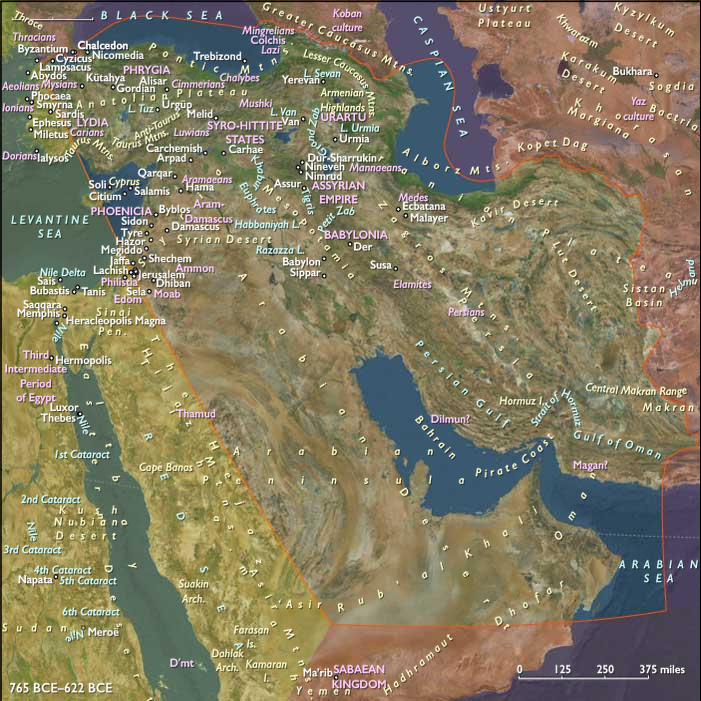
765 BCE to 622 BCE
The language of the Cimmerians, who are believed to have been Indo-European, is regarded as related to Iranian or Thracian; they appear to have had an Iranian ruling class.
Documents dating to centuries earlier than Herodotus, such as intelligence reports to Sargon II, lead academic scholars making use of recent research to note that these identify the Cimmerians as living south rather than north of the Black Sea.
The first historical record of the Cimmerians, which appears in Assyrian annals in the year 714 BCE, describes how a people termed the Gimirri helped the forces of Sargon to defeat the kingdom of Urartu.
Their original homeland, called Gamir or Uishdish, seems to have been located within the buffer state of Mannae.
The later geographer Ptolemy placed the Cimmerian city of Gomara in this region.
Some modern authors assert that the Cimmerians included mercenaries, whom the Assyrians knew as Khumri, who had been resettled there by Sargon.
Later Greek accounts describe the Cimmerians as having previously lived on the steppes, between the Tyras (Dniester) and Tanais (Don) rivers.
Greek and Mesopotamian sources note several Cimmerian kings including Tugdamme (Lygdamis in Greek; mid-seventh century BCE), and Sandakhshatra (late-seventh century).
The Cimmerians had been expelled from the steppes by the Scythians according to the Histories of Herodotus, written in about 440 BCE, who states that the men of the Cimmerian royal family, to ensure burial in their ancestral homeland, divided into groups and fought each other to the death.
The Cimmerian commoners buried the bodies along the river Tyras and fled from the Scythian advance, across the Caucasus and into Anatolia and the Near East.
People
Groups
Topics
Commodities
Subjects
Regions
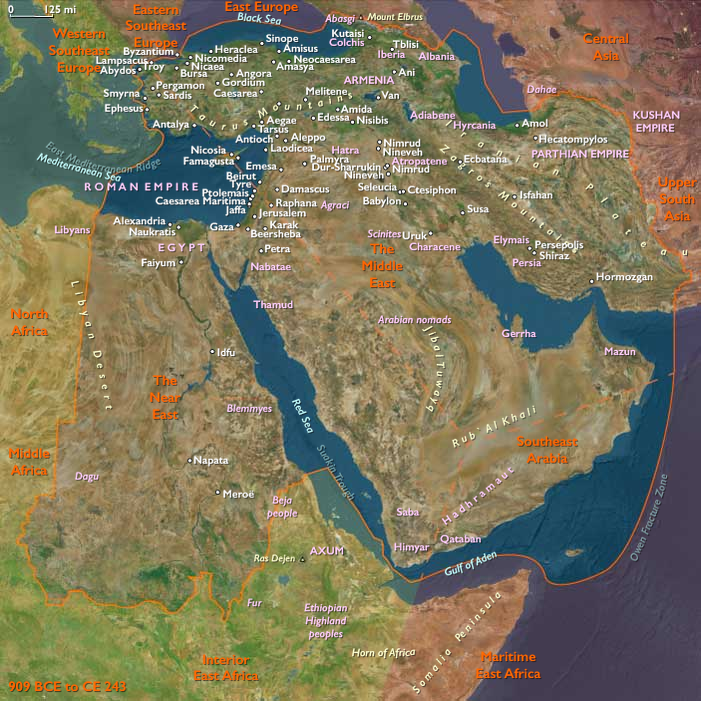
The Near and Middle East
View →Subregions