Event
The expedition had sighted the Pacific Ocean…
The expedition had sighted the Pacific Ocean for the first time on November 7, 1805, arriving two weeks later.
The expedition had faced its second bitter winter camped on the north side of the Columbia River, in a storm-wracked area.
Lack of food was a major factor.
The elk, the party's main source of food, had retreated from their usual haunts into the mountains, and the party is now too poor to purchase enough food from neighboring tribes.
On November 24, 1805, the party votes to move their camp to the south side of the Columbia River near modern Astoria, Oregon.
Sacagawea, and Clark's slave York, had both been allowed to participate in the vote, so this may have been the first time in American history where a woman and a slave were allowed to vote.
-
{# Image navigates to the detail page; the magnifying-glass chip is the only Fancybox lightbox trigger (kept a separate sibling — anchors can't nest). #}
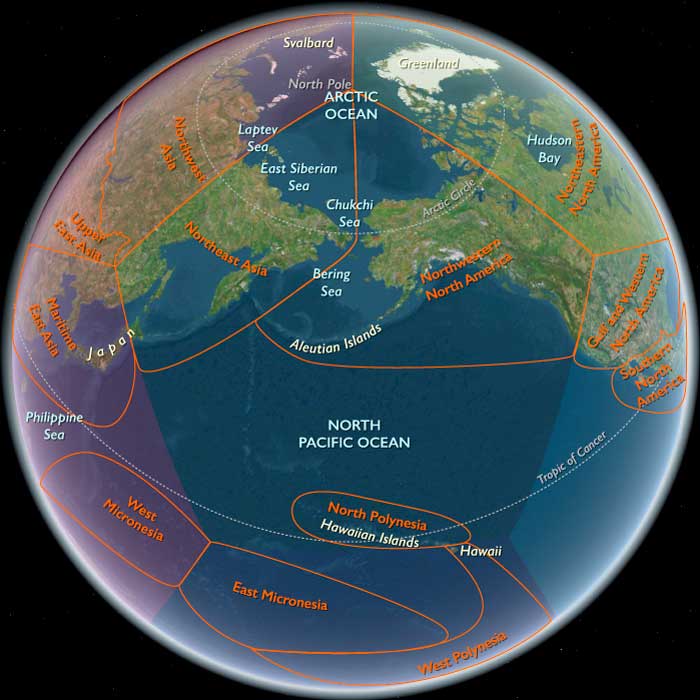
 Northern Oceania
World
-
{# Image navigates to the detail page; the magnifying-glass chip is the only Fancybox lightbox trigger (kept a separate sibling — anchors can't nest). #}
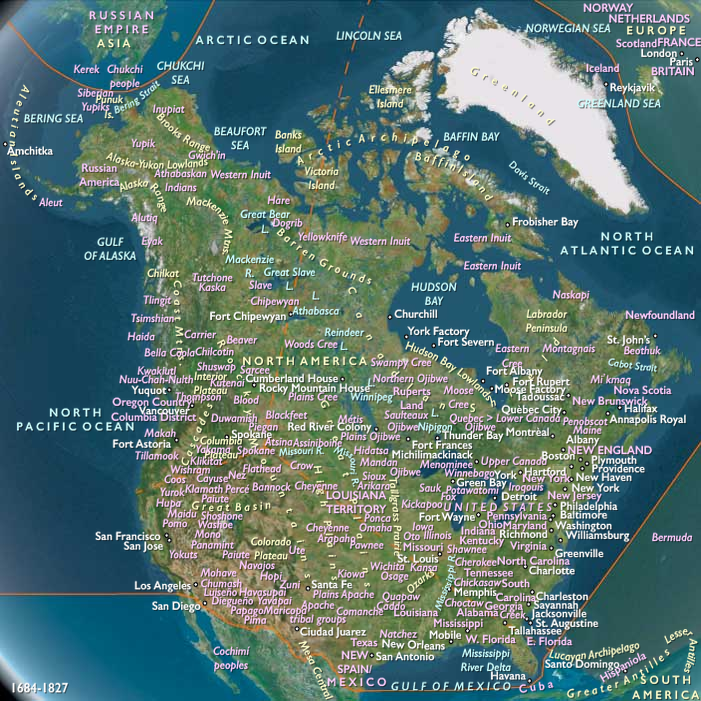 Northern North America
Region
-
{# Image navigates to the detail page; the magnifying-glass chip is the only Fancybox lightbox trigger (kept a separate sibling — anchors can't nest). #}
 Northwestern North America
Subregion