Event
The Mayan culture emerges in the lowland…
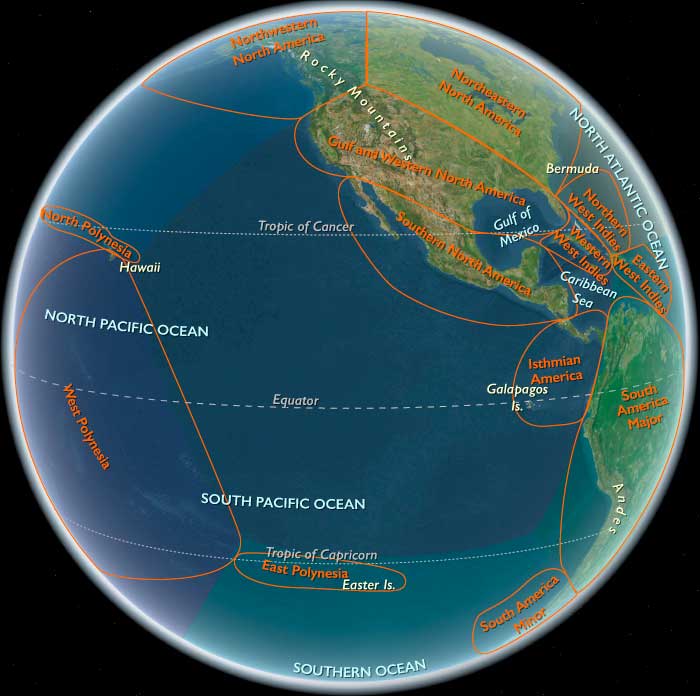
The Mayan culture emerges in the lowland area of the Yucatan Peninsula and the highlands to the south, in what is now southeastern Mexico, Guatemala, western Honduras, and Belize.
Many aspects of this culture persist in the area today despite nearly half a millennium of European domination.
All evidence, whether from archaeology, history, ethnography, or linguistic studies, points to a cultural continuity in this region.
The descendants of the first settlers in the area have lived there for at least three millennia.
Some hunting and foraging bands had settled in small farming villages prior to about 2500 BCE.
Although hunting and foraging continue to play a part in their subsistence, these farmers hace domesticated crops such as corn, beans, squash, and chili peppers—which are still the basic foods in Central America.
A profusion of languages and subcultures develops within the Mayan core culture. The basic institutions of Mayan civilization emerge between about 2500 BCE and CE 250. (The peak of Mayan civilization will occur during the classic period, which will begin about CE 250 and end about seven hundred years later.
Farmers engage in various types of agriculture, including labor-intensive irrigated and ridged-field systems and shifting slash- and-burn agriculture.
Their products feed the civilization's craft specialists, merchants, warriors, and priest-astronomers, who coordinate agricultural and other seasonal activities with a cycle of rituals in ceremonial centers.
These priests, who observe the movements of the sun, moon, planets, and stars, develop a complex mathematical and calendrical system to coordinate various cycles of time and to record specific events on carved stelae.
Belize boasts important sites of the earliest Mayan settlements, majestic ruins of the classic period, and examples of late post- classic ceremonial construction.
About five kilometers west of Orange Walk, is Cuello, a site originally dated to 2000 BCE, but now corrected and updated to around 1200 BCE.
Jars, bowls, and other dishes found here are among the oldest pottery unearthed in present-day Mexico and Central America.
The site includes platforms of buildings arranged around a small plaza, indicating a distinctly Mayan community.
The presence of shell, hematite, and jade shows that the Maya were trading over long distances.
The Mayan economy, however, is still basically subsistence, combining foraging and cultivation, hunting, and fishing.
-
{# Image navigates to the detail page; the magnifying-glass chip is the only Fancybox lightbox trigger (kept a separate sibling — anchors can't nest). #}
 The Far West
World
-
{# Image navigates to the detail page; the magnifying-glass chip is the only Fancybox lightbox trigger (kept a separate sibling — anchors can't nest). #}
 Middle America
Region
-
{# Image navigates to the detail page; the magnifying-glass chip is the only Fancybox lightbox trigger (kept a separate sibling — anchors can't nest). #}
 Southern North America
Subregion