Event
Pre-Columbian Honduras is populated by a complex…
Pre-Columbian Honduras is populated by a complex mixture of indigenous peoples representing a wide variety of cultural back-grounds and linguistic groups—the most advanced and notable of which are related to the Maya of the Yucatan and Guatemala.
Mayan civilization had reached western Honduras in the fifth century CE, probably spreading from lowland Mayan centers in Guatemala's Peten region.
The Maya had spread rapidly through the Rio Motagua Valley, centering their control on the major ceremonial center of Copan, near the present-day town of Santa Rosa de Copan.
The Maya have developed the city for three and a half centuries, making it one of the principal centers of their culture.
At one point, Copan is probably the leading center for both astronomical studies—in which the Maya are quite advanced—and art.
One of the longest Mayan hieroglyphic inscriptions ever discovered is found at Copan.
The Maya also establish extensive trade networks spanning as far as central Mexico.
Copan is apparently abandoned at the height of the Mayan civilization.
The last dated hieroglyph in Copan is CE 800.
Much of the population evidently remains in the area after that, but the educated class—the priests and rulers who built the temples, inscribed the glyphs, and developed the astronomy and mathematics—suddenly vanish.
Copan falls into ruin, and the descendants of the Maya who remain have no memory of the meanings of the inscriptions or of the reasons for the sudden fall.
-
{# Image navigates to the detail page; the magnifying-glass chip is the only Fancybox lightbox trigger (kept a separate sibling — anchors can't nest). #}
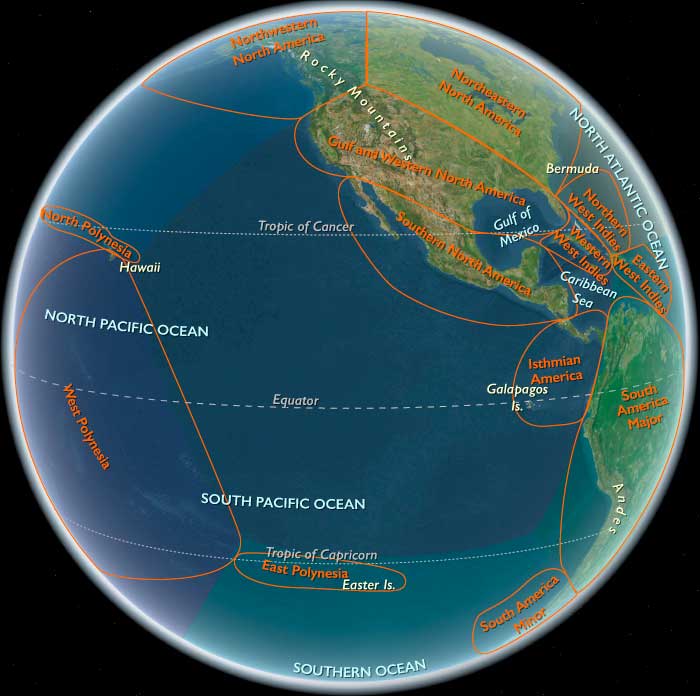
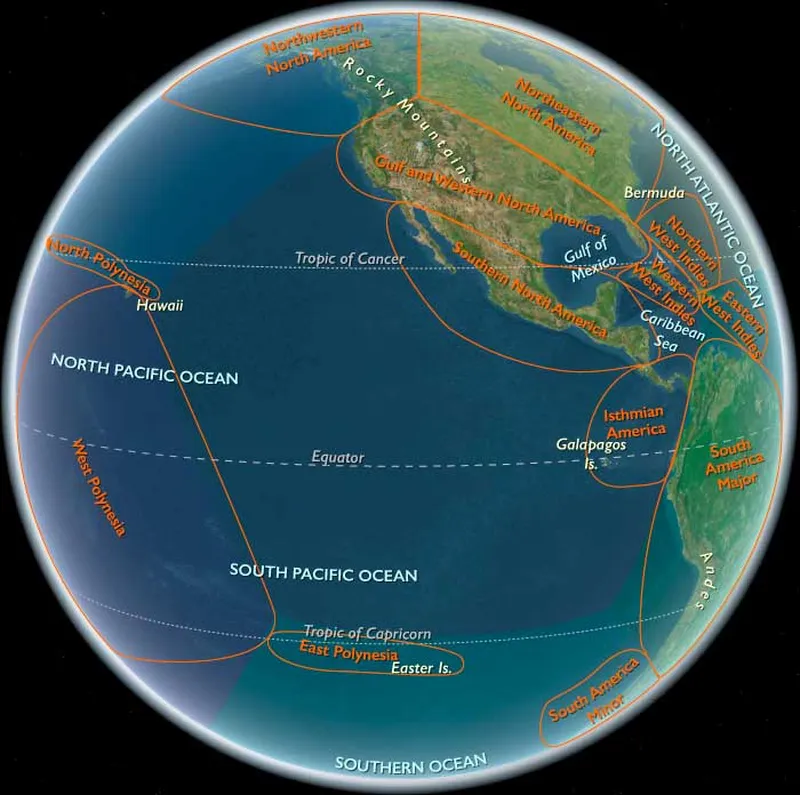 The Far West
World
-
{# Image navigates to the detail page; the magnifying-glass chip is the only Fancybox lightbox trigger (kept a separate sibling — anchors can't nest). #}
 Middle America
Region
-
{# Image navigates to the detail page; the magnifying-glass chip is the only Fancybox lightbox trigger (kept a separate sibling — anchors can't nest). #}
 Southern North America
Subregion