
The Middle East (3789–3646 BCE): Administration, Writing, …
Years: 3789BCE - 3646BCE
The Middle East (3789–3646 BCE): Administration, Writing, and Early Urban Conflict
Cylinder Seals and Administration at Susa
Between 3789 and 3646 BCE, the cylinder seals of the Susa I and Susa II periods exhibited rich iconography, uniquely emphasizing scenes of everyday life, alongside depictions of a local figure identified by scholar P. Amiet as a "proto-royal figure," potentially an antecedent to the "priest-kings" of the Late Uruk era. These seals, together with bullae and clay tokens, suggest the growing importance of administrative practices and sophisticated accounting techniques at Susa during the second half of the fourth millennium BCE. Significantly, Susa also yielded some of the earliest known writing tablets, underscoring its critical role in the development of writing systems.
Broader Cultural Context in Susiana
Other regional sites in Susiana, such as Jaffarabad and Chogha Mish, similarly reflect substantial archaeological developments from this period, illustrating the widespread nature of these administrative and cultural transformations.
Tell Brak and Early Urbanization
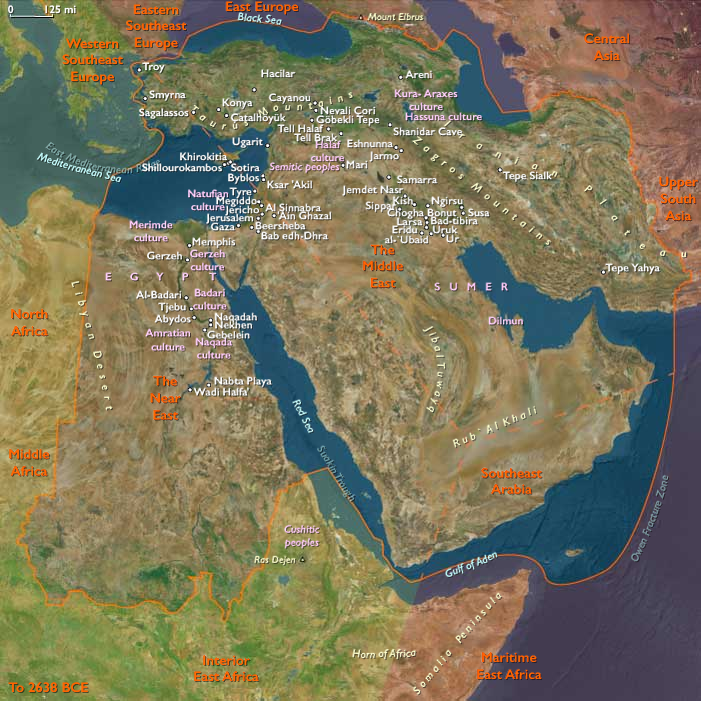
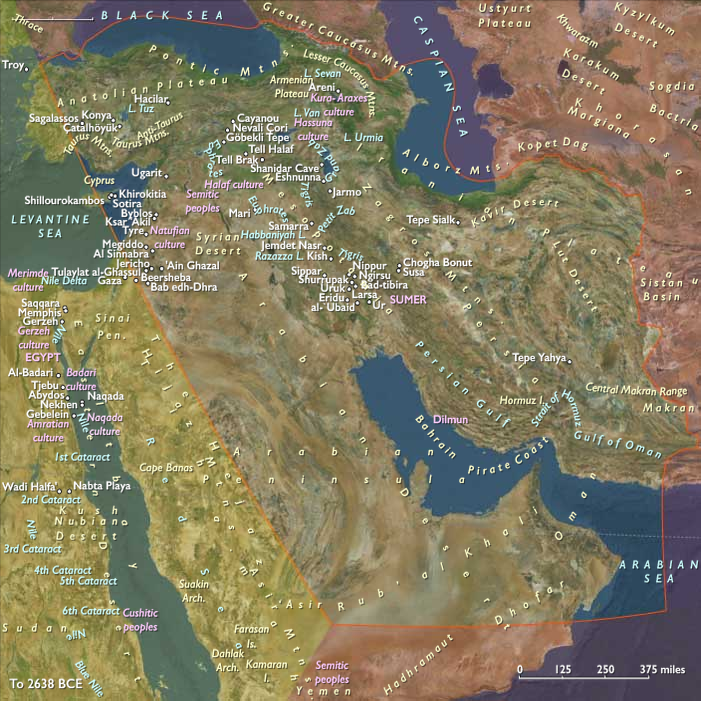
Meanwhile, a small settlement existed at Tell Brak in northeastern Syria, in the present-day Al-Hasakah Governorate, as early as 6000 BCE, with materials indicating a continuous occupation through the Late Neolithic Halaf culture into the subsequent Ubaid and Uruk periods. Excavations and surface surveys indicate that Tell Brak developed into an urban center contemporaneously with, or even slightly earlier than, well-known cities of southern Mesopotamia, such as Uruk.
Recent archaeological excavations at Tell Brak have uncovered dramatic evidence, including a series of mass graves dating to approximately 3800–3600 BCE, suggesting that the urbanization process may have been accompanied by significant warfare. Additionally, a notable domestic structure from around 3700 BCE featured a long, narrow courtyard with a domed oven, suggesting social gatherings or communal activities. Skeletal remains from the site indicate that Tell Brak was later a notable source of donkey-onager mules utilized for pulling wheeled carts prior to the introduction of horses around 2300 BCE.
Metallurgical Advancements
During this period, the production of the earliest known bronze artifacts, such as those previously discovered at Tepe Yahya in Iran, marked significant advancements in metallurgy, contributing to the technological sophistication of the era.
This age highlights pivotal advancements in administrative and writing practices, the complexities associated with urbanization and warfare, and continuing metallurgical innovations, which collectively shaped the trajectory of early urban societies in the ancient Middle East.
Groups
- Ubaid culture
- Eridu, City-state of
- Sumer
- Nippur, city-state of
- Susa, City-state of
- Ur, city-state of
- Uruk, city-state of
Topics
Commodoties
- Weapons
- Hides and feathers
- Glass
- Domestic animals
- Grains and produce
- Ceramics
- Strategic metals
- Beer, wine, and spirits
Subjects
- Architecture
- Painting and Drawing
- Environment
- Decorative arts
- Faith
- Government
- Custom and Law
- Technology
- Metallurgy
Regions
Subregions
Years: 3789BCE - 3646BCE
Groups
- Ubaid culture
- Eridu, City-state of
- Sumer
- Nippur, city-state of
- Susa, City-state of
- Ur, city-state of
- Uruk, city-state of
Topics
Commodoties
- Weapons
- Hides and feathers
- Glass
- Domestic animals
- Grains and produce
- Ceramics
- Strategic metals
- Beer, wine, and spirits
Subjects
- Architecture
- Painting and Drawing
- Environment
- Decorative arts
- Faith
- Government
- Custom and Law
- Technology
- Metallurgy
Regions
Subregions