
The Middle East (4797–4654 BCE): Social Stratification…
4797 BCE to 4654 BCE
The Middle East (4797–4654 BCE): Social Stratification in the Ubaid Period
Emergence of Social Hierarchies
Between 4797 and 4654 BCE, the Ubaid period experienced marked changes in social structures, transitioning from egalitarian societies toward increasing social stratification. Analysis of grave goods from this era indicates a clear polarization in societal status, with distinct variations in wealth and social standing among individuals and households.
"Trans-egalitarian" Societal Developments
This period, described by archaeologist Peter Bogucki as characterized by "Trans-egalitarian" competitive households, saw certain groups falling behind due to downward social mobility. Households began to exhibit competition, leading to socioeconomic disparities previously unseen.
Rise of Elite Classes
Scholars Morton Fried and Elman Service proposed that the Ubaid culture witnessed the rise of an elite class of hereditary chieftains. These leaders were likely heads of kin groups linked to administrative roles within temple shrines and associated granaries. Their responsibilities likely included mediating intra-group conflicts and maintaining social order, roles once managed collectively by community councils.
Transition from Primitive Democracy
The increasing complexity of these communities made traditional collective decision-making processes, described by Thorkild Jacobsen as primitive democracy, less effective. Previously, disputes were commonly resolved through councils comprising community peers. However, the emerging hierarchical social structures necessitated centralized leadership, marking a significant shift towards institutionalized governance.
This age underscores the profound societal transformations in Ubaid culture, characterized by increasing social differentiation, emerging elite classes, and significant shifts in governance mechanisms, laying essential foundations for the future urban and social complexities of Mesopotamia.
Topics
Commodities
Subjects
Regions
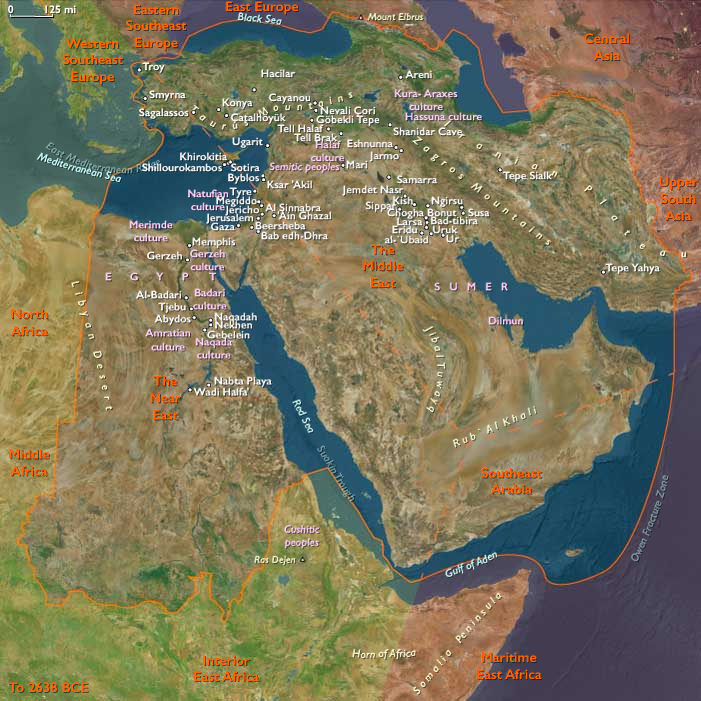
The Near and Middle East
View →Subregions
