
The Montanist movement, which originated in Asia …
Years: 178 - 178
The Montanist movement, which originated in Asia Minor, has made its way to Rome and Gaul in the second half of the second century, around the reign of Eleuterus.
Its nature does not diverge so much from the orthodoxy of the time for it to initially be labeled heresy.
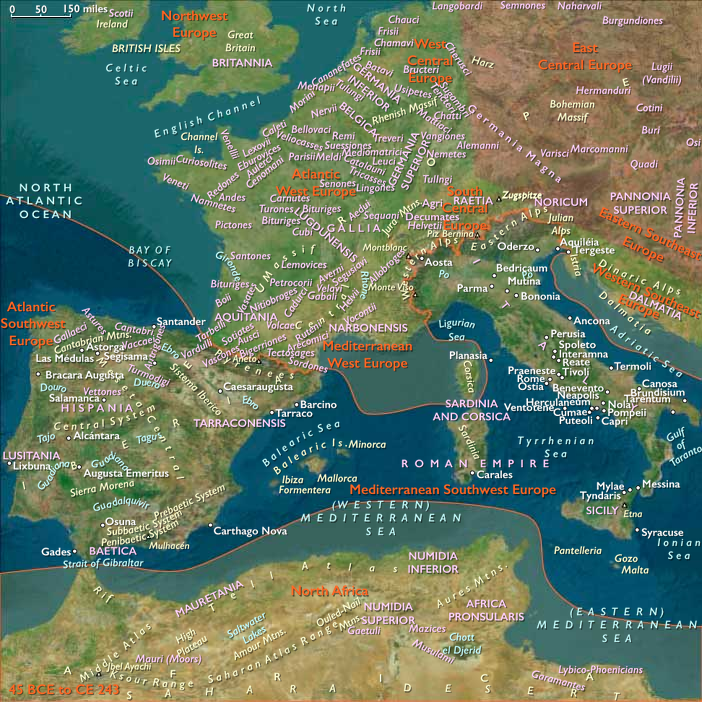
During the violent persecution at Lyon, in 177, local confessors had written from their prison concerning the new movement to the Asiatic and Phrygian communities, and also to Pope Eleuterus.
The bearer of their letter to the pope is the presbyter Irenaeus, soon to become Bishop of Lyon.
It appears from statements of Eusebius concerning these letters that the Christians of Lyon, though opposed to the Montanist movement, advocated patience and pleaded for the preservation of ecclesiastical unity.
Exactly when the Roman Catholic Church takes its definite stand against Montanism is not known with any certainty.
It would seem from Tertullian's account (adv. Praxeam, I) that a Roman bishop did send some conciliatory letters to the Montanists, but these letters, says Tertullian, were subsequently recalled.
He probably refers to Pope Eleuterus, who long hesitated, but after a conscientious and thorough study of the situation, is supposed to have declared against the Montanists.
At Rome, the Gnostics and Marcionites continue to preach against the orthodox church.
The Liber Pontificalis ascribes to Pope Eleutherius a decree that no kind of food should be despised by Christians (Et hoc iterum firmavit ut nulla esca a Christianis repudiaretur, maxime fidelibus, quod Deus creavit, quæ tamen rationalis et humana est).
Possibly he did issue such an edict against the Gnostics and Montanists; it is also possible that on his own responsibility, the writer of the Liber Pontificalis attributed to this pope a similar decree current about the year 500.
Locations
People
Groups
- Gallia Lugdunensis (Roman province)
- Italy, Roman
- Christians, Early
- Roman Empire (Rome): Nerva-Antonine dynasty
- Valentinianism
- Gnosticism
- Marcionism
- Montanism
Topics
Subjects
Regions
Subregions
Years: 178 - 178
Locations
People
Groups
- Gallia Lugdunensis (Roman province)
- Italy, Roman
- Christians, Early
- Roman Empire (Rome): Nerva-Antonine dynasty
- Valentinianism
- Gnosticism
- Marcionism
- Montanism
Topics
Subjects
Regions
Subregions