
East Europe (2637 – 910 BCE): Forest–Steppe …
Years: 2637BCE - 910BCE
East Europe (2637 – 910 BCE): Forest–Steppe Frontiers and Great River Gateways
Geographic and Environmental Context
East Europe—including Belarus, Ukraine, the European portion of Russia west of the Urals, and the sixteen Russian Republics in this zone—spanned a vast mosaic of taiga, mixed forest, forest–steppe, and open steppe. The Dniester, Dnieper, Don, and Volga rivers linked interior zones to the Black Sea, Sea of Azov, and Caspian Sea, creating major north–south transport arteries. The climate ranged from cool-temperate in the north to semi-arid in the southern steppe.
Subsistence and Settlement
By the mid–third millennium BCE:
-
Forest–steppe communities practiced mixed farming, cultivating barley, wheat, and millet, and raising cattle, sheep/goats, and horses.
-
Steppe herders relied on mobile pastoralism, moving seasonally with herds and supplementing diets with hunting and fishing.
-
Northern forest zones supported fishing, fur trapping, and limited slash-and-burn horticulture.
-
Settlements ranged from semi-permanent villages on river terraces to seasonal encampments following grazing patterns.
Technological and Cultural Developments
-
Metallurgy progressed from copper to bronze, producing socketed spearheads, axes, and ornaments.
-
Stone and bone tools remained common, especially in the north.
-
Burial traditions included kurgans (earthen mounds) with timber or stone chambers, often containing weapons, horse gear, and prestige goods.
-
The Catacomb culture and later Srubnaya (Timber-Grave) culture dominated large areas of the steppe and forest–steppe, associated with early chariot and wagon use.
-
Anthropomorphic stelae carved in stone marked elite burials and territorial claims.
Trade and Interregional Networks
East Europe was a key corridor between Europe and Central Asia:
-
Amber, furs, and forest products moved south toward the Black Sea and beyond.
-
Tin, copper, and finished bronze goods entered from the Caucasus and Carpathian regions.
-
River systems linked to the Baltic and the Volga–Ural routes, connecting to the steppe nomadic cultures and Central Asian metallurgical centers.
Cultural and Symbolic Expressions
Art and ornament favored geometric patterns, solar motifs, and animal representations, often linked to steppe cosmologies. Horse burials and the inclusion of riding or chariot equipment reflected the growing symbolic and practical importance of equestrianism.
Environmental Adaptation and Resilience
Mobile pastoralism was the key adaptation to the variable climate of the steppe. Mixed economies in forest–steppe regions allowed resilience through diversification—grains, herds, wild foods, and fishing. Seasonal migration routes optimized pasture use while maintaining ties to permanent resource areas.
Transition to the Early First Millennium BCE
By 910 BCE, East Europe was a dynamic meeting ground of agriculturalists, herders, and long-distance traders. Its open steppe corridors, fertile river valleys, and role in trans-Eurasian exchange positioned it for major cultural shifts with the rise of early Iron Age steppe confederations.
Groups
Topics
- Subboreal Period
- 4.2 kiloyear BP aridification event
- Rottnest Transgression
- Younger Subboreal Period
Commodoties
- Fish and game
- Hides and feathers
- Gem materials
- Domestic animals
- Oils, gums, resins, and waxes
- Grains and produce
- Strategic metals
- Salt
- Sweeteners
Subjects
Regions
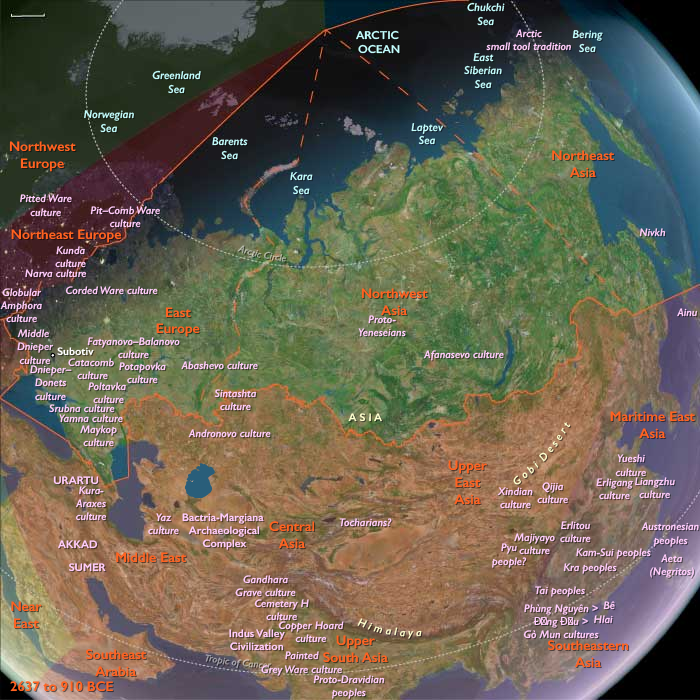
Subregions
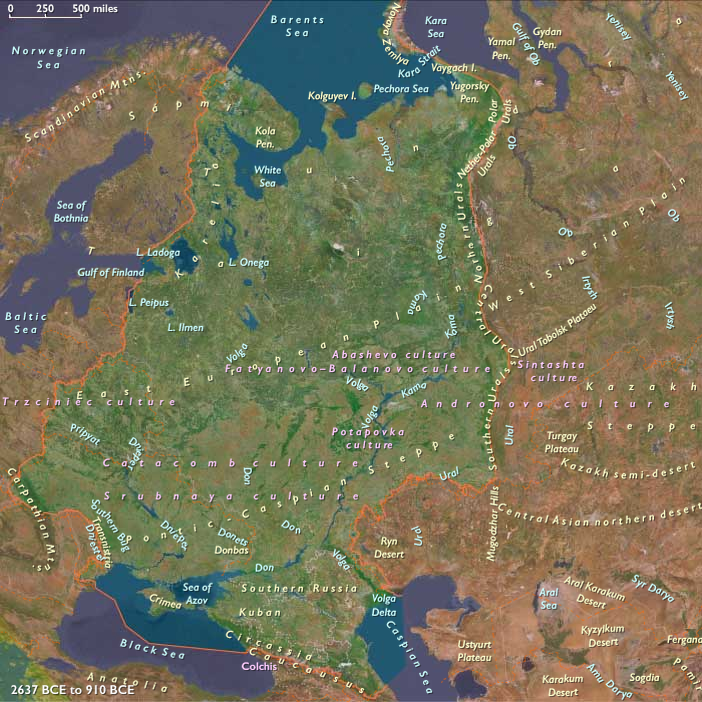
Years: 2637BCE - 910BCE
Groups
Topics
- Subboreal Period
- 4.2 kiloyear BP aridification event
- Rottnest Transgression
- Younger Subboreal Period
Commodoties
- Fish and game
- Hides and feathers
- Gem materials
- Domestic animals
- Oils, gums, resins, and waxes
- Grains and produce
- Strategic metals
- Salt
- Sweeteners
Subjects
Regions
Subregions