The British company employs sepoys—European-trained and European-led…
1684 CE to 1827 CE
The British company employs sepoys—European-trained and European-led Indian soldiers—to protect its trade, but local rulers seek their services to settle scores in regional power struggles.
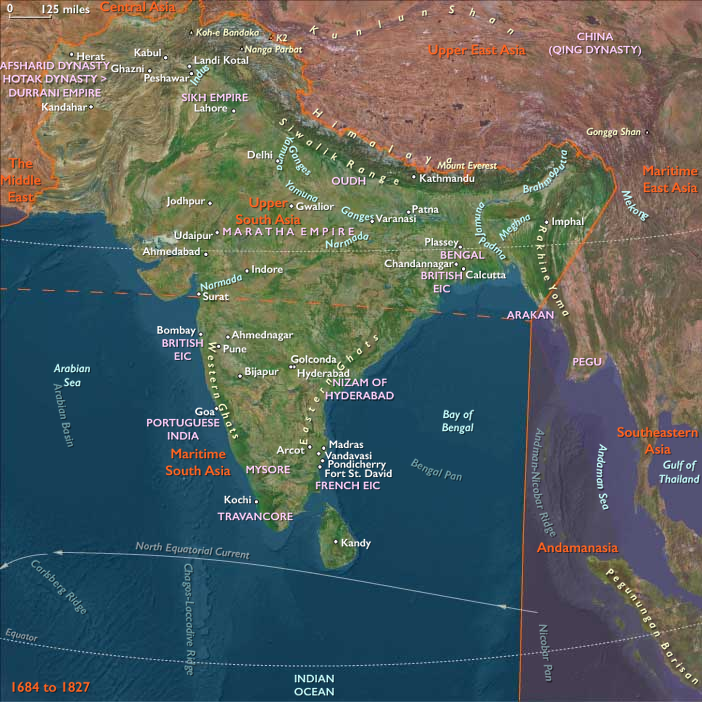
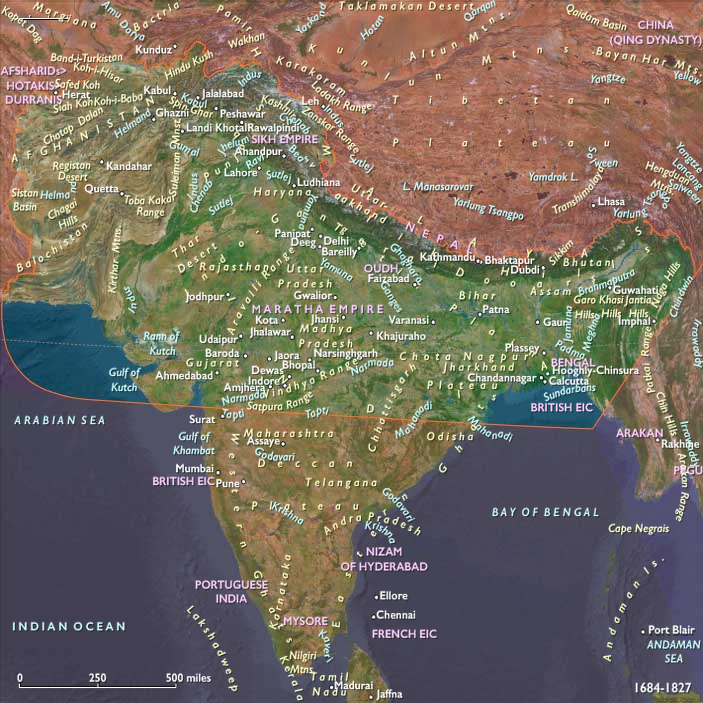
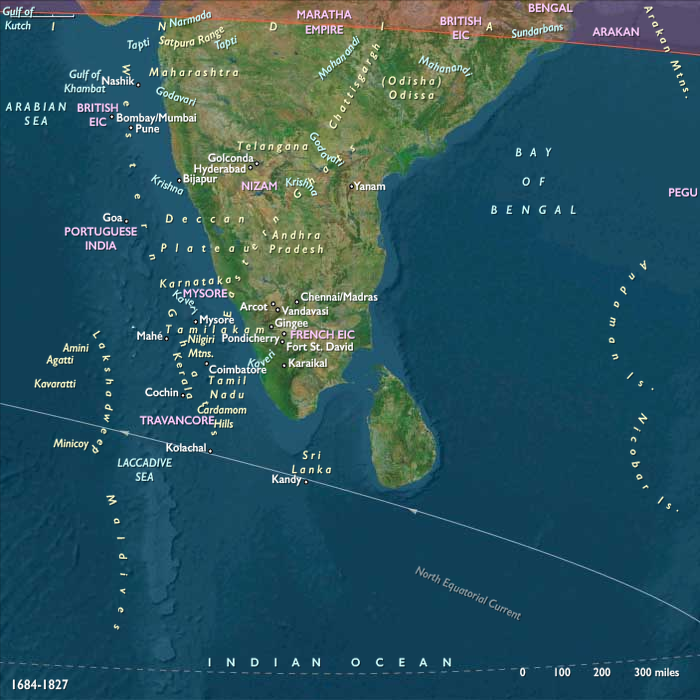
South India witnesses the first open confrontation between the British and the French, whose forces are led by Robert Clive and Francois Dupleix, respectively.
Both companies desire to place their own candidate as the nawab, or ruler, of Arcot, the area around Madras.
At the end of a protracted struggle between 1744 and 1763, when the Peace of Paris is signed, the British gain an upper hand over the French and install their man in power, supporting him further with arms and lending large sums as well.
The French and the British also back different factions in the succession struggle for Mughal viceroyalty in Bengal, but Clive intervenes successfully and defeats Nawab Siraj-ud-daula in the Battle of Plassey (Palashi, about one hundred and fifty kilometers north of Calcutta) in 1757.
Clive finds help from a combination of vested interests that oppose the existing nawab: disgruntled soldiers, landholders, and influential merchants whose commercial profits are closely linked to British fortunes.
People
Groups
Topics
Commodities
Regions