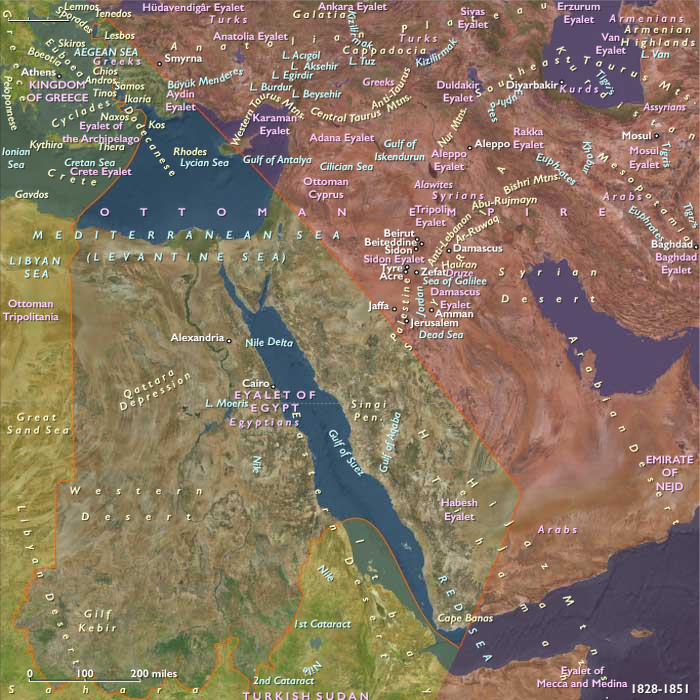
The Near East, 1840 to 1851 CE:…
1840 CE to 1851 CE
The Near East, 1840 to 1851 CE: The Retreat of Muhammad Ali and the Reassertion of Ottoman Influence
International Coalition Against Muhammad Ali
In response to Muhammad Ali's occupation of Syria and his subsequent threat to the Ottoman capital at Constantinople, the major European powers—Britain, France, Austria, Russia, and Prussia—unite with the Ottoman government to counter the Egyptian advance. The international coalition intervenes decisively, with a British fleet bombarding Beirut in September 1840, prompting local uprisings against the Egyptian forces.
In November 1840, the key fortress of Acre falls to the allied forces, while British naval power threatens Egypt itself by anchoring off Alexandria. These military reversals compel Muhammad Ali to order his army’s retreat back to Egypt, effectively ending his Syrian ambitions.
Treaty of 1841 and the Reduction of Egyptian Autonomy
The resulting Treaty of 1841 dramatically curtails Muhammad Ali’s regional power. He is forced to relinquish all conquered territories except Sudan, although he retains the hereditary governorship of Egypt, with succession rights guaranteed to his eldest male descendant.
Significantly, Muhammad Ali is also required to accept the terms of the Anglo-Ottoman Convention of 1838, establishing "free trade" in Egypt. This agreement dismantles his extensive economic monopolies and mandates tariff structures that heavily favor imported manufactured goods, especially from Britain.
Economic Consequences and the Decline of Egyptian Industry
The imposition of free trade policies severely undermines Egypt’s burgeoning industrial base. Local Egyptian industries are overwhelmed by the influx of cheaper imported manufactured goods, particularly from Britain, which flood the market unchecked due to the newly imposed low tariffs. Consequently, this era marks a pronounced setback in Muhammad Ali's economic vision, weakening Egypt’s economic sovereignty and limiting its industrial potential.
Legacy of the Era: International Intervention and Economic Decline
The period from 1840 to 1851 highlights the decisive role of international powers in shaping the political and economic landscape of the Near East. Muhammad Ali’s forced retreat from Syria, the loss of his monopolies, and the imposition of disadvantageous trade policies significantly diminish Egypt’s regional autonomy and industrial growth. These developments underscore the enduring influence of European powers and set the stage for sustained external intervention in Egypt and the broader Near East.
People
Groups
Regions
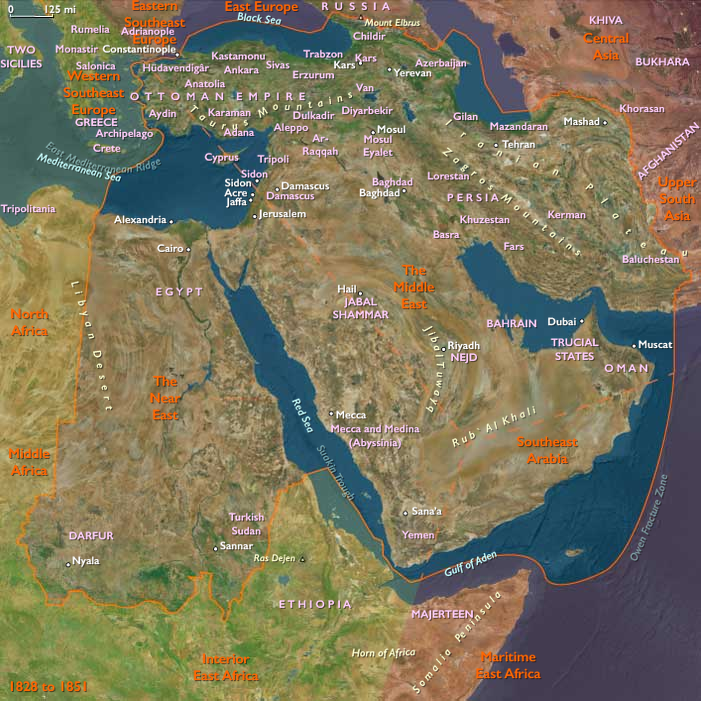
The Near and Middle East
View →Subregions