Johannes Gutenberg and the Origins of Printing…
1439 CE
Johannes Gutenberg and the Origins of Printing in Strasbourg (1434–1444)
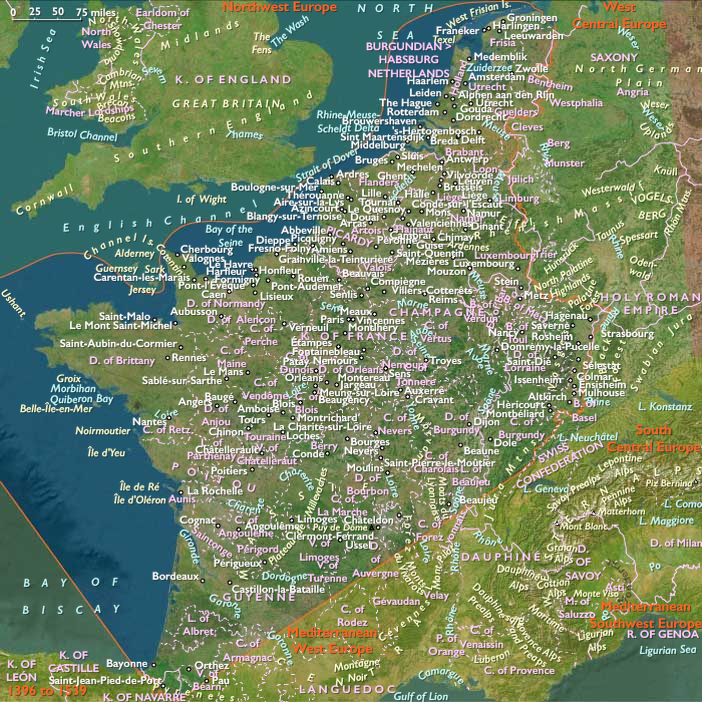
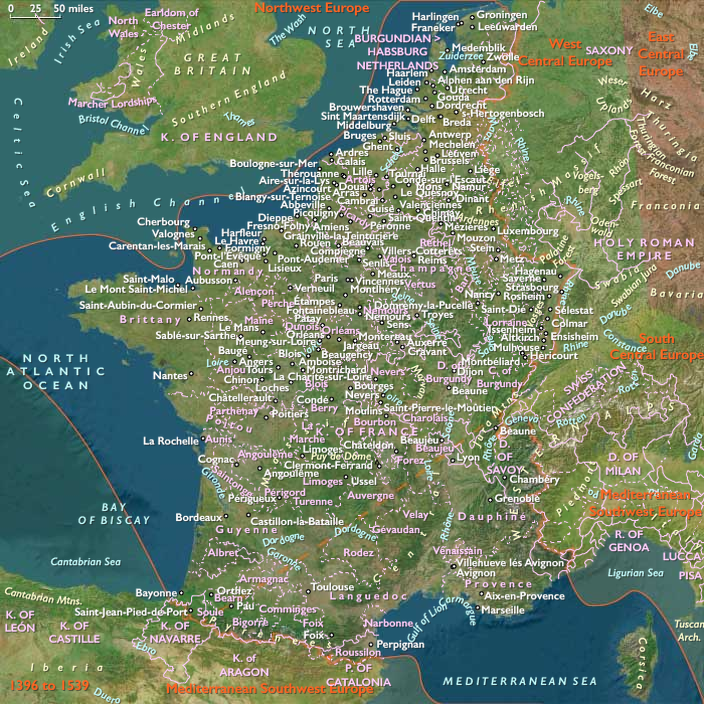
Johannes Gutenberg, originally from Mainz and the son of a patrician family, had relocated to Strasbourg (modern-day France) sometime between 1428 and 1430 following political turmoil and conflicts between the patricians and guilds in Mainz. Records confirm Gutenberg's active presence in Strasbourg from at least 1434 to 1444, during which he utilized his considerable skill in metalworking and related crafts such as gem-cutting, also instructing pupils in these skills.
Around 1438, Gutenberg's business partners—Hans Riffe, Andreas Dritzehn, and Andreas Heilmann—discovered he was secretly pursuing a significant, undisclosed project. Having invested substantial funds in Gutenberg's enterprises, they insisted upon inclusion in this confidential endeavor, leading to the formation of a five-year contract. The agreement explicitly stated that, should any partner die during this period, their heirs would receive monetary compensation rather than inheritance of partnership rights.
When Andreas Dritzehn passed away in late December 1438, his heirs initiated legal action against Gutenberg, seeking to circumvent the contract and secure partnership rights. Though the lawsuit was ultimately unsuccessful, court testimony exposed critical details about Gutenberg’s secretive activities. Witnesses revealed that a carpenter named Conrad Saspach had provided Dritzehn money for the construction of a wooden press. Additionally, a goldsmith named Hans Dünne testified that as early as 1436, Gutenberg had purchased printing materials worth one hundred guilders.
The lawsuit thus inadvertently revealed Gutenberg's clandestine efforts toward the development of movable-type printing technology, highlighting his determined attempt to protect the secrecy of his revolutionary invention. This Strasbourg period marked the early stages of Gutenberg’s groundbreaking innovations, which would profoundly transform communication and culture in Europe and beyond.
Locations
People
Subjects
Regions
West Europe
View →Subregions