
The occupation of northeastern Burma by KMT …
Years: 1960 - 1971
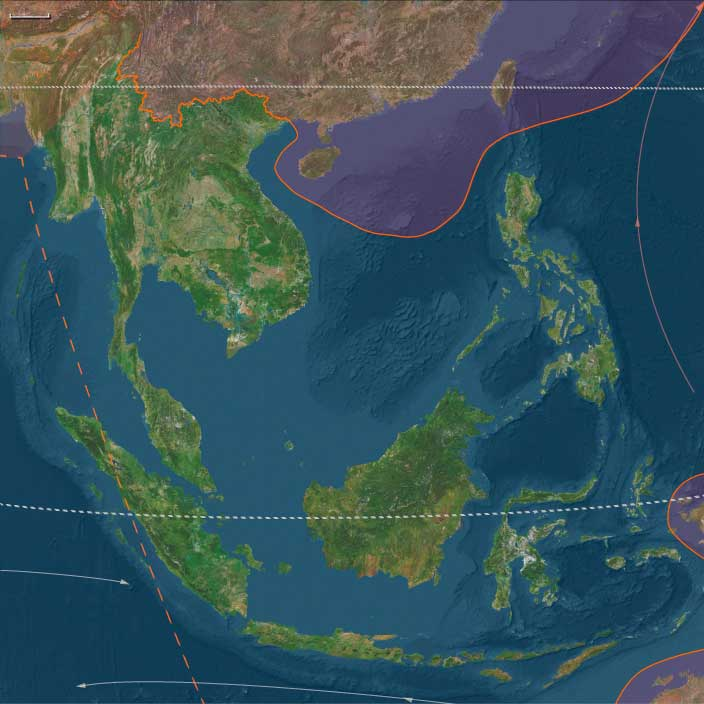
The occupation of northeastern Burma by KMT irregulars, combined with the Shan secessionist revolt after 1958, transforms the Shan State into a region of conflict that reduces government control and permits a marked expansion in local opium production.
The Chinese strongmen have terrorized local villagers into growing opium for them and made the so-called Golden Triangle the world's leader in opium production.
After a joint Burma-China military operation evicts them from the Shan State in 1961, the KMT forces establishes new base camps just across the border in Thailand and from there continue to dominate the Shan State opium trade.
During their decade-long occupation of Burma's prime opium lands, the KMT had fostered a generation of local opium warlords such as Olive Yang, Lo Hsing-han, and Khun Sa who remain in Burma after the KMT departure to vie, as both antagonists and allies, for control of the local traffic.
By the early 1960s, Southeast Asia is home to much of the world's heroin production.
By the mid-1960s, the high profits of the Shan opium trade finances the formation of new armies, notably Khun Sa's Ka Kwe Ye, a local militia loyal to the Burmese government.
US involvement in Vietnam is blamed for the surge in illegal heroin being smuggled into the States.
To aid U.S. allies, the CIA establishes a charter airline, Air America, which is allegedly involved in the transport raw opium from Burma and Laos (though veteran pilots deny that this was done knowingly).
Some of the opium ends up being transported to Marseille by Corsican gangsters to be refined into heroin and shipped to the US via the so-called “French Connection”.
Locations
Groups
- United States of America (US, USA) (Washington DC)
- Corsican crime syndicates
- Kuomintang (KMT)
- CIA (Central Intelligence Agency of the U.S.A.)
- Burma, Union of
- China, Republic of (Taiwan)
- Thailand, Kingdom of
- China, People's Republic of
- Laos, Kingdom of
- Vietnam, (South) Republic of
- Air America
Topics
- Cold War
- Burma, Internal conflict in
- Laotian Civil War
- Vietnam War, or Second Indo-China War
- Laotian Military Coup
- Burmese Military Coup
- Thailand War
- Thai Rebellion
- Thai Government Coup
Commodoties
Subjects
Regions
Related Events
Showing 10 events out of 3698 total
Years: 1960 - 1971
Locations
Groups
- United States of America (US, USA) (Washington DC)
- Corsican crime syndicates
- Kuomintang (KMT)
- CIA (Central Intelligence Agency of the U.S.A.)
- Burma, Union of
- China, Republic of (Taiwan)
- Thailand, Kingdom of
- China, People's Republic of
- Laos, Kingdom of
- Vietnam, (South) Republic of
- Air America
Topics
- Cold War
- Burma, Internal conflict in
- Laotian Civil War
- Vietnam War, or Second Indo-China War
- Laotian Military Coup
- Burmese Military Coup
- Thailand War
- Thai Rebellion
- Thai Government Coup
Commodoties
Subjects
Regions