
The origins of Alexios Palaiologos are obscure. …
Years: 1200 - 1200
The origins of Alexios Palaiologos are obscure.
His family is wealthy and mostly known as civil and military officials under the Komnenian emperors.
Alexios's father was probably the sebastos and megas hetaireiarches George Palaiologos, the son or grandson of Alexios I Komnenos's staunchest supporter George Palaiologos.
Through his grandmother, Alexios shares in the blood of the Komnenian house.
In circa 1198, Alexios had been chosen by Emperor Alexios III, who was without male offspring, to wed his eldest daughter, Irene.
She was a widow of Andronikos Kontostephanos, and Alexios Palaiologos was forced to divorce his own beautiful first wife (whose name is unknown) to marry her.
The wedding, accompanied by lavish celebrations, had taken place in spring 1199.
Alexios had thus become the imperial heir apparent, and is elevated to the rank of despot.
At the same time, the emperor's second daughter Anna, also a widow, had been wed to Theodore Laskaris, the future founder of the Empire of Nicaea.
Shortly afterwards, both imperial sons-in-law are sent alongside general Manuel Kamytzes against the rebel Ivanko in Thrace.
During this campaign, in the siege of Kritzimos, Alexios's father George is killed.
The campaign fails when the imperial force is trapped in an ambush and Kamytzes is captured.
This success emboldens Ivanko, who now claims the imperial title.
In spring 1200, Alexios III pretends to be willing to begin negotiations, and sends Alexios Palaiologos to meet the rebel.
Alexios gives solemn promises of safety, but when Ivanko appears in the imperial camp, he is arrested and executed.
In February of the same year, Alexios had been called upon to help with the riots that broke out in Constantinople in protest against the embezzlement of charitable donations by the prison warden John Lagos.
A large mob had taken control of the capital's prisons and opened them, and battled the guards of the emperor, who was away at Chrysopolis.
Alexios Palaiologos had led troops into the city and suppressed the revolt after inflicting heavy casualties on the populace.
Locations
People
Groups
- Greeks, Medieval (Byzantines)
- Bulgarians (South Slavs)
- Bulgaria, Theme of
- Roman Empire, Eastern: Angelid dynasty
- Bulgarian Empire (Second), or Empire of Vlachs and Bulgars
Topics
Commodoties
Subjects
Regions
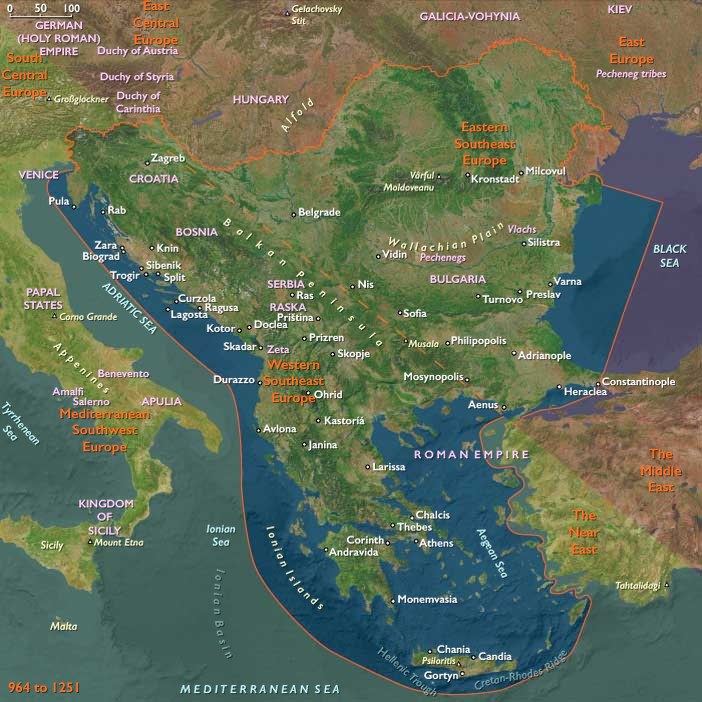
Subregions
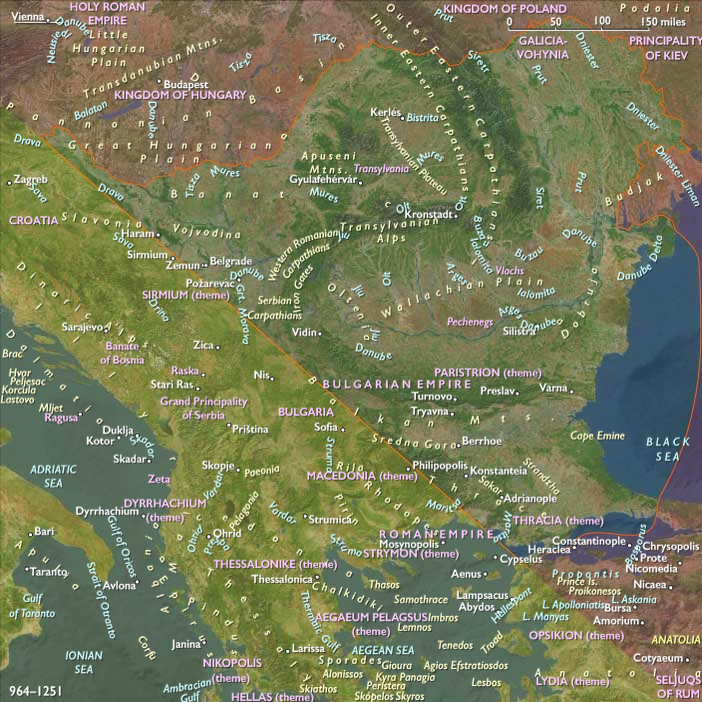
Related Events
Showing 10 events out of 47703 total
Years: 1200 - 1200
Locations
People
Groups
- Greeks, Medieval (Byzantines)
- Bulgarians (South Slavs)
- Bulgaria, Theme of
- Roman Empire, Eastern: Angelid dynasty
- Bulgarian Empire (Second), or Empire of Vlachs and Bulgars
Topics
Commodoties
Subjects
Regions
Subregions