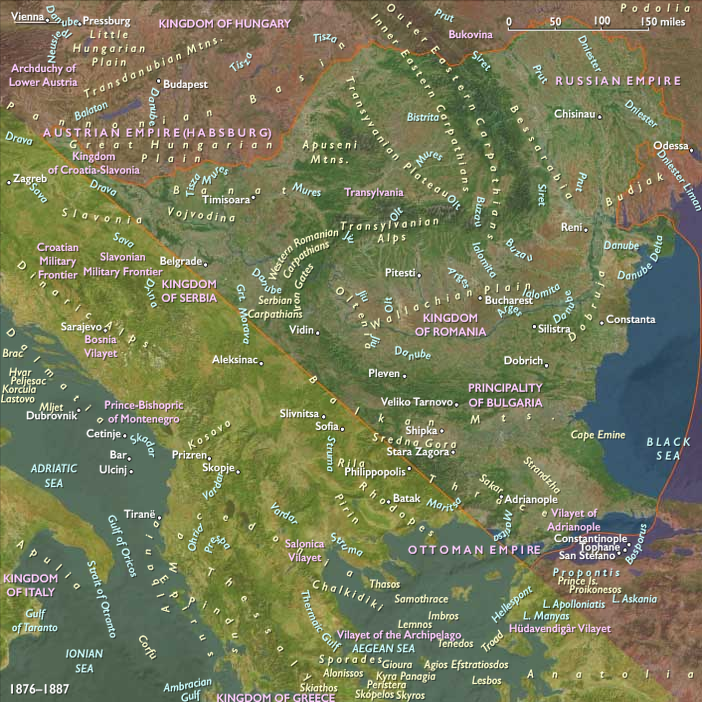
The Ottoman Empire has a dual economy…
1876 CE to 1887 CE
The Ottoman Empire has a dual economy in the nineteenth century consisting of a large subsistence sector and a small colonial-style commercial sector linked to European markets and controlled by foreign interests.
The empire's first railroads, for example, are built by foreign investors to bring the cash crops of Anatolia's coastal valleys—tobacco, grapes, and other fruit—to Smyrna (Izmir) for processing and export.
The cost of maintaining a modern army without a thorough reform of economic institutions causes expenditures to be made in excess of tax revenues.
Heavy borrowing from foreign banks in the 1870s to reinforce the treasury and the undertaking of new loans to pay the interest on older ones creates a financial crisis that in 1881 obliges the Porte to surrender administration of the Ottoman debt to a commission representing foreign investors.
The debt commission collects public revenues and transfers the receipts directly to creditors in Europe.
Locations
Groups
Commodities
Regions
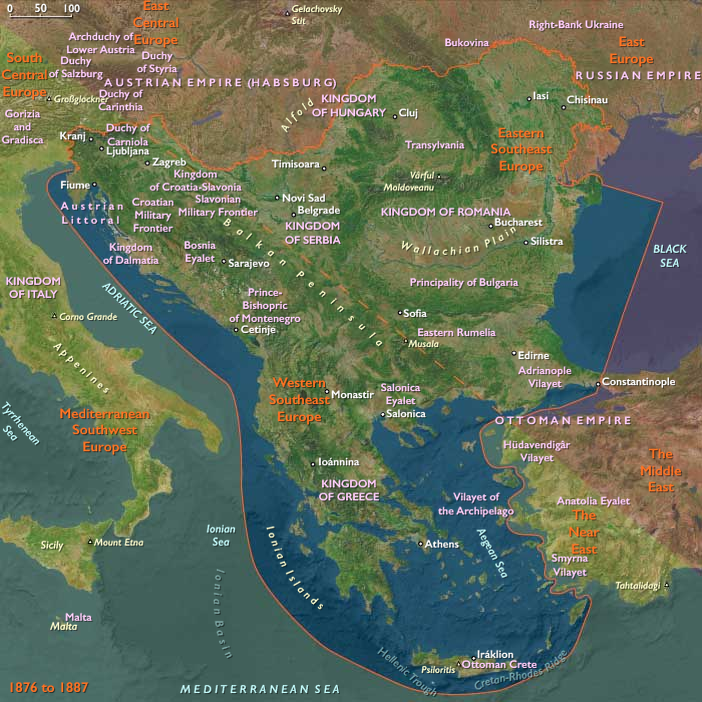
Southeast Europe
View →Subregions