
The Ottomans also continue to challenge the …
Years: 1540 - 1683
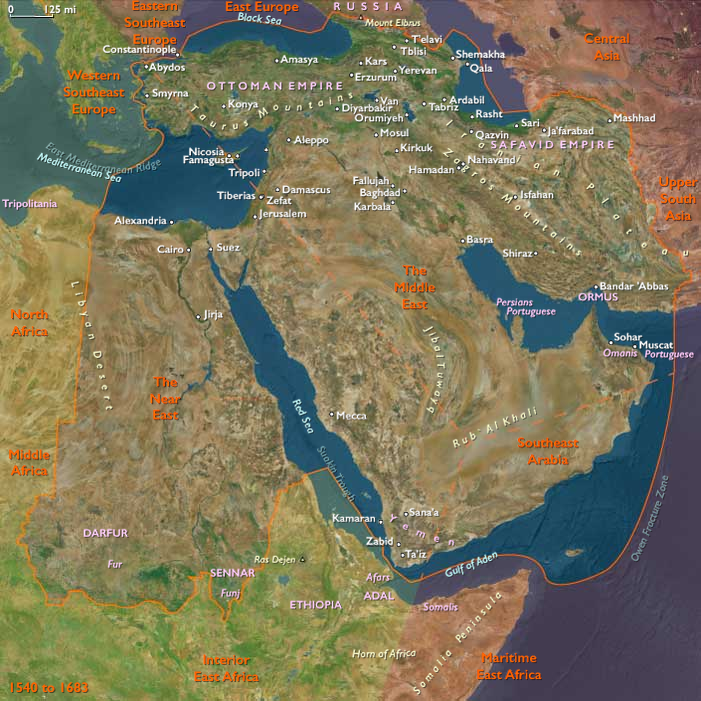
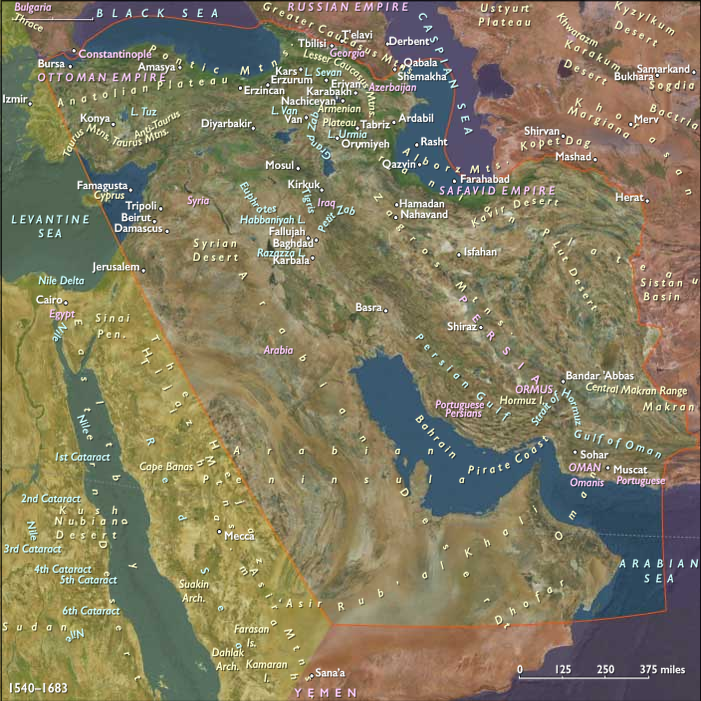
The Ottomans also continue to challenge the Safavis for control of Azarbaijan and the Caucasus until the Treaty of Qasr-e Shirin in 1639 establishes frontiers in both Iraq and in the Caucasus that remain virtually unchanged.
The Safavi state reaches its apogee during the reign of Shah Abbas (1587-1629).
The shah gains breathing space to confront and defeat the Uzbeks by signing a largely disadvantageous treaty with the Ottomans.
He then fights successful campaigns against the Ottomans, reestablishing Iranian control over Iraq, Georgia, and parts of the Caucasus.
He counterbalances the power of the Qizilbash by creating a body of troops composed of enslaved Georgians and Armenians who are loyal to the person of the shah.
He extends state and crown lands and the provinces directly administered by the state, at the expense of the Qizilbash chiefs.
He relocates tribes to weaken their power, strengthens the bureaucracy, and further centralizes the administration.
Locations
Groups
- Iranian peoples
- Georgians
- Arab people
- Transoxiana
- Khorasan, Greater
- Oghuz Turks
- Muslims, Sunni
- Muslims, Shi'a
- Turkmen, Iraqi
- Sufism
- Turkmen people
- Mongols
- Uzbeks
- Ottoman Empire
- Qizilbash or Kizilbash, (Ottoman Turkish for "Crimson/Red Heads")
- Persia, Safavid Kingdom of
Topics
- Safavid conversion of Iran to Shia Islam
- Ottoman–Safavid War (1578–1590)
- Ottoman–Safavid War (1603–1618)
- Mughal-Persian War of 1622-23
- Ottoman–Safavid War, or Turko-Persian War of 1623-39
Subjects
Regions
Subregions
Years: 1540 - 1683
Locations
Groups
- Iranian peoples
- Georgians
- Arab people
- Transoxiana
- Khorasan, Greater
- Oghuz Turks
- Muslims, Sunni
- Muslims, Shi'a
- Turkmen, Iraqi
- Sufism
- Turkmen people
- Mongols
- Uzbeks
- Ottoman Empire
- Qizilbash or Kizilbash, (Ottoman Turkish for "Crimson/Red Heads")
- Persia, Safavid Kingdom of
Topics
- Safavid conversion of Iran to Shia Islam
- Ottoman–Safavid War (1578–1590)
- Ottoman–Safavid War (1603–1618)
- Mughal-Persian War of 1622-23
- Ottoman–Safavid War, or Turko-Persian War of 1623-39
Subjects
Regions
Subregions