Wellington’s 1813 Campaign – The Northern Advance…
May 1813 CE
Wellington’s 1813 Campaign – The Northern Advance and the Road to Vitoria
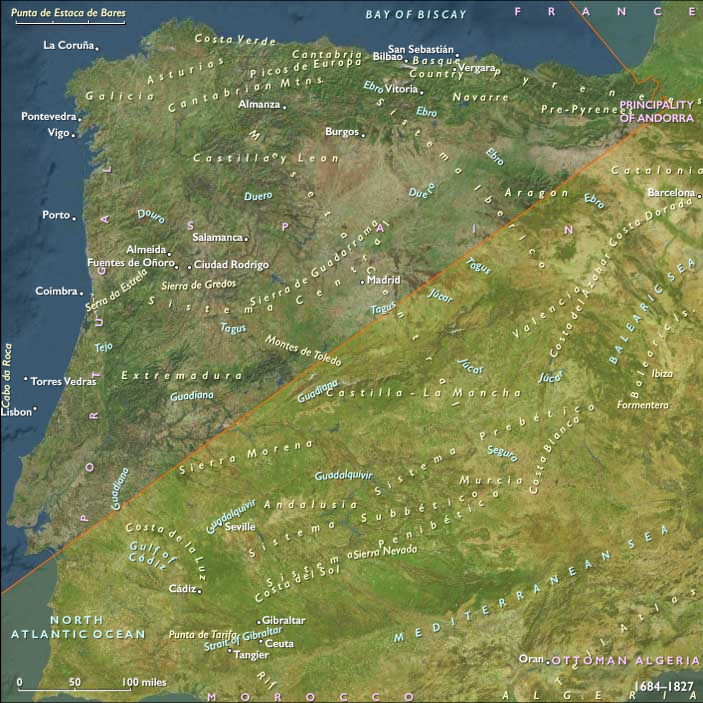
After his failed siege of Burgos in late 1812, Wellington retreated to Portugal, regrouping for a final decisive offensive in Spain. By 1813, with Napoleon facing war in Central Europe, Wellington planned a strategic shift that would force the French out of Spain permanently.
Strategic Shift – Moving the British Supply Base
- Wellington relocated his army’s supply base from Lisbon to Santander, on Spain’s northern coast.
- This move shortened supply lines and allowed his Anglo-Portuguese army to operate deeper into Spain.
- The shift enabled a faster advance, preventing the French from concentrating their forces effectively.
The Anglo-Portuguese Offensive – May 1813
- In late May 1813, Wellington launched his long-awaited counteroffensive, sweeping northward into Spain.
- The Allies seized Burgos, capturing a key strategic stronghold that had previously resisted them in 1812.
- Wellington outflanked the French, forcing King Joseph Bonaparte’s army into the valley of the River Zadorra, near Vitoria.
The Road to Vitoria – A Decisive Moment
- With Joseph Bonaparte’s army trapped, the French position in Spain was critically weakened.
- Wellington prepared for the climactic battle of the campaign, which would take place at Vitoria on June 21, 1813.
- The upcoming battle would determine the fate of French rule in Spain, setting the stage for the final expulsion of the French from the Iberian Peninsula.
Conclusion – The Beginning of the End for the French in Spain
Wellington’s strategic northward advance, combined with the outflanking of the French army, marked a major turning point in the Peninsular War. The French retreat from Madrid and the loss of Burgos set the conditions for the decisive Battle of Vitoria, which would soon shatter French control in Spain once and for all.
Locations
People
Groups
Commodities
Subjects
Regions
Southwest Europe
View →Subregions