
Event
The Social Contract, or Of the Social…
The Social Contract, or Of the Social Contract, or Principles of Political Law (French: Du contrat social ou Principes du droit politique; 1762) by Jean-Jacques Rousseau, is a book in which Rousseau theorizes about the best way to establish a political community in the face of the problems of commercial society, which he had already identified in his Discourse on Inequality (1754).
The Social Contract will help inspire political reforms or revolutions in Europe, especially in France.
The Social Contract argues against the idea that monarchs are divinely empowered to legislate.
Rousseau asserts that only the people, who are sovereign, have that all-powerful right.
Emile, or On Education or Émile, or Treatise on Education (French: Émile, ou De l’éducation) is a treatise on the nature of education and on the nature of man written by Rousseau, who considers it to be the "best and most important" of all his writings.
Due to a section of the book entitled "Profession of Faith of the Savoyard Vicar", Emile is banned in Paris and Geneva and is publicly burned in 1762, the year of its first publication.
During the French Revolution, Emile will serve as the inspiration for what will become a new national system of education.
-
{# Image navigates to the detail page; the magnifying-glass chip is the only Fancybox lightbox trigger (kept a separate sibling — anchors can't nest). #}
 The North Atlantic Lands
World
-
{# Image navigates to the detail page; the magnifying-glass chip is the only Fancybox lightbox trigger (kept a separate sibling — anchors can't nest). #}
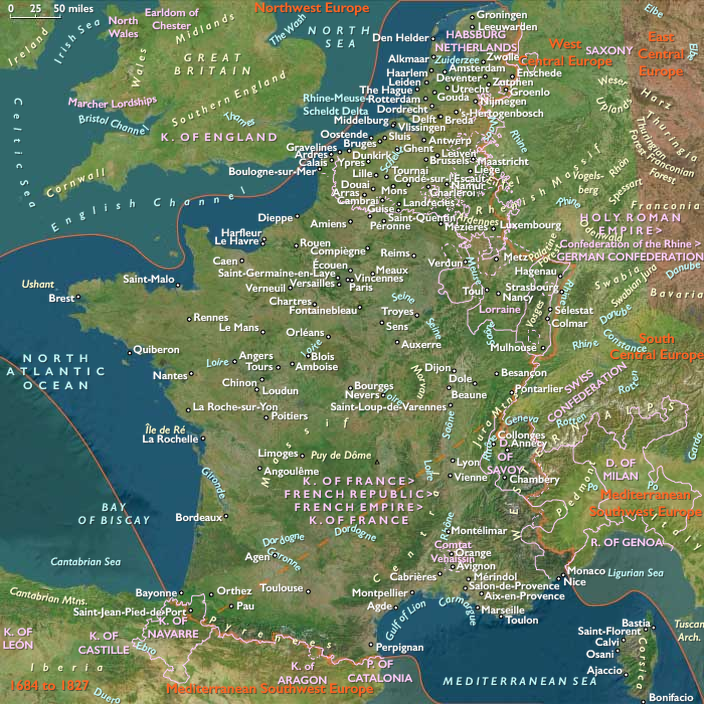 West Europe
Region
-
{# Image navigates to the detail page; the magnifying-glass chip is the only Fancybox lightbox trigger (kept a separate sibling — anchors can't nest). #}
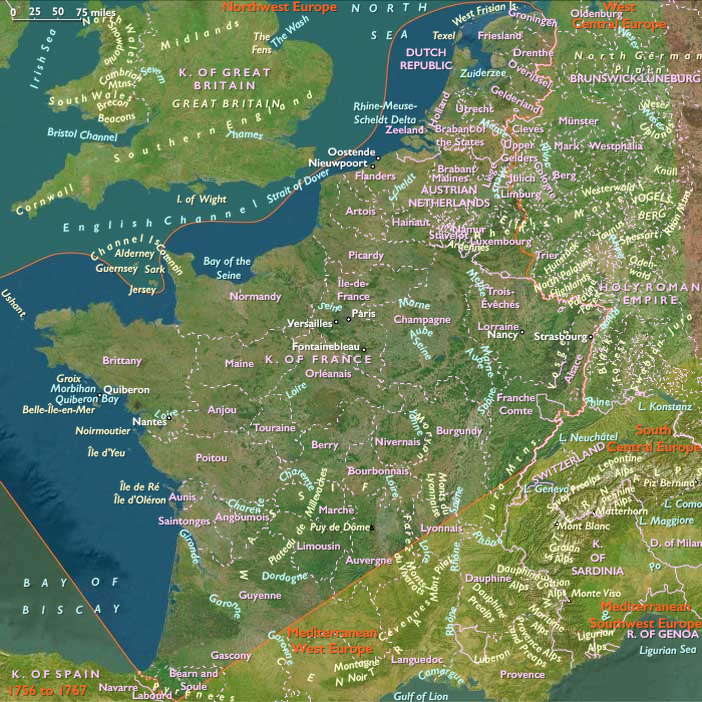 Atlantic West Europe
Subregion
