The Jagiellons will never recover their hegemony…
1396 CE to 1539 CE
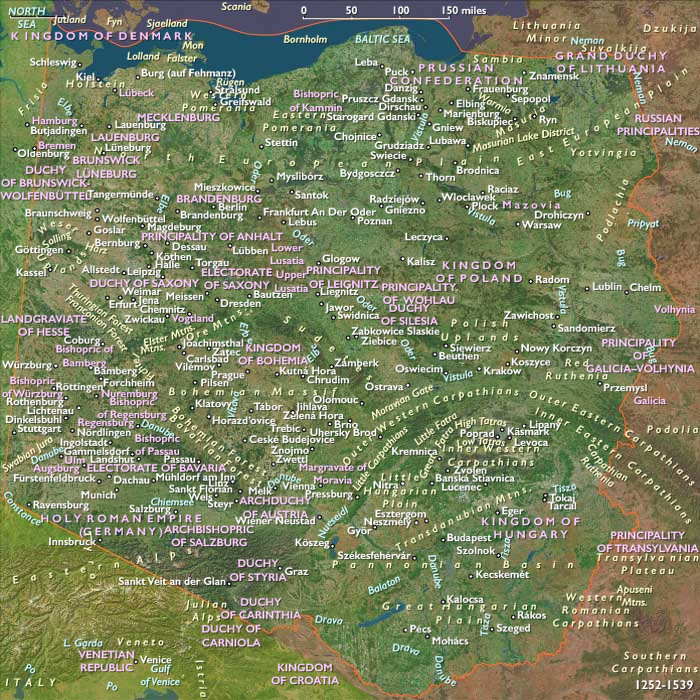
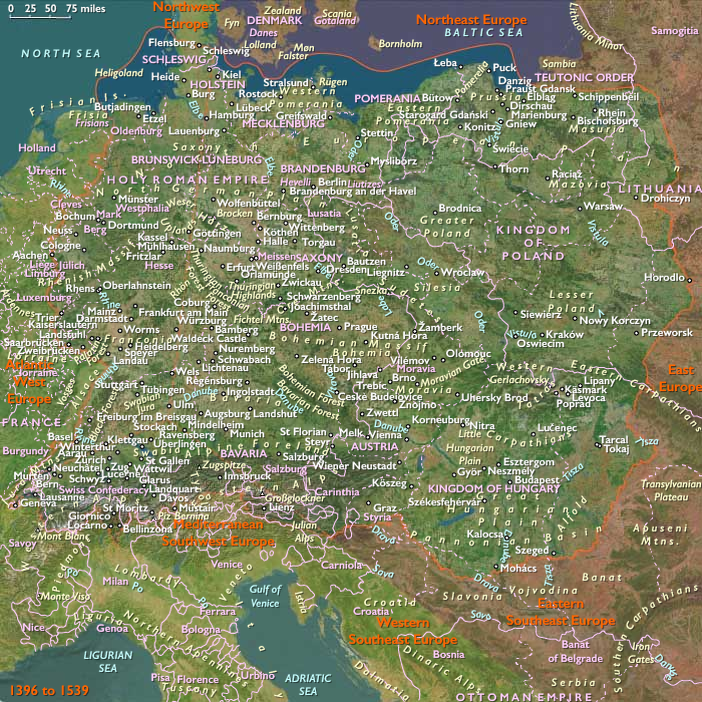
The Jagiellons will never recover their hegemony over Central Europe, and the ascendancy of the Ottomans foreshadows the eventual subjection of the entire region to foreign rule; but the half century that follows the Battle of Mohács marks an era of stability, affluence, and cultural advancement unmatched in national history and widely regarded by Poles as their country's golden age.
The Teutonic Knights have been reduced to vassalage, and despite the now persistent threats posed by the Turks and an emerging Russian colossus, Poland-Lithuania manages to defend its status as one of the largest and most prominent states of Europe.
The wars and diplomacy of the century yield no dramatic expansion but shield the country from significant disturbance and permit significant internal development.
An "Eternal Peace" concluded with the Ottoman Turks in 1533 lessens but does not remove the threat of invasion from that quarter.
A lucrative agricultural export market is the foundation for the kingdom's wealth.
A population boom in Western Europe prompts an increased demand for foodstuffs; Poland-Lithuania becomes Europe's foremost supplier of grain, which is shipped abroad from the Baltic seaport of Gdansk.
Aside from swelling Polish coffers, the prosperous grain trade supports other notable aspects of national development.
It reinforces the preeminence of the landowning nobility that receives its profits, and it helps to preserve a traditionally rural society and economy at a time when Western Europe has begun moving toward urbanization and capitalism.
Locations
Groups
Topics
Commodities
Subjects
Regions
Central Europe
View →Subregions