
Event
The Mughals in their heyday have a…
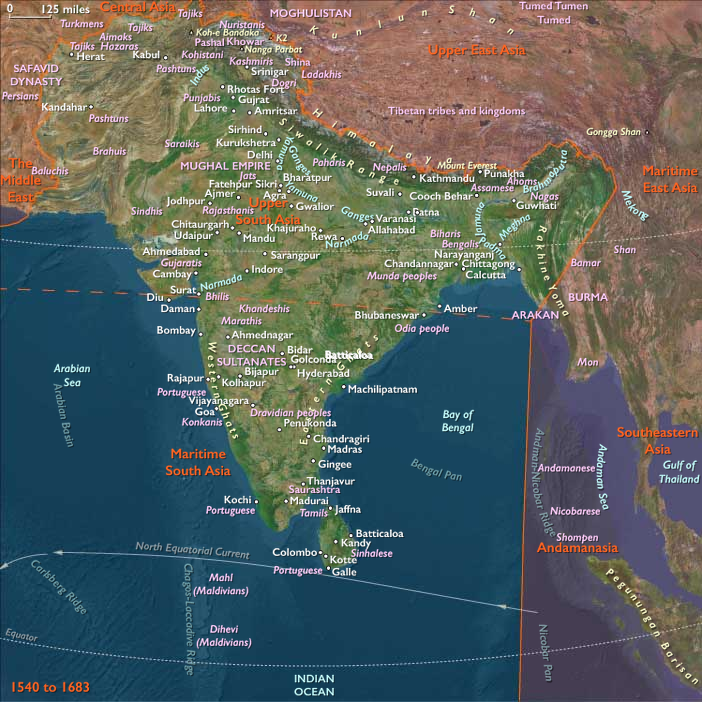
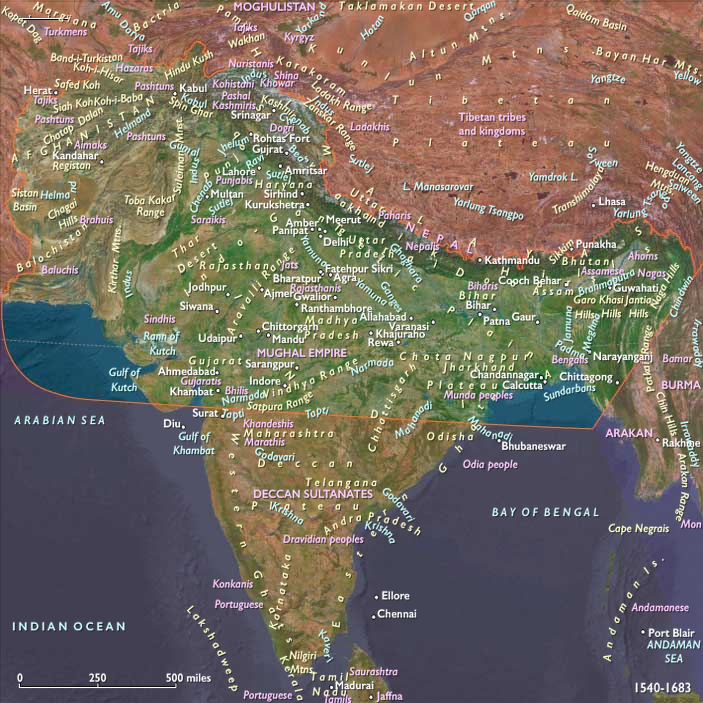
The Mughals in their heyday have a profound and lasting effect on Bengal.
When Akbar ascends the throne at Delhi, a road connecting Bengal with Delhi is under construction and a postal service is being planned as a step toward drawing Bengal into the operations of the empire.
Akbar implements the present-day Bengali calendar, and his son, Jahangir (1605-27), introduces civil and military officials from outside Bengal who receive rights to collect taxes on land.
The development of the zamindar (tax collector and later landlord) class and its later interaction with the British will have immense economic and social implications for twentieth-century Bengal.
Bengal is treated as the "breadbasket of India" and, as the richest province in the empire, is drained of its resources to maintain the Mughal army.
The Mughals, however, do not expend much energy protecting the countryside or the capital from Arakanese or Portuguese pirates; in one year as many as forty thousand Bengalis are seized by pirates to be sold as slaves, and still the central government does not intervene.
Local resistance to imperial control forces the emperor to appoint powerful generals as provincial governors.
Yet, despite the insecurity of the Mughal regime, Bengal prospers.
Agriculture expands, trade is encouraged, and Dhaka becomes one of the centers of the textile trade in South Asia.
-
{# Image navigates to the detail page; the magnifying-glass chip is the only Fancybox lightbox trigger (kept a separate sibling — anchors can't nest). #}
 The Great Crossroads
World
-
{# Image navigates to the detail page; the magnifying-glass chip is the only Fancybox lightbox trigger (kept a separate sibling — anchors can't nest). #}
 South Asia
Region
-
{# Image navigates to the detail page; the magnifying-glass chip is the only Fancybox lightbox trigger (kept a separate sibling — anchors can't nest). #}
 Upper South Asia
Subregion
