
The Popish Recusants Act 1605 (3 Jac.1,…
December 1605 CE
The Popish Recusants Act 1605 (3 Jac.1, c. 4), an Act of the Parliament of England, quickly follows the Gunpowder Plot.
The Act forbids Roman Catholics from practicing the professions of law and medicine and from acting as a guardian or trustee; and it allows magistrates to search their houses for arms.
The Act also provides a new oath of allegiance, which denies the power of the Pope to depose monarchs.
The recusant is to be fined sixty pounds or to forfeit two-thirds of his land if he does not receive the sacrament of the Lord's Supper at least once a year in his Church of England parish church.
The Act also makes it high treason to obey the authority of Rome rather than the King.
James has changed his focus from the anxieties of English Catholics to the establishment of an Anglo-Scottish union.
He also has appointed Scottish nobles such as George Home to his court, which has proven unpopular with the Parliament of England.
Some Members of Parliament have made it clear that in their view, the "effluxion of people from the Northern parts" is unwelcome, and compares them to "plants which are transported from barren ground into a more fertile one".
Even more discontent results when the King allows his Scottish nobles to collect the recusancy fines.
There are five thousand five hundred and sixty convicted of recusancy in 1605, of whom one hundred and twelve were landowners.
The very few Catholics of great wealth who refuse to attend services at their parish church are fined twenty pounds per month.
Those of more moderate means have to pay two-thirds of their annual rental income; middle class recusants are fined one shilling a week, although the collection of all these fines is "haphazard and negligent".
When James came to power, almost five thousand pounds a year (equivalent to over ten million pounds as of 2008) was being raised by these fines.
People
Groups
Topics
Subjects
Regions
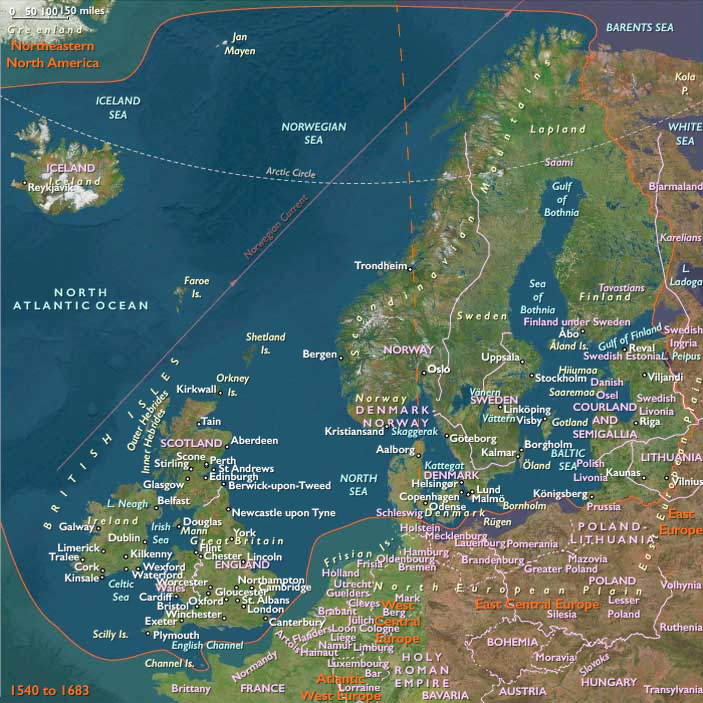
North Europe
View →Subregions
