Event
If Potosí silver production is the mainspring…
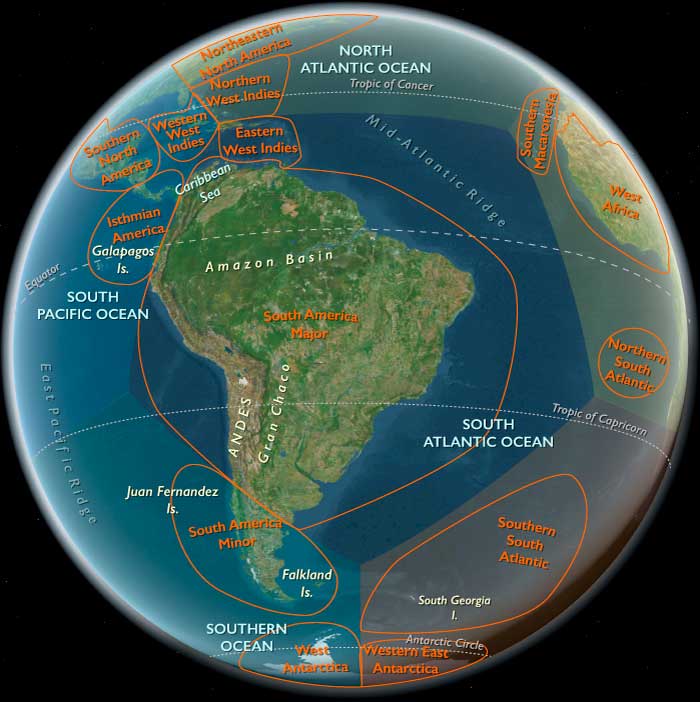
If Potosí silver production is the mainspring of this economic system, Lima is its hub.
"The city of the kings" (Los Reyes) had been founded by Pizarro as the capital of the new viceroyalty in 1535 in order to reorient trade, commerce, and power away from the Andes toward imperial Spain and Europe.
As the outlet for silver bullion on the Pacific, Lima and its nearby port, Callao, also receive and redistribute the manufactured goods from the metropolis for the growing settlements along the growth pole.
The two-way flow of imports and exports through Lima concentrates both wealth and administration, public and private, in the city.
As a result, Lima becomes the headquarters for estate owners and operators, merchants connecting their Andean trading operations with sources of supply in Spain, and all types of service providers, from artisans to lawyers, who need access to the system in a central place.
Not far behind come the governmental and church organizations established to administer the vast viceroyalty.
Finally, once population, commerce, and administration interact, major cultural institutions such as a university, a printing press, and theater follow suit.
The great architect of this colonial system is Francisco Toledo y Figueroa, who arrives in Lima in 1569, when its population is twenty-five hundred, and serves as viceroy until 1581.
Toledo, one of Madrid's ablest administrators and diplomats, works to expand the state, increase silver production, and generally reorganize the economy by instituting a series of major reforms during his tenure.
Native communities (ayllus) are concentrated into poorly located colonial settlements called reducciones to facilitate administration and the conversion of the native Americans to Christianity.
The Incan mita system is shifted from performing public works or military service to supplying compulsory labor for the mines and other key sectors of the economy and state.
Finally, various fiscal schemes, such as the tribute tax to be paid in coin and the forced purchase of Spanish merchandise, are levied on the indigenous population in order to force or otherwise induce it into the new monetary economy as "free wage" workers.
In these, as in many other instances, the Spaniards use whatever elements of the Andean political, social, and economic superstructure that serve their purposes and unhesitatingly modify or discard those that do not.
As a result of these and other changes, the Spaniards and their Creole successors come to monopolize control over the land, seizing many of the best lands abandoned by the massive native depopulation.
Gradually, the land tenure system becomes polarized.
One sector consists of the large haciendas, worked by native peasant serfs in a variety of labor arrangements and governed by their new overlords according to hybrid Andean forms of Iberian paternalism.
The other sector is made up of remnants of the essentially subsistence-based indigenous communities that persist and endure.
This arrangement leaves Peru with a legacy of one of the most unequal landholding arrangements in all of Latin America and a formidable obstacle to later development and modernization.
-
{# Image navigates to the detail page; the magnifying-glass chip is the only Fancybox lightbox trigger (kept a separate sibling — anchors can't nest). #}
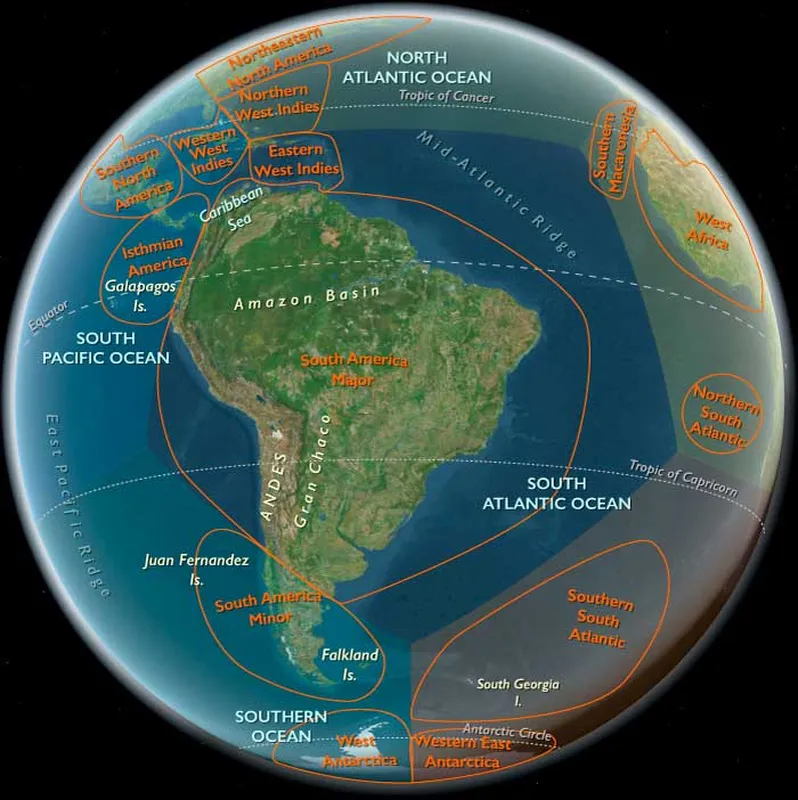 South America and The Eastern Isles
World
-
{# Image navigates to the detail page; the magnifying-glass chip is the only Fancybox lightbox trigger (kept a separate sibling — anchors can't nest). #}
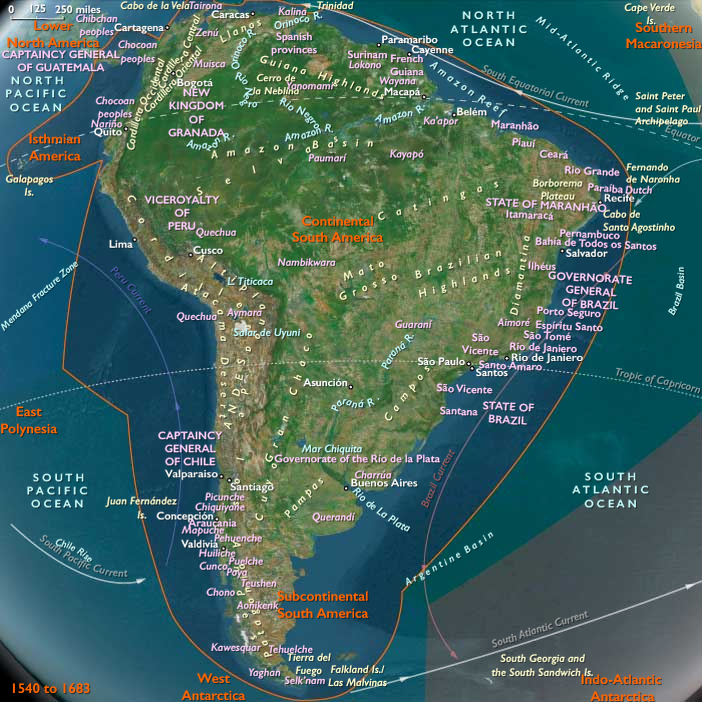 South America
Region
-
{# Image navigates to the detail page; the magnifying-glass chip is the only Fancybox lightbox trigger (kept a separate sibling — anchors can't nest). #}
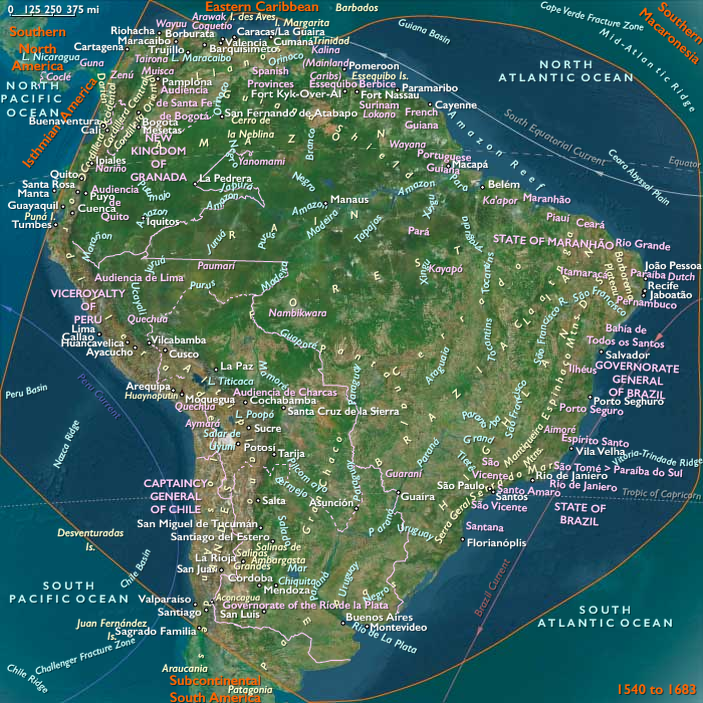 South America Major
Subregion