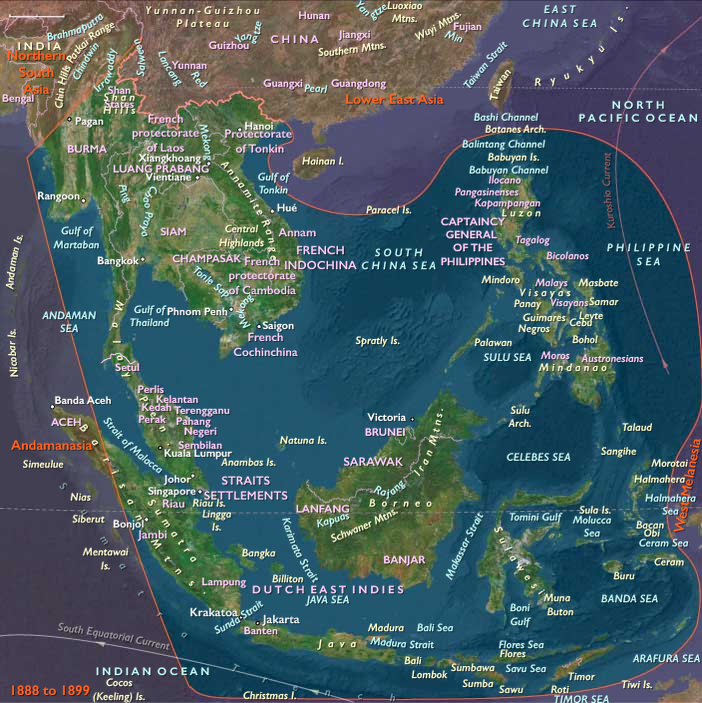
Controversies over visitation and secularization are persistent…
1888 CE to 1899 CE
Controversies over visitation and secularization are persistent themes in Philippine church history.
Visitation involves the authority of the bishops of the church hierarchy to inspect and discipline the religious orders, a principle laid down in church law and practiced in most of the Catholic world.
The friars have been successful in resisting the efforts of the archbishop of Manila to impose visitation; as a consequence, they operate without formal supervision except that of their own provincials or regional superiors.
Secularization means the replacement of the friars, who come exclusively from Spain, with Filipino priests ordained by the local bishop.
This movement, again, is successfully resisted, as friars through the centuries keep up the argument, often couched in crude racial terms, that Filipino priests are too poorly qualified to take on parish duties.
Although church policy dictates that religious orders relinquish parishes of countries converted to Christianity to indigenous diocesan priests, in 1870 only one hundred and eighty-one out of seven hundred and ninety-two parishes in the islands had Filipino priests.
The national and racial dimensions of secularization means that the issue has become linked with broader demands for political reform.
Groups
Commodities
Regions
Southeast Asia
View →Subregions