The Protestant Dutch hold sway over the…
August 1830 CE
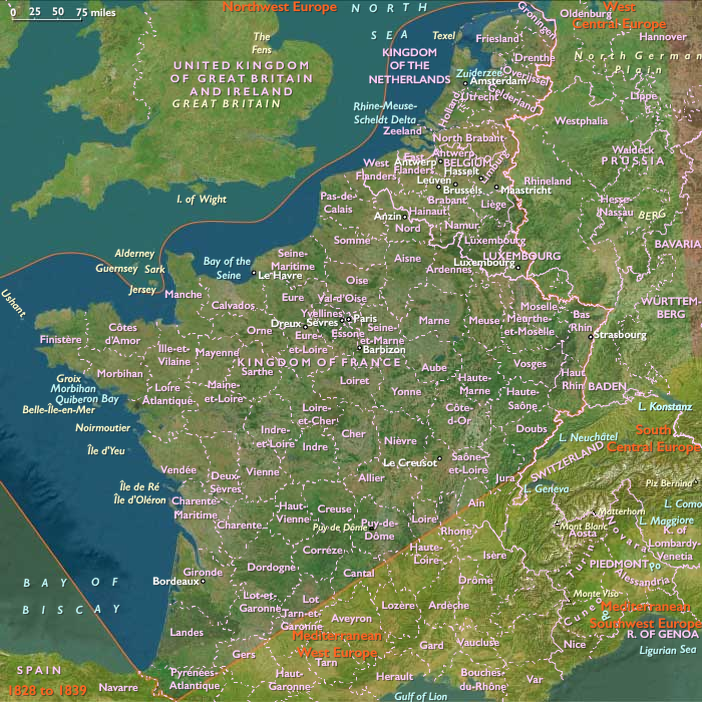
The Protestant Dutch hold sway over the economic, political, and social institutions of the United Provinces.
Although the former Austrian provinces, populated largely by French-speaking Catholic Walloons, possess nearly double the population of the Netherlands, these are assigned the same number of representatives in the States General.
The Walloons, having little influence over the economy, resent Dutch control.
At the most basic level, the Dutch, having always been a merchants' nation, are for free trade, while less developed local industries in the southern Netherlands call for the protection of tariffs.
Free trade lowers the price of bread, made from wheat imported through the reviving port of Antwerp; at the same time, these imports from the Baltic depress agriculture in French Catholic grain-growing regions.
The Walloons see the main political domination in the fact that King William I is Dutch, lives in the present day Netherlands, and largely ignores the Belgian demands for greater self-determination.
His more progressive and amiable representative living in Brussels, which is meant to be a twin capital, is the affable and moderate Crown Prince William, who has some popularity among the upper class but none among Walloon peasants and workers, whose Roman Catholicism conflicts with that of their Dutch King and his Calvinist beliefs.
Although there are (and remain today) many Roman Catholics in the present-day Netherlands, the southerners see themselves as purely Catholic and demand a higher role for the Church, and for Catholics, in their government.
Groups
Commodities
Subjects
Regions
West Europe
View →Subregions