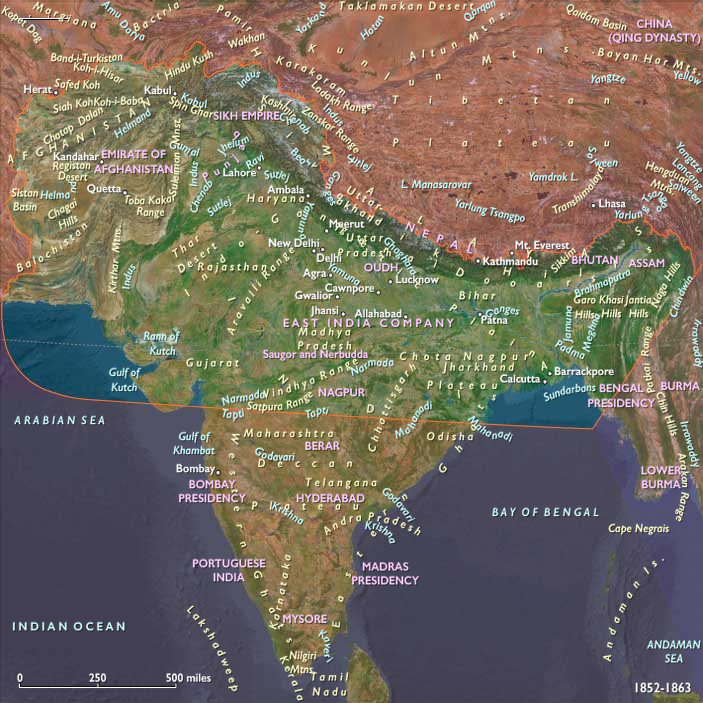
The uprising of 1857-58 becomes the great…
1852 CE to 1863 CE
The uprising of 1857-58 becomes the great divide in nineteenth-century South Asian history.
Understated by British historians as the Indian Mutiny or Sepoy Rebellion and referred to with some exaggeration by later Indian nationalists as the First War of Independence, the uprising nevertheless heralds the formal end of the Mughal Empire and marks the end of company rule in India as well.
In general, the uprising is a reaction to British expansionism and the outcome of the policies of modernization and annexation of Governor General Lord Dalhousie (1848-56), especially in Oudh (Avadh, now part of the Indian state of Uttar Pradesh) in 1856.
The immediate spark for mutiny by the sepoys (Indian soldiers employed by the East India Company) is the introduction of the new Enfield rifle, which has cartridges, allegedly greased with cow or pig fat, the tips of which have to be bitten off before loading.
Both Muslim and Hindu soldiers are outraged at this offense to their religious scruples and refuse to comply.
British officers respond by summarily dismissing regiment after regiment from the Bengal Army for refusing to load their weapons.
The mutiny is ignited at the cantonment at Meerut, north of Delhi, when all three of the sepoy regiments rise in revolt against the British, killing some British officers before heading for Delhi to restore Bahadur Shah II to imperial glory.
Although the area of fighting is limited to northern and central India and participation is limited to sepoys of the Bengal army and some princely states, the uprisings last a year and are a severe blow to British confidence.
In putting down the rebellion, British troops are aided substantially by their recently recruited troops from the Punjab.
Locations
Groups
Topics
Regions
South Asia
View →Subregions