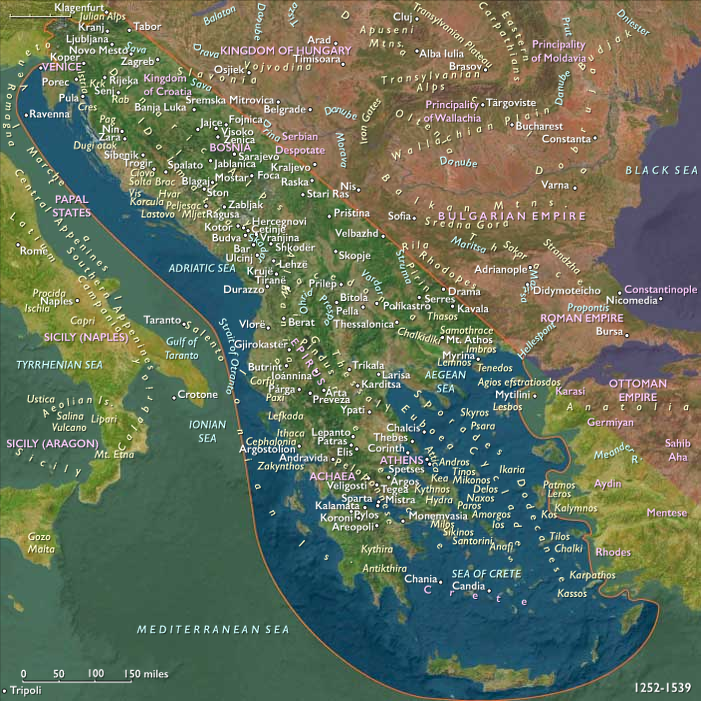
Much of the Greek peninsula had been…
1396 CE to 1539 CE
By the beginning of the fifteenth century, the Ottoman advance means that Byzantine territory in Greece is limited mainly to its now-largest city, Thessaloniki, and the Peloponnese (Despotate of the Morea).
After the fall of Constantinople to the Ottomans in 1453, the Morea is the last remnant of the Byzantine Empire to hold out against the Ottomans.
However, this, too, falls to the Ottomans in 1460, completing the Ottoman conquest of mainland Greece.
With the Turkish conquest, many Byzantine Greek scholars, who up until now are largely responsible for preserving Classical Greek knowledge, flee to the West, taking with them a large body of literature and thereby significantly contributing to the Renaissance.
Groups
Greeks, Medieval (Byzantines)
View →
Serbs (South Slavs)
View →
Roman Empire, Eastern: Komnenos dynasty, restored
View →
Roman Empire, Eastern: Angelid dynasty
View →
Epirus, Despotate of
View →
Serbia, Kingdom of
View →
Thessalonica, East Roman Theme of
View →
Achaea, Principality of
View →
Ottoman Emirate
View →
Ottoman Emirate
View →
Morea, Despotate of
View →
Ottoman Empire
View →
Subjects
Regions
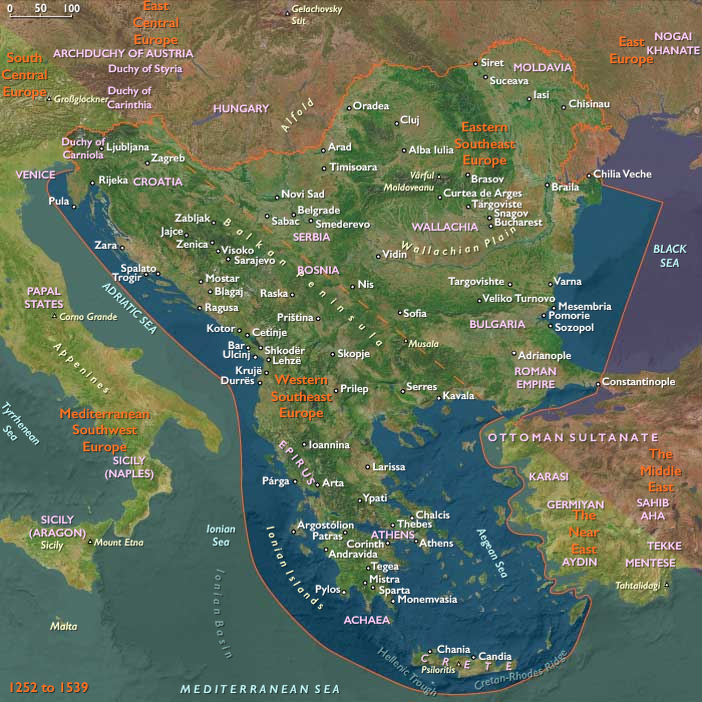
Southeast Europe
View →Subregions