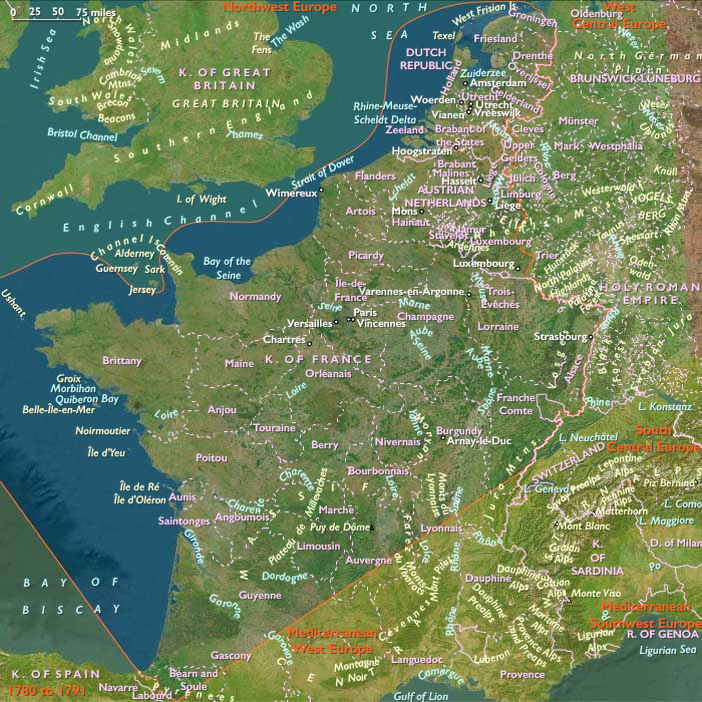
The city of Paris is in a…
July 1789 CE
The partisans of the Third Estate in France, now under the control of the Bourgeois Militia of Paris (soon to become Revolutionary France's National Guard), had earlier stormed the Hôtel des Invalides without meeting significant opposition.
Their intention had been to gather the weapons held there (twenty-nine thousand to thirty-two muskets, but without powder or shot).
The commandant at the Invalides had in the previous few days taken the precaution of transferring two hundred and fifty barrels of gunpowder to the Bastille for safer storage.
At this point, the Bastille is nearly empty, housing only seven prisoners: four forgers, two "lunatics" and one "deviant" aristocrat, the Comte de Solages (the Marquis de Sade had been transferred out ten days earlier).
The high cost of maintaining a garrisoned medieval fortress, for what is seen as having a limited purpose, had led to a decision being made shortly before the disturbances began to replace it with an open public space.
Amid the tensions of July 1789, the building remains as a symbol of royal tyranny.
The regular garrison consists of eighty-two invalides (veteran soldiers no longer suitable for service in the field).
It had however been reinforced on July 7 by thirty-two grenadiers of the Swiss Salis-Samade Regiment from the regular troops on the Champ de Mars.
The walls mount eighteen eight-pound guns and twelve smaller pieces.
The governor is Bernard-René de Launay, son of the previous governor and actually born within the Bastille.
The official list of vainqueurs de la Bastille (conquerors of the Bastille) subsequently compiled will have nine hundred and fifty-four names, and the total of the crowd is probably fewer than one thousand.
A breakdown of occupations included in the list indicates that the majority were local artisans, together with some regular army deserters and a few distinctive categories such as twenty-one wine merchants.
The crowd gathers outside around mid-morning, calling for the surrender of the prison, the removal of the cannon and the release of the arms and gunpowder.
Two representatives of the crowd outside are invited into the fortress and negotiations begin, and another is admitted around noon with definite demands.
The negotiations drag on while the crowd grows and became impatient.
Locations
Regions
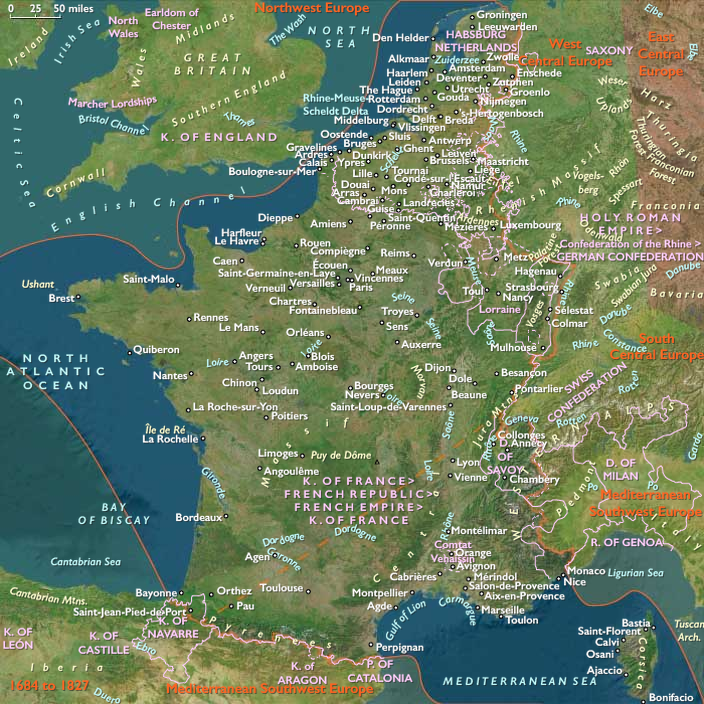
West Europe
View →Subregions