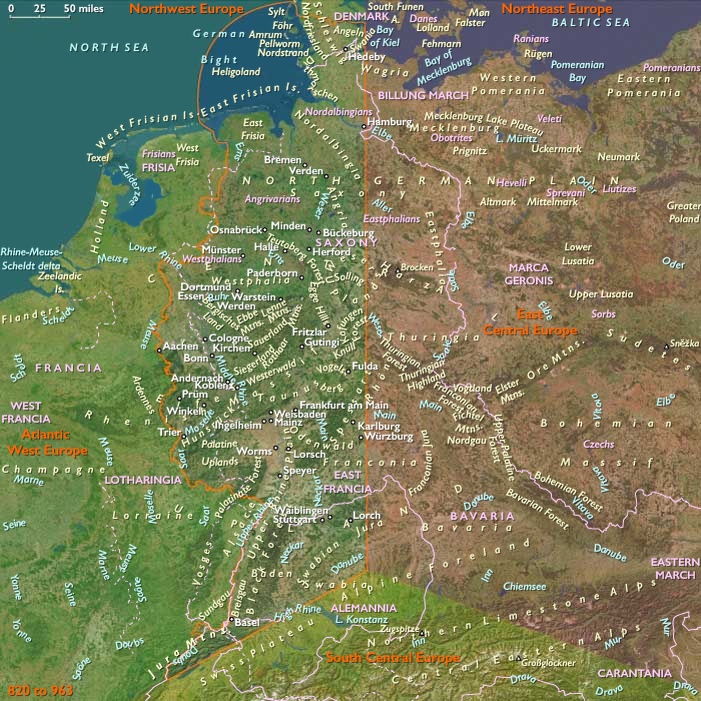
Charlemagne’s Expansion and the Reunification of Western…
796 CE to 807 CE
Charlemagne’s Expansion and the Reunification of Western Europe
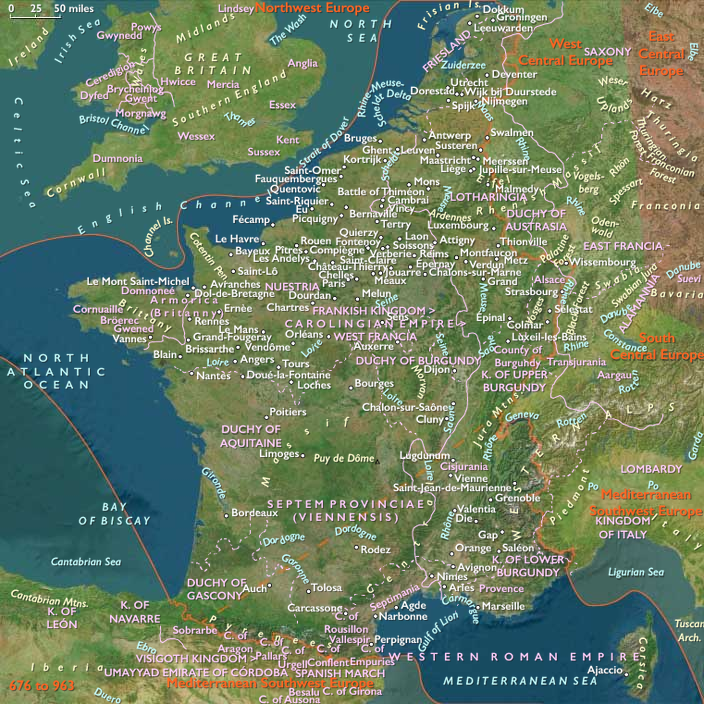
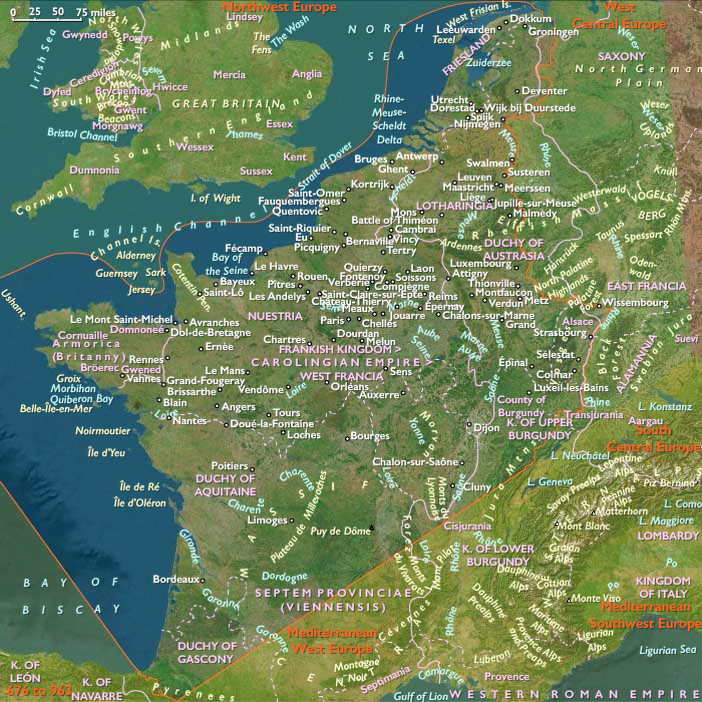
During the reign of Charlemagne, the Carolingian Empire comes to dominate most of Western Europe, mirroring the territorial expanse once controlled by the Western Roman Empire. However, unlike the Romans, whose influence rarely extended beyond the Rhine, Charlemagne pushes eastward, permanently incorporating Germanic territories into his empire and fundamentally reshaping the political landscape of Central Europe.
The Conquest of the Germanic Tribes
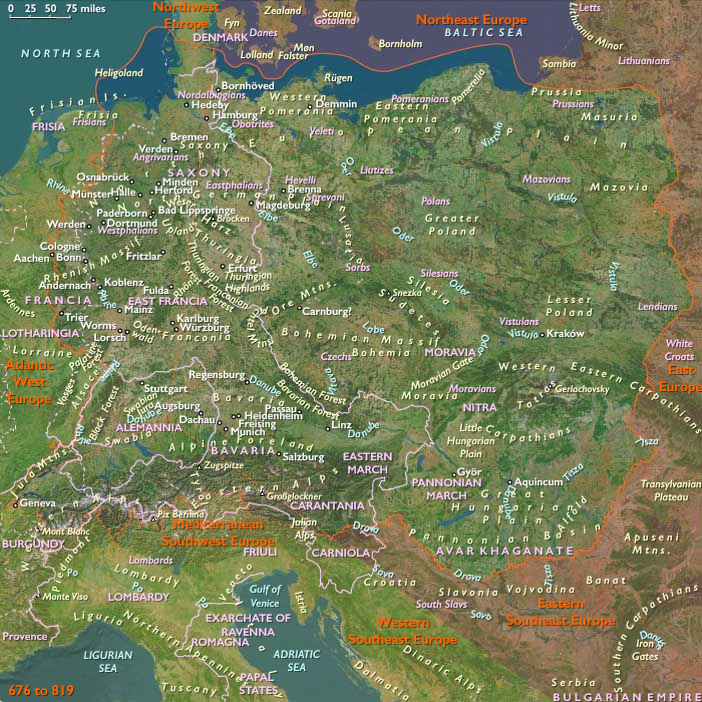
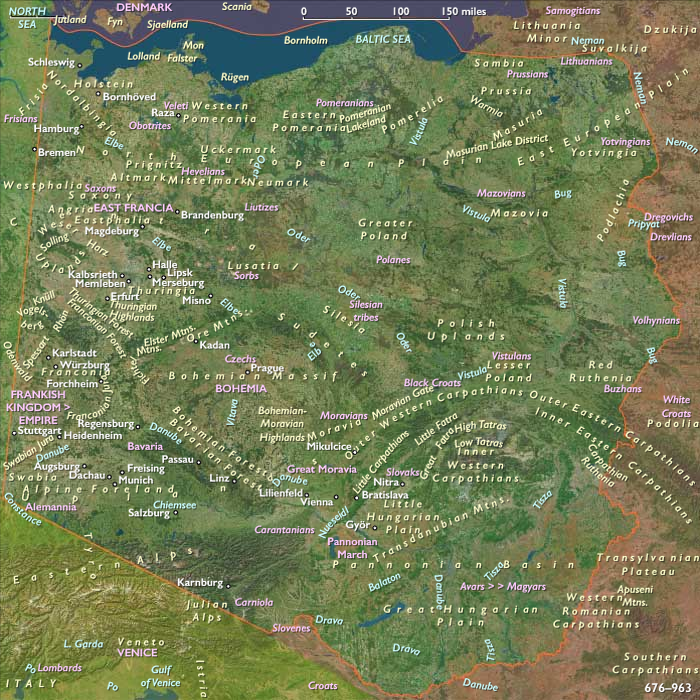
Whereas Rome’s eastern frontier in Gaul largely stopped at the Rhine, with only temporary incursions into Germania—most notably ending in disaster at the Battle of the Teutoburg Forest (9 CE)—Charlemagne decisively subjugates the Germanic tribes, pushing his empire’s borders to the Elbe River. His key campaigns include:
- The Saxon Wars (772–804) – Charlemagne annihilates Saxon resistance, forcibly Christianizing the Saxonsand incorporating their lands into the empire.
- The Bavarian Campaign (787–788) – The submission of Duke Tassilo III brings Bavaria firmly under Frankish rule.
- The Avar Wars (791–796) – Charlemagne destroys the Avar Khaganate, extending Frankish influence deep into Central Europe.
- The Slavic Frontier – His campaigns into Bohemia and Moravia weaken Slavic resistance, leading to long-term Frankish influence in Eastern Europe.
Geopolitical Influence Beyond the Empire
Charlemagne’s empire exerts influence far beyond its formal borders, including:
- The Russian Steppes – Through alliances with Slavic and steppe peoples, the Carolingians establish diplomatic and military influence extending toward Kievan Rus' and beyond.
- The Papal States – His support of the papacy cements Frankish dominance over Italy, creating a precedent for later imperial rule.
- The Iberian March – Establishing a buffer zone against Muslim Al-Andalus, Charlemagne extends Frankish control into Spain, securing a military frontier against the Umayyads.
Legacy: Foundations of the Holy Roman Empire
By uniting much of Western and Central Europe, Charlemagne revives the idea of a Western Roman Empire, a vision later realized in the form of the Holy Roman Empire (962), established by Otto I. His subjugation of Germania permanently shifts the power center of European civilization eastward, making the German-speaking heartlands integral to medieval and early modern European politics.
Though Charlemagne’s empire would fragment after his death, its political, religious, and cultural influence endures, shaping the future of medieval Europe and defining the boundaries of Christendom for centuries to come.