
Andamanasia (4,365 – 2,638 BCE) Late Neolithic/Chalcolithic…
4365 BCE to 2638 BCE
Andamanasia (4,365 – 2,638 BCE) Late Neolithic/Chalcolithic — Canoe Economies and Outer-Island Exchange
Geographic and Environmental Context
Andamanasia encompasses:
-
Andaman Islands (North, Middle, South Andaman) and Nicobar Islands.
-
Aceh in northern Sumatra, with nearby islands (Simeulue, Nias, Batu, Mentawai).
-
The Cocos (Keeling) Islands.
-
The Preparis, Coco, and Little Coco Islands (off Myanmar).
Anchors: North–South Andaman coasts and reefs, Nicobar Great Channel, Aceh’s Weh Island and Lhokseumawe–Banda Aceh corridor, Simeulue–Nias–Mentawai arc, Preparis/Coco islets, Cocos (Keeling) lagoon.
-
Nicobars as Bay hub; Aceh/Nias/Mentawai coastal villages expanded; Andamans maintained foraging identity.
Climate & Environmental Shifts
-
Monsoon reliable but cyclones episodic; high productivity sustained.
Subsistence & Settlement
-
Village agriculture expanded: yam/taro/banana, coconut/pandanus, fishing and pig-raising.
-
Canoe villages ringed lagoons.
-
Andamans: maintained hunter-forager marine economies.
Technology & Material Culture
-
Pottery widespread; copper ornaments begin in Aceh/Mentawai; barkcloth and weaving.
-
Large outrigger canoes.
Movement & Interaction Corridors
-
Canoe economies: dried fish, copra, resin, shells moved between Nicobars and Aceh.
-
Cocos/Preparis lightly visited; no permanent villages.
Cultural & Symbolic Expressions
-
Feasting during inter-island voyages; ancestor cults maintained.
Environmental Adaptation & Resilience
-
Transported landscapes (coconut groves, yam gardens) stabilized subsistence.
Transition
By 2,638 BCE, Andamanasia was embedded in regional Bay exchange
Images
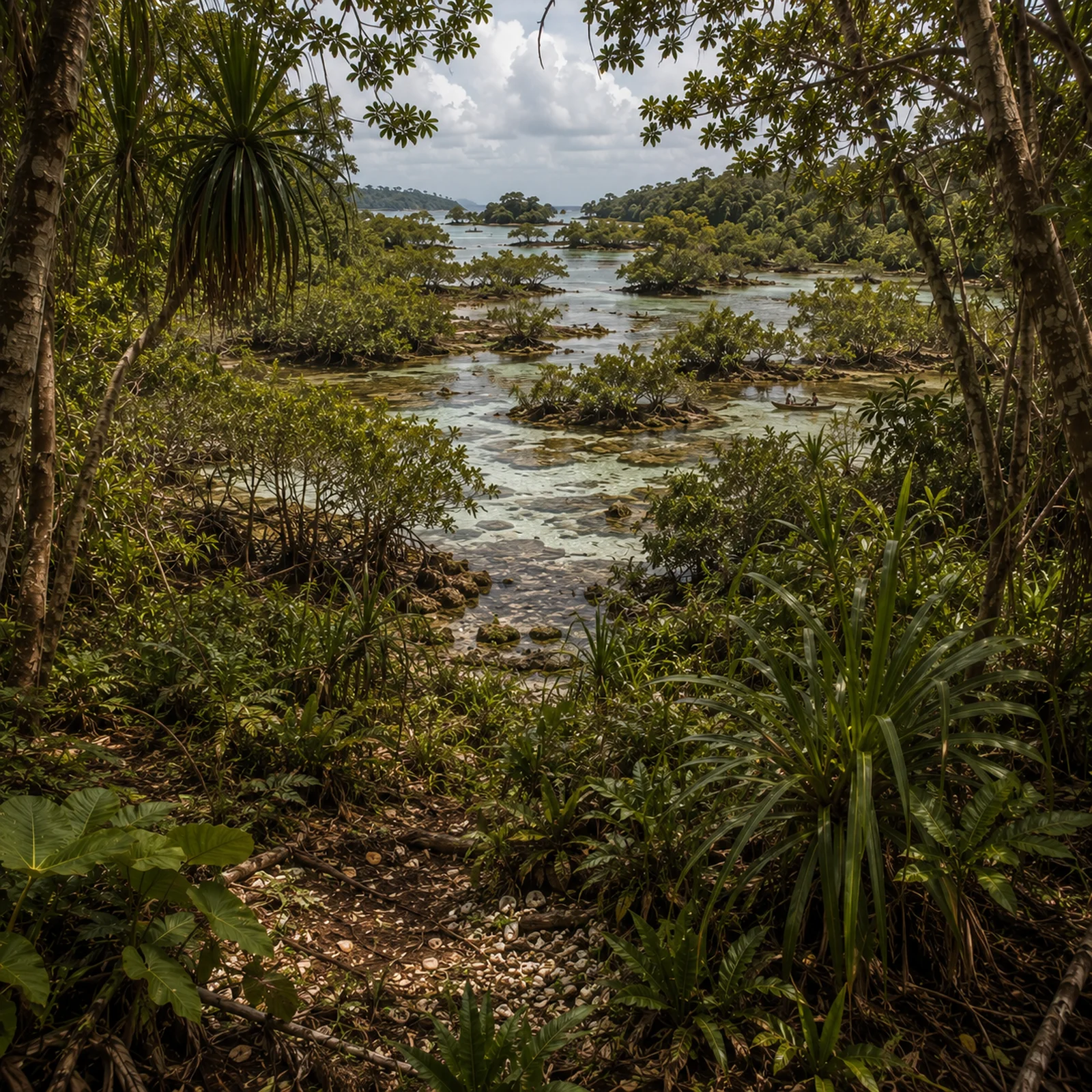
Andamanasia in the Late Holocene
Groups
Subjects
Regions

Southeast Asia
View →Subregions
