
Filters:
Chile—cut off to the north by desert, …
Years: 1540 - 1683
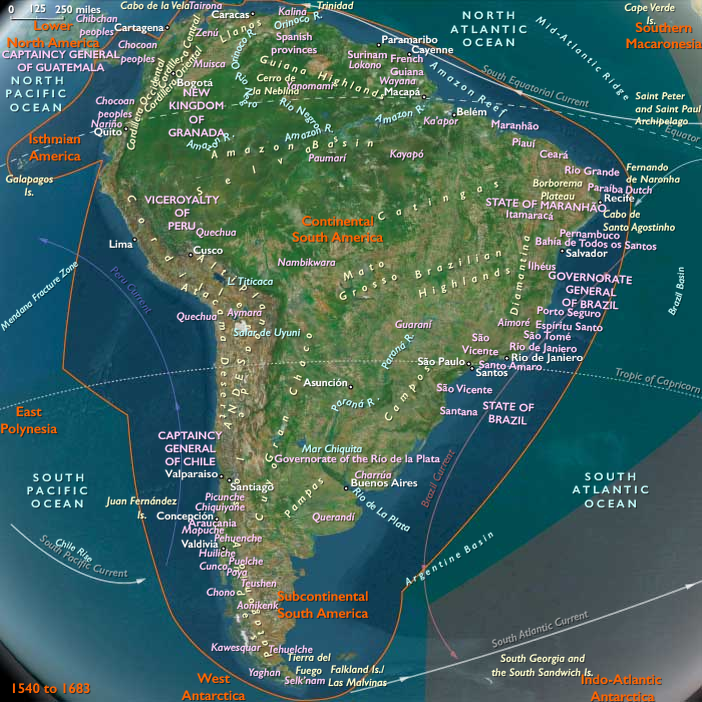
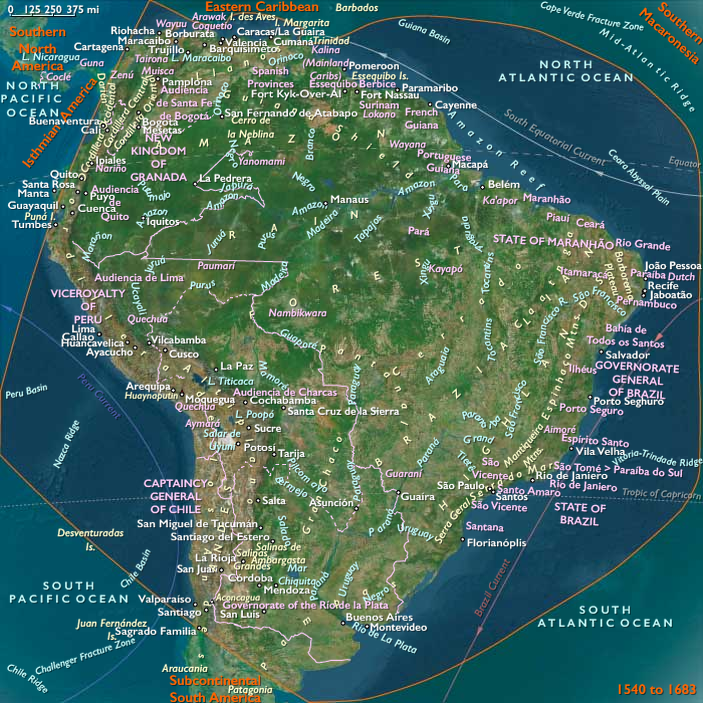
Chile—cut off to the north by desert, to the south by the Araucanians, to the east by the Andes Mountains, and to the west by the ocean—becomes one of the most centralized, homogeneous colonies in Spanish America.
Serving as a sort of frontier garrison, the colony finds itself with the mission of forestalling encroachment by Araucanians and by Spain's European enemies, especially the English and the Dutch.
In addition to the Araucanians, buccaneers and English adventurers menace the colony, as is shown by Sir Francis Drake's 1578 raid on Valparaiso, the principal port.
Because Chile hosts one of the largest standing armies in the Americas, it is one of the most militarized of the Spanish possessions, as well as a drain on the treasury of Peru.
Throughout the colonial period, the Spaniards engage in frontier combat with the Araucanians, who control the territory south of the Rio Bio-Bio (about five hundred kilometers south of Santiago) and wage guerrilla warfare against the invaders.
During many of those years, the entire southern region is impenetrable by Europeans.
In the skirmishes, the Spaniards take many of their defeated foes as slaves.
Missionary expeditions to Christianize the Araucanians prove risky and often fruitless.
Most European relations with the native Americans are hostile, resembling those later existing with nomadic tribes in the United States.
The Spaniards generally treat the Mapuche as an enemy nation to be subjugated and even exterminated, in contrast to the way the Incas treated the Mapuche, as a pool of subservient laborers.
Nevertheless, the Spaniards do have some positive interaction with the Mapuche.
Along with warfare, there also occurs some miscegenation, intermarriage, and acculturation between the colonists and the indigenous people.
Serving as a sort of frontier garrison, the colony finds itself with the mission of forestalling encroachment by Araucanians and by Spain's European enemies, especially the English and the Dutch.
In addition to the Araucanians, buccaneers and English adventurers menace the colony, as is shown by Sir Francis Drake's 1578 raid on Valparaiso, the principal port.
Because Chile hosts one of the largest standing armies in the Americas, it is one of the most militarized of the Spanish possessions, as well as a drain on the treasury of Peru.
Throughout the colonial period, the Spaniards engage in frontier combat with the Araucanians, who control the territory south of the Rio Bio-Bio (about five hundred kilometers south of Santiago) and wage guerrilla warfare against the invaders.
During many of those years, the entire southern region is impenetrable by Europeans.
In the skirmishes, the Spaniards take many of their defeated foes as slaves.
Missionary expeditions to Christianize the Araucanians prove risky and often fruitless.
Most European relations with the native Americans are hostile, resembling those later existing with nomadic tribes in the United States.
The Spaniards generally treat the Mapuche as an enemy nation to be subjugated and even exterminated, in contrast to the way the Incas treated the Mapuche, as a pool of subservient laborers.
Nevertheless, the Spaniards do have some positive interaction with the Mapuche.
Along with warfare, there also occurs some miscegenation, intermarriage, and acculturation between the colonists and the indigenous people.
Locations
People
Groups
- Mapuche (Amerind tribe)
- Dutch people
- Christians, Roman Catholic
- English people
- England, (Tudor) Kingdom of
- Spaniards (Latins)
- Spain, Habsburg Kingdom of
- Chile (Spanish colony)
- Jesuits, or Order of the Society of Jesus
- Peru, Viceroyalty of
- Spain, Habsburg Kingdom of
- Netherlands, United Provinces of the (Dutch Republic)
Topics
- Colonization of the Americas, Spanish
- Arauco War
- Chile, Spanish Conquest of
- Drake's circumnavigation of the earth
- Piracy, Golden Age of
Commodoties
Subjects
Regions
Subregions
Related Events
Showing 10 events out of 43 total
Years: 1540 - 1683
Locations
People
Groups
- Mapuche (Amerind tribe)
- Dutch people
- Christians, Roman Catholic
- English people
- England, (Tudor) Kingdom of
- Spaniards (Latins)
- Spain, Habsburg Kingdom of
- Chile (Spanish colony)
- Jesuits, or Order of the Society of Jesus
- Peru, Viceroyalty of
- Spain, Habsburg Kingdom of
- Netherlands, United Provinces of the (Dutch Republic)
Topics
- Colonization of the Americas, Spanish
- Arauco War
- Chile, Spanish Conquest of
- Drake's circumnavigation of the earth
- Piracy, Golden Age of
Commodoties
Subjects
Regions
Subregions