
The Origins and Consolidation of the University…
1507 CE
The Origins and Consolidation of the University of Santiago de Compostela (1495–1507)
The University of Santiago de Compostela (USC), one of Spain’s oldest and most prestigious institutions, traces its roots back to 1495, when López Gómez de Mazoa, a local solicitor, founded a school for the poor called the Gramatic Academy with the support of the abbot of San Martiño Pinario.
Early Struggles and Papal Recognition (1495–1504)
- The Gramatic Academy was originally housed in the Monastery of San Paio de Antealtares.
- The school faced financial difficulties, raising doubts about its sustainability.
- In 1504, Pope Julius II issued a Papal Bull, formally recognizing the institution and allowing it to develop into a center of higher learning.
The University’s Consolidation Under Archbishop Alonso III de Fonseca (1507)
- The definitive transformation of the school into a university came under Alonso III de Fonseca, who was named Archbishop of Santiago de Compostela in 1507.
- Fonseca was a highly educated Renaissance figure and a patron of the arts, with ties to Erasmus of Rotterdam and other humanist thinkers.
- He purchased the old Pilgrim’s Hospital, transforming it into a university college.
- The Santiago Alfeo College (Colegio de Santiago Alfeo), later known as Fonseca College, was built and became the center of university life until the second half of the 18th century.
Legacy and Significance
- The University of Santiago de Compostela grew into a major institution of learning, playing a crucial role in the intellectual and cultural life of Galicia and Spain.
- Fonseca College remains an emblematic landmark of the university to this day.
- The university’s origins in religious and Renaissance humanist traditions continue to shape its academic foundations.
The University of Santiago de Compostela stands as a testament to the enduring power of education, rising from a small charitable school in 1495 to become one of Spain’s most influential centers of learning.
People
Groups
Regions
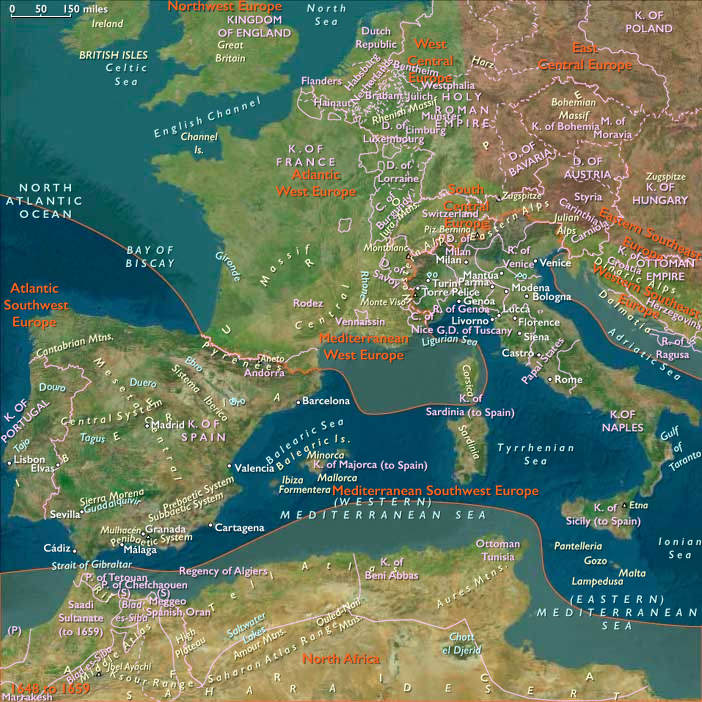
Southwest Europe
View →Subregions
