
The royal colony of Carolina had been…
July 1729 CE
The royal colony of Carolina had been settled by English settlers, mostly from Barbados, sent by the Lords Proprietors in 1670, followed by French Huguenots.
The Carolina upcountry had been settled largely by Scots-Irish migrants from Pennsylvania and Virginia, following the Great Wagon Road.
The formal colony of "The Carolinas" had in 1712 split informally into two parts.
The Yamasee War had led directly to South Carolina's overthrow of the Lords Proprietors, although it has taken several years to accomplish.
South Carolinians had been discontented with the proprietary system before the Yamasee War, but the call for change had become shrill in 1715, after the first phase of the war, and had only grown louder in the ensuing years.
The process of transition from a proprietary colony to a crown colony had begun by 1720.
It has taken nine years, but South Carolina and North Carolina officially become crown colonies on July 25, 1729, when seven of the original eight Lords Proprietors sell their tracts within the Province of Carolina back to the crown.
The Province is permanently divided and reorganized into the Royal Colonies of North Carolina and South Carolina.
South Carolina, which retains Charleston as its capital, is more fully developed than its northern sibling.
Groups
Commodities
Subjects
Regions
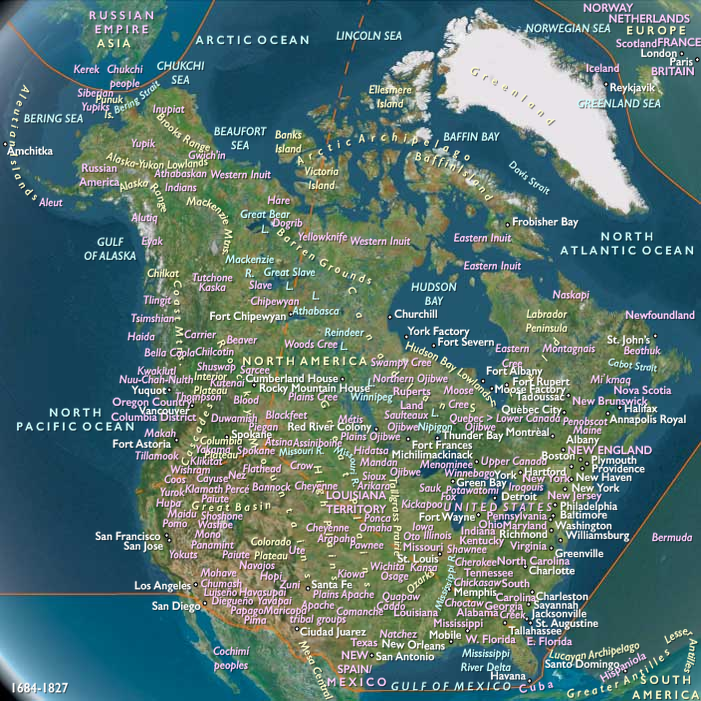
Northern North America
View →Subregions
