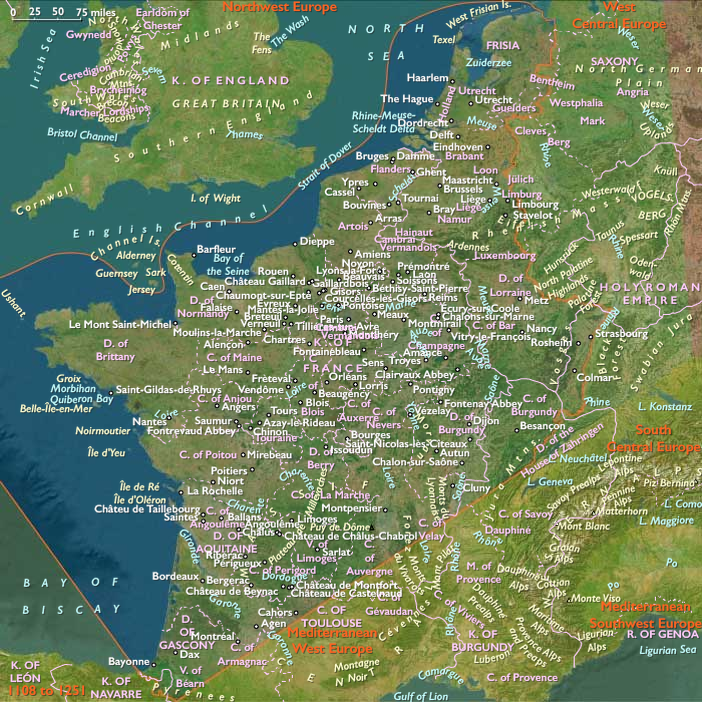
The Saintonge War (1242): A Feudal Struggle…
1240 CE to 1251 CE
The Saintonge War (1242): A Feudal Struggle Between France and England
The Saintonge War (1242) was a feudal conflict between King Louis IX of France and King Henry III of England, primarily fought in the region of Saintonge (around Saintes) in western France. The war arose from tensions over the appointment of Alphonse, Louis IX’s brother, as Count of Poitou, which displeased some of Louis’ vassals, who then sought English support.
Though the French decisively defeated the English at the Battle of Taillebourg and the Siege of Saintes, Louis IX refrained from annexing Guyenne, prioritizing dynastic stability and his upcoming crusade.
Causes of the War
- In 1241, King Louis IX granted Poitou to his younger brother, Alphonse, triggering resistance from discontented local nobles.
- The Count of La Marche (Hugh X of Lusignan) and other Poitevin lords, unwilling to submit to Alphonse, sought the support of Henry III of England.
- Henry III, eager to restore Angevin control in France, allied with his rebel vassals and launched an invasionin 1242.
Major Battles of the War
1. The Battle of Taillebourg (July 21, 1242)
- Henry III’s army advanced into Saintonge, meeting Louis IX’s forces near the bridge of Taillebourg over the Charente River.
- The French forces, superior in strategy and numbers, decisively defeated the English and their Poitevin allies.
- Henry III retreated to Saintes, marking a turning point in the war.
2. The Siege of Saintes (July 24–26, 1242)
- After their defeat at Taillebourg, the English and Poitevins fell back to Saintes, but Louis IX quickly pursued and laid siege to the city.
- The city surrendered after three days, effectively ending the conflict.
Why Louis IX Did Not Annex Guyenne
- Despite his overwhelming victory, Louis IX did not fully strip Henry III of his last possessions in southwestern France.
- He was mindful of dynastic sensibilities, aiming to avoid prolonged conflict that could destabilize France or provoke further rebellion.
- His primary focus was preparing for the Seventh Crusade (1248), and he preferred to secure peace with England rather than commit to another extended war.
- In 1259, the Treaty of Paris would later formalize Henry III’s reduced status in France, requiring him to renounce claims to Normandy, Anjou, and Poitou, but allowing him to retain Guyenne as a vassal of the French king.
Consequences of the Saintonge War
- French supremacy in western France was reaffirmed, further weakening English influence on the continent.
- Henry III’s ambitions to reclaim lost Angevin territories were crushed, solidifying the Capetian grip on Poitou and Saintonge.
- The war marked another failed English campaign in France, foreshadowing the later struggles of the Hundred Years’ War.
The Saintonge War (1242) ultimately confirmed Capetian dominance over western France, leaving England with only Guyenne as a continental possession, while Louis IX turned his attention to the Crusades.
Groups
Topics
Commodities
Subjects
Regions
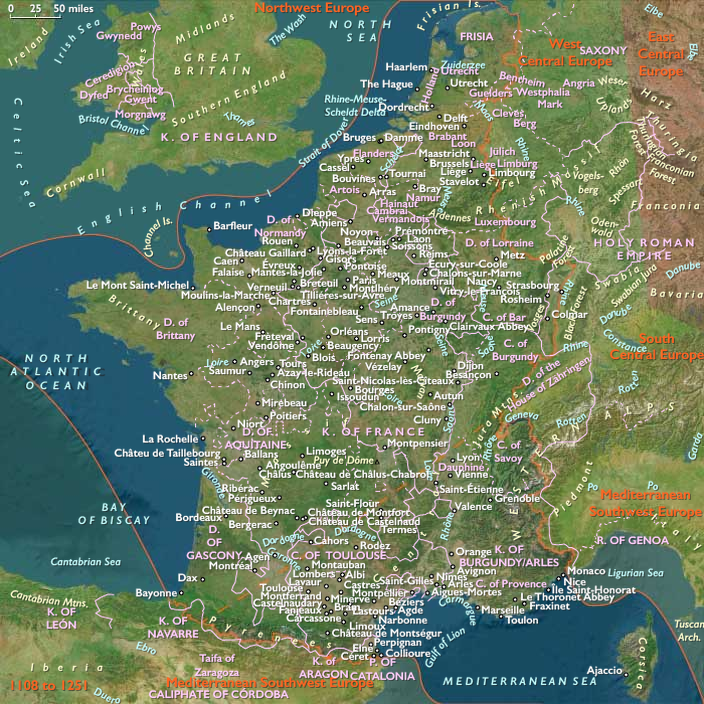
West Europe
View →Subregions