
Egypt, having recovered from the Hyksos invasion, …
Years: 1485BCE - 1342BCE
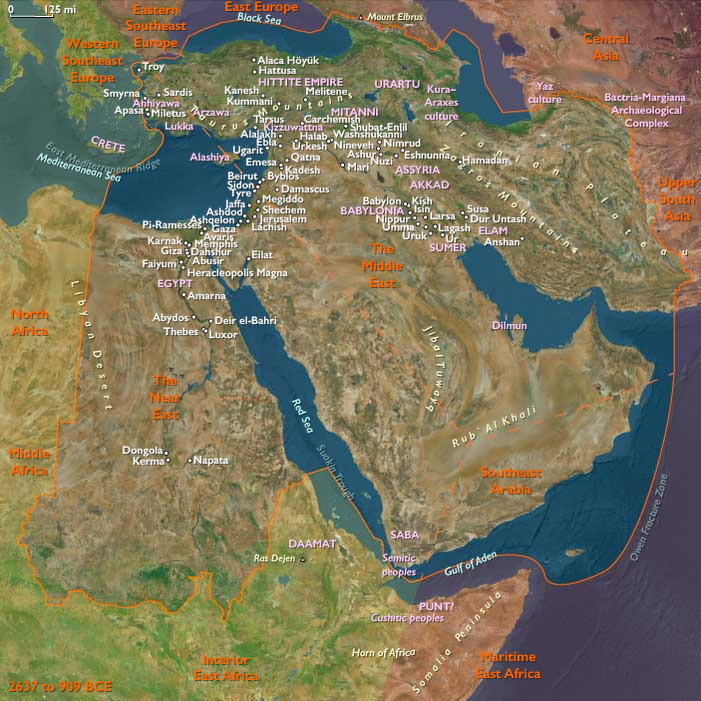
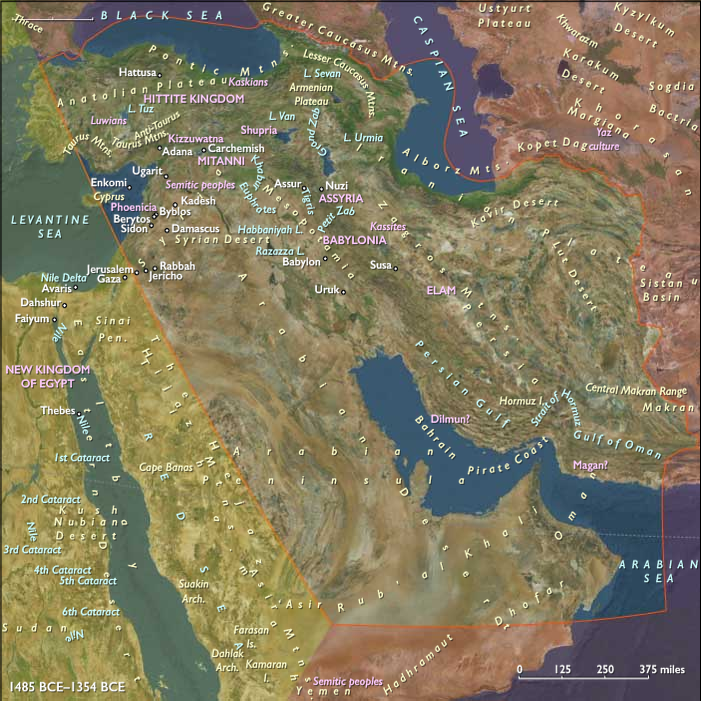
Egypt, having recovered from the Hyksos invasion, attempts to regain control of Syria, but its claim to hegemony there is contested by the empire-building Hittites from Anatolia (the central region of modern Turkey).
The prolonged conflict between these two great powers during the fifteenth to thirteenth centuries BCE bypasses the East Bank of the Jordan, allowing for the development of a string of small tribal kingdoms with names familiar from the Old Testament: Edom, Moab, Bashan, Gilead, and Ammon, whose capital is the biblical Rabbath Ammon (modern Amman).
Although the economy of the countryside is essentially pastoral, its inhabitants adapt well to agriculture and are skilled in metallurgy.
The Edomites work the substantial deposits of iron and copper found in their country, while the land to the north is famous for its oak wood, livestock, resins, and medicinal balms.
The towns profit from the trade routes crisscrossing the region that connect Egypt and the Mediterranean ports with the southern reaches of the Arabian Peninsula and the Persian Gulf.
Locations
Groups
Topics
Commodoties
Subjects
Regions
Subregions
Years: 1485BCE - 1342BCE
Locations
Groups
Topics
Commodoties
Subjects
Regions
Subregions