After 1375 CE, the Hohokam abandoned most…
1396 CE to 1539 CE
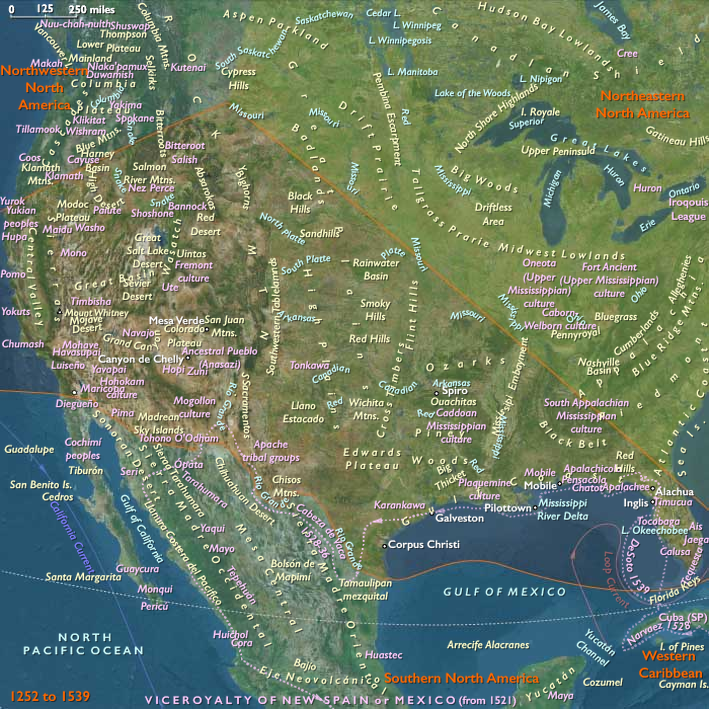
After 1375 CE, the Hohokam abandoned most villages and canal systems in the lower Salt River basin, with the complex irrigation systems falling into complete disuse between 1400 and 1450. The area continued to be occupied, but on a far smaller scale, with the few remaining villages concentrated along the Gila River.
The relocated Pueblo peoples established permanent settlements in their new territories. The Hopi, whose name means "behaving one, one who is mannered, civilized, peaceable, polite," established villages on three mesas in northeastern Arizona. Old Oraibi, founded before 1100 CE, became one of the oldest continuously inhabited villages within the territory of the United States.
The Zuni, whose culture is associated with Mogollon and Ancestral Pueblo peoples, established their settlements in western New Mexico. By the end of the 17th century, only Halona remained inhabited of the original six villages. Their descendants—the Pueblos of New Mexico, the Zuni, and the Hopi—became the inheritors of rich traditions in artistic and architectural design.
This period of consolidation ended with Spain's first contact with the Pueblo peoples in 1539, when Moorish slave Estevanico led an advance party of Fray Marcos de Niza's Spanish expedition, followed by Francisco Vásquez de Coronado's expedition in 1540.
Commodities
Regions
Northern North America
View →Subregions