
The Shang rule from the city of…
1341 BCE to 1198 BCE
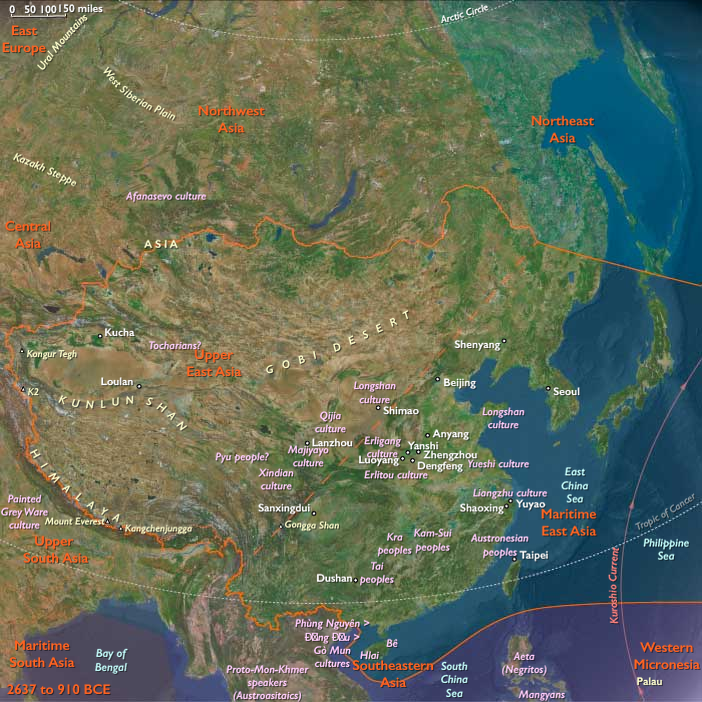
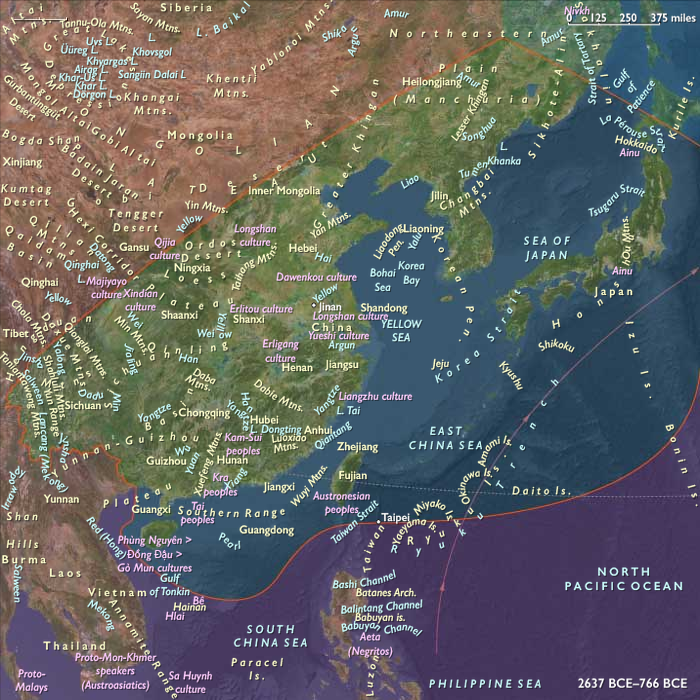
The Shang rule from the city of Yin, near modern Anyang, beginning about 1350 BCE.
The new capital city includes defensive walls plus palaces, temples, tombs for the elite, facilities for storage of grain, and army barracks.
Locations
Commodities
Regions
East Asia
View →Subregions
Maritime East Asia
View →Related Events
Showing 10 events out of 5030 total
The Emergence and Spread of the Urnfield Burial Rite (c. 1300–800 BCE)
Toward the end of the second millennium BCE, the flat-grave cremation burial rite, commonly associated with the Urnfield culture, became widely adopted across Central and Western Europe. This marked a significant shift in funerary customs, replacing earlier inhumation practices and influencing the social and ritual traditions of Late Bronze Age societies.
Origins and Development of the Urnfield Cremation Rite
- The cremation practice is believed to have originated in the Balkans, where it was widespread in the eastern part of the Tumulus culture (c. 1600–1200 BCE).
- The Urnfield culture (c. 1300–800 BCE) developed as a direct successor to the Tumulus culture, adopting cremation and extending its influence westward into Central and Western Europe.
- The transition to urn burials was gradual, with overlapping traditions in both pottery styles and burial practices.
Geographic Spread of the Urnfield Tradition
The Urnfield burial rite was practiced across a vast territory, stretching from:
- Western Hungary to Eastern France
- The Alps to near the North Sea
This widespread distribution reflects the influence of Urnfield traditions on diverse regional cultures, many of which later developed into Iron Age societies such as:
- The Hallstatt culture in Central Europe (1200–450 BCE)
- The Proto-Celtic societies of Western Europe
- The Nordic Bronze Age cultures in Scandinavia
Cultural and Social Implications
- The adoption of cremation and the use of urnfields (large burial grounds for urns) suggest changes in religious beliefs and concepts of the afterlife.
- This period also saw an increase in warfare and social stratification, reflected in the construction of fortified settlements and hoards of bronze weapons.
- The Urnfield culture played a key role in shaping European prehistory, influencing later Celtic, Italic, and Germanic traditions.
Legacy of the Urnfield Culture
The widespread adoption of flat-grave cremation burial practices marks one of the most important cultural shiftsin Late Bronze Age Europe. As Urnfield traditions evolved, they laid the groundwork for Iron Age social and ritual customs, ultimately shaping the belief systems, settlement patterns, and political structures of early European civilizations.
Jewelry-Making and Artistic Innovations in Late Bronze Age Europe (c. 1200 BCE)
By 1200 BCE, jewelry-making flourished across Central and Western Europe, as artisans refined metalworking techniques to craft intricate adornments from bronze and gold. This period saw the emergence of distinctive decorative styles, with the spiral motif becoming the most common artistic element in jewelry design.
Key Characteristics of Late Bronze Age Jewelry
- Materials Used:
- Gold was used for elite ornaments such as torcs, lunulae, diadems, and bracelets.
- Bronze was widely employed for brooches, pins, rings, and necklaces.
- The Spiral Motif:
- The spiral became a defining symbol of Late Bronze Age art, appearing on jewelry, metalwork, and ceramics.
- This motif likely held symbolic or ritual significance, possibly representing eternity, cycles of nature, or solar worship.
The Invention of the Fibula-Brooch: A Key Clothing Innovation
- Around 1200 BCE, the fibula-brooch was invented, revolutionizing clothing fasteners.
- This early precursor to the safety pin allowed for secure fastening of garments, gradually replacing earlier pins and ties.
- Over time, fibulae became highly decorative, evolving into distinct regional styles throughout the Iron Age and classical antiquity.
Impact of Jewelry-Making on Late Bronze Age Societies
- The refinement of metalworking techniques contributed to social stratification, as elite classes displayed status and wealth through elaborate adornments.
- The spread of metal jewelry and fibulae highlights the increasing role of trade networks, connecting cultures across Europe, the Mediterranean, and beyond.
- The enduring popularity of spiral motifs and metal ornaments influenced later Celtic, Italic, and Germanic artistic traditions, leaving a lasting legacy in European decorative arts.
The Late Bronze Age thus represents a pivotal period in artistic and technological development, setting the foundation for later Iron Age and classical jewelry traditions.
The Spread of Indo-European Languages in Europe (c. 1000 BCE)
By 1000 BCE, Indo-European languages had become dominant across most of Europe, as various migrating and expanding groups introduced their dialects to existing populations. This linguistic expansion was closely tied to Bronze Age and early Iron Age migrations, influencing the development of later European cultures.
Indo-European Language Expansion
-
Western and Central Europe:
- Early Italic and Celtic-speaking groups expanded across the Alps and western regions, influencing later Latin and Celtic languages.
- Germanic-speaking peoples were emerging in northern Europe, laying the groundwork for later Scandinavian and Germanic linguistic traditions.
-
Eastern Europe and the Steppe:
- Slavic and Baltic languages were developing in northern and eastern regions, though their distinct identities would emerge later.
- Iranian-speaking groups, such as the Cimmerians and Scythians, dominated the Pontic-Caspian steppe and parts of Eastern Europe.
Exceptions to the Indo-European Linguistic Expansion
Despite the widespread adoption of Indo-European dialects, several regions retained their distinct linguistic traditions:
-
The Basques (Western Europe)
- The Basques of northern Spain and southwestern France maintained their non-Indo-European language, Euskara.
- Euskara has no known linguistic relatives, making it a unique linguistic isolate in Europe.
- The survival of Basque suggests continuity from pre-Indo-European populations, possibly tracing back to Paleolithic hunter-gatherers or early Neolithic cultures.
-
Caucasian-Speaking Peoples (Northwest and West of the Black Sea)
- Various groups in the Caucasus region and parts of Eastern Europe spoke Caucasian languages, which were unrelated to Indo-European.
- These languages persisted in areas where steppe migrations had less influence or where geographical barriers helped maintain linguistic isolation.
Significance of Linguistic Diversity in Ancient Europe
- The Indo-European expansion played a key role in shaping the linguistic landscape of Europe, influencing later Celtic, Italic, Germanic, Slavic, and Iranian cultures.
- The persistence of non-Indo-European languages, such as Basque and Caucasian languages, highlights the cultural resilience of some populations.
- These linguistic patterns laid the foundation for the diverse languages of Europe that would continue to evolve throughout the Iron Age and classical antiquity.
Thus, by 1000 BCE, Indo-European languages had become the dominant linguistic family in Europe, but isolated linguistic traditions—such as Basque and Caucasian languages—remained as surviving relics of Europe’s pre-Indo-European past.
West Europe (909 BCE – 819 CE): From Roman Gaul to Frankish Christendom
Regional Overview
From the Pyrenees to the Low Countries, West Europe evolved across two millennia from a patchwork of Celtic tribes and Roman provinces into the western half of Charlemagne’s empire.
Its dual geography—Mediterranean Gaul to the south and Atlantic Gaul to the north—gave the region both a seaward reach and a continental core.
The Rhône, Loire, and Seine bound these worlds together, channeling grain, wine, salt, and ideas between coast and hinterland.
By the early ninth century, these linked river kingdoms had become the agricultural and cultural heart of Latin Christendom.
Geography and Environment
West Europe straddled two climatic zones.
-
The Mediterranean south enjoyed mild, dry summers and fertile terraces suited to vines and olives.
-
The Atlantic north experienced wetter, temperate seasons ideal for cereals and pastures.
The Pyrenees, Massif Central, and Jura defined the interior highlands, while the Rhône, Loire, Seine, Scheldt, and Meuse carved navigable corridors through them.
These rivers—and the Rhône–Saône axis especially—linked the Mediterranean ports of Arles and Marseille to the Rhineland and North Sea, making Gaul Europe’s natural trade hinge.
Societies and Political Developments
Celtic Tribes and Roman Provinces
In the first millennium BCE, Celtic polities such as the Arverni and Aedui dominated the uplands and river plains.
Rome’s conquest under Julius Caesar (1st c. BCE) integrated Gaul into the empire, founding coloniae at Lugdunum (Lyon), Narbo Martius (Narbonne), Arelate (Arles), and Burdigala (Bordeaux).
Southern Gaul (Gallia Narbonensis) flourished as a Romanized province of cities, amphitheaters, and vineyards, while northern Gaul became the empire’s frontier breadbasket.
Late Antiquity and the Franks
After Rome’s collapse (5th c. CE), the Franks, Visigoths, and Burgundians divided the region.
By the late 6th century, the Merovingian Franks unified much of Gaul under kings who ruled from Paris, Metz, and Soissons.
The Carolingians, rising from Austrasia, consolidated power during the 8th century; under Charlemagne, the western provinces—stretching from the Atlantic to the Rhône and from the Pyrenees to the Meuse—became the imperial nucleus of the Holy Roman Empire (coronation 800 CE).
The Marca Hispanica and Septimania guarded the Pyrenean borderlands against Islamic Iberia, while coastal cities like Marseille reconnected the Franks to Mediterranean trade.
Regional Balances
-
In the Mediterranean south, Provençal bishoprics and monastic schools preserved classical learning; cities such as Arles and Marseille maintained continuity with Rome’s maritime world.
-
In the Atlantic north, riverine capitals—Paris, Rouen, Tours, Ghent, Bruges, Bordeaux—became centers of commerce and early urban revival.
-
The Low Countries developed intensive agriculture and proto-industrial craft traditions, foreshadowing their later prominence.
Economy and Trade
Agrarian wealth anchored every phase of development.
Wheat, rye, oats, and wine covered the valleys; olive groves and salt pans lined the Mediterranean coast.
Livestock and wool supplied northern markets; fisheries and coastal saltworks added export staples.
Under Rome, trade flowed along the Rhône–Saône–Rhine system and through Atlantic ports; after the Carolingian revival, monasteries and fairs renewed this network.
Mediterranean West Europe exchanged oil, wine, and ceramics with Italy and North Africa, while Atlantic West Europe traded textiles, timber, and metals with Britain and Scandinavia.
Technology and Material Culture
Roman legacies—roads, aqueducts, amphitheaters—remained visible and often repurposed.
By the Carolingian age, innovations such as the heavy plow, horse collar, and three-field rotation began to transform northern agriculture.
In the south, terrace farming and irrigation canals sustained Mediterranean crops.
Water mills, revived in both regions, mechanized grain processing and textile fulling.
Shipwrights along the Channel and Mediterranean refined clinker-built and carvel-hulled vessels that would later underpin European maritime expansion.
Belief and Symbolism
Christianization followed Roman roads and monastic frontiers.
Bishoprics at Arles, Lyon, Paris, Tours, and Reims anchored ecclesiastical authority; pilgrim routes multiplied, many converging toward the emerging cult of Saint James at Compostela.
Monasteries such as Saint-Martin of Tours, Corbie, and Lérins became scriptoria preserving Latin literature.
By the 8th–9th centuries, Carolingian reform fused Roman, Gallican, and Germanic traditions into a unified Christian culture—its manuscripts, sculpture, and chant defining early medieval art.
Adaptation and Resilience
West Europe’s strength lay in its environmental and institutional diversity.
When one zone faltered—Mediterranean trade disrupted or northern harvests failed—the other could compensate.
River navigation and coastal shipping offered redundancy against overland hazards; monasteries functioned as food reserves and safe havens during war or famine.
Frankish administrative pragmatism and local autonomy in towns and monasteries allowed flexible recovery from external shocks, whether Saracen raids or climatic downturns.
Regional Synthesis and Long-Term Significance
By 819 CE, West Europe had matured into the western half of Latin Christendom:
-
The Mediterranean South retained classical urbanism, monastic scholarship, and ties to the wider Mediterranean.
-
The Atlantic North drove agrarian and commercial growth through its river valleys and ports.
-
The Carolingian polity bound them into one imperial system, governed from the Rhineland but nourished by the produce and trade of Gaul.
The natural division between Mediterranean and Atlantic spheres thus reveals their complementarity: one maritime and urban, the other agrarian and riverine, together forming a single continuum of innovation and exchange.
From this equilibrium emerged the cultural and economic foundations of medieval Western Europe—a civilization whose unity, like its geography, was sustained by the flow of rivers to the sea.
Atlantic West Europe (909 BCE – CE 819): Coastal Kingdoms, River Valleys, and Frankish Frontiers
Geographic and Environmental Context
Atlantic West Europe includes the Atlantic and English Channel coasts of France as well as the Loire Valley, Burgundy, northern France (including Paris), and the Low Countries—Belgium, the Netherlands, and Luxembourg.
-
The subregion’s varied landscapes range from tidal estuaries and sandy shores to fertile river plains and densely settled urban areas.
-
Major rivers such as the Seine, Loire, Scheldt, and Meuse connect inland regions to the sea, facilitating both commerce and cultural exchange.
Climate and Environmental Shifts
-
A temperate maritime climate with steady rainfall supported productive agriculture.
-
Coastal areas faced periodic storm surges, while river valleys experienced seasonal flooding that enriched soils.
-
Cooler intervals in the early medieval period influenced crop choices and pastoral patterns.
Societies and Political Developments
-
By this period, most of the region was incorporated into the Frankish realms, particularly under the Carolingian Empire.
-
Coastal and riverine towns such as Rouen, Bordeaux, Ghent, and Bruges served as important trade centers.
-
The Low Countries developed a dense network of villages and markets, benefiting from fertile soils and proximity to both inland and maritime routes.
-
Paris, located on the Seine, was emerging as a key political and economic center within the Frankish domain.
Economy and Trade
-
Agriculture produced wheat, rye, oats, wine, and livestock for local use and export.
-
Coastal fisheries and salt production added valuable commodities to the regional economy.
-
River and sea trade moved goods such as textiles, metalwork, and pottery throughout the North Sea and English Channel corridors.
-
Links to Britain, Scandinavia, and the Mediterranean brought in imports like wine, olive oil, glassware, and luxury goods.
Subsistence and Technology
-
Advanced plough designs and crop rotation systems improved yields in fertile lowlands.
-
Shipbuilding supported both coastal navigation and longer voyages across the Channel.
-
Stone bridge construction in urban centers improved transport reliability.
Movement and Interaction Corridors
-
The Seine, Loire, and Scheldt rivers provided key inland transport routes to the sea.
-
Coastal shipping lanes connected Atlantic West Europe to Northwest Europe, Iberia, and the Mediterranean.
-
Overland routes tied Paris, Burgundy, and the Low Countries to West Central Europe and beyond.
Belief and Symbolism
-
Christianity was firmly established, with cathedrals, abbeys, and monasteries serving as religious, educational, and economic hubs.
-
Pilgrimage traditions were developing, some linked to routes leading toward Santiago de Compostela.
-
Carolingian artistic styles influenced manuscript illumination and church decoration.
Adaptation and Resilience
-
Agricultural diversity and coastal access mitigated the impact of poor harvests.
-
Strategic river control allowed towns to prosper as trade hubs.
-
The integration into the Carolingian political structure provided stability and facilitated economic growth.
Long-Term Significance
By CE 819, Atlantic West Europe was a thriving agricultural and commercial heartland of the Frankish Empire, its river valleys and ports making it a linchpin in the trade networks of medieval Western Europe.
At around this time people begin to extract iron from the ore in peat bogs.
Evidence of strong Celtic cultural influence dates from this period in Denmark, and in much of northwest Europe, and survives in some of the older place names.
Atlantic West Europe (909–766 BCE): Early Tribal Formation and Initial Cultural Foundations
From 909 to 766 BCE, Atlantic West Europe—including Aquitaine, the Atlantic coast, northern and central Gaul, Alsace, and the Low Countries—experienced early stages of tribal organization, foundational economic exchanges, and preliminary cultural developments. This formative era laid essential groundwork for the gradual evolution of more complex societies, regional interactions, and distinct cultural identities.
Political and Military Developments
Early Tribal Communities
-
Early tribal groups were largely decentralized, with communities slowly beginning to establish localized territories and rudimentary leadership structures.
-
Ancestors of later prominent tribes, such as the Arverni and Aedui, gradually emerged in central Gaul, laying initial foundations for future societal complexity.
-
Northern areas witnessed the formation of proto-tribal groups that would later coalesce into the Belgae tribes, beginning early territorial organization and local alliances.
Regional Isolation
-
Atlantic West Europe remained largely isolated from Mediterranean or external influence during this era. Political dynamics were predominantly shaped by local interactions and limited internal rivalries.
Economic and Social Developments
Basic Trade Networks
-
Economic activity remained largely localized, featuring small-scale exchanges of essential goods, such as metals (copper, tin), salt, agricultural products, and basic crafted items.
-
Coastal communities engaged in minimal maritime activity, setting preliminary foundations for the gradual development of maritime skills in subsequent periods.
Initial Agricultural Practices
-
Agricultural practices improved modestly, enabling small but stable settlements and slight population growth.
-
Early communities were small and largely semi-permanent, gradually moving toward increased sedentism and the establishment of fixed village sites.
Cultural and Religious Developments
Early Cultural Expressions
-
Cultural developments were nascent, with simple artistic expressions found in pottery, metalwork, and basic personal ornaments that began reflecting emerging community identities.
-
Burial practices began to reflect minimal social distinctions, marking early signs of societal stratification within tribes.
Proto-Religious Practices
-
Early forms of communal rituals and sacred sites emerged, forming initial communal bonds and shared cultural traditions.
-
Spiritual leaders and proto-religious figures began to appear within communities, serving early ritual and social leadership roles.
Notable Early Tribal Communities
-
Early Ancestors of Arverni and Aedui: Established initial forms of tribal life and community organization in central Gaul.
-
Emerging Coastal Tribes: Engaged in preliminary maritime practices, forming the earliest foundations for later maritime tribes like the Veneti.
-
Proto-Belgae Groups: Northern communities began early steps toward basic organizational structures, foreshadowing later tribal identities.
Long-Term Significance and Legacy
Between 909 and 766 BCE, Atlantic West Europe:
-
Initiated early processes of tribal and social organization, crucial for future societal complexity and regional stability.
-
Developed initial economic practices and local trade networks, forming the foundations for later, more extensive economic interactions.
-
Established the earliest cultural traditions and communal rituals, which evolved into more complex religious institutions and regional identities.
This formative era set the earliest stage for subsequent historical developments, significantly influencing the long-term trajectory of Atlantic West Europe in politics, economy, and cultural expression.
Atlantic West Europe (909–766 BCE): Late Bronze Exchange, Early Iron Horizons, and Maritime Networks
Geographic & Environmental Context
Atlantic West Europe stretched from the Loire Valley through Brittany and Normandy across the French and Flemish Channel coasts to the Low Countries (Belgium, Netherlands, Luxembourg). To the south, its influence reached the Charente and Aquitaine estuaries; to the north, it graded into the marshes of the Scheldt delta and the lower Rhine.
Anchors included the Loire and Seine basins, Brittany’s granite peninsulas, the Armorican Massif, the Somme and Meuse valleys, and the low dune coasts of Flanders and Zeeland. The interior combined rolling uplands of loess soils and broad river corridors with an Atlantic façade of sheltered rias, tidal flats, and fertile estuarine plains.
Climate & Environmental Shifts
This period coincided with a generally warm and stable Late Holocene phase following earlier Bronze Age aridity.
-
Summers were mild and moist, favoring mixed oak–hazel woodland and intensive cereal cultivation.
-
Rising humidity renewed peat growth in coastal wetlands of the Netherlands and northern France.
-
Minor sea-level fluctuations reshaped estuaries, but no catastrophic transgressions occurred.
-
Abundant rainfall sustained grain surpluses that underpinned regional trade and elite consumption.
Societies and Political Developments
By the 9th–8th centuries BCE, Atlantic West Europe was a corridor of innovation between the Atlantic Bronze Age and the emerging Iron Age.
-
Armorica (Brittany): Hilltop enclosures and coastal forts (e.g., Beg-er-Vil, Morbihan Gulf) flourished as centers of trade in tin, copper, and finished bronzes. Local chieftains controlled workshops producing swords, axes, and ornate personal ornaments.
-
Lower Loire and Seine Basins: Prosperous riverine communities grew around barrow clusters and oppidum precursors. Wealthy burials with bronze weapons, razors, and drinking sets reflect an elite warrior-trader class.
-
Normandy and the Channel Coasts: Maritime settlements maintained close contact with southern Britain; shared bronze hoard types (palstaves, socketed axes) and pottery styles attest to sustained cross-Channel exchange.
-
Low Countries: Flat alluvial landscapes supported dense farming villages. Wooden trackways and embanked fields reveal advanced water management. Salt extraction and amber trade linked the Scheldt–Rhine delta to northern Germany and Denmark.
Economy & Exchange Networks
The region functioned as the western limb of a pan-European exchange system:
-
Metals: Tin from Armorica and Cornwall, copper from Iberia, and amber from the North Sea converged through Brittany and Normandy ports.
-
Artisan Goods: Foundries produced standardized bronze tools and weapons, exchanged via maritime routes to Britain and Ireland and inland along the Loire–Seine–Rhine corridors.
-
Agriculture: Mixed grain (emmer, barley, spelt) and livestock herding (cattle, sheep, pigs) supplied both local and trade needs. Surpluses sustained craft specialists and elites.
-
Salt and Fish: Coastal salterns and dried-fish production in Brittany and the Flemish flats were traded inland, presaging later Iron Age market patterns.
Technology & Material Culture
-
Metallurgy: Socketed axes, leaf-bladed swords, and ornate torcs mark the mature Atlantic Bronze Age style; high-tin alloys and decorative inlay techniques foreshadow early Iron Age craftsmanship.
-
Ceramics: Fine burnished wares with fluting or cord impressions; domestic coarseware in local clays.
-
Iron Emergence: Small smelting experiments (bloomery furnaces) appear in the Loire and Meuse valleys, signaling technological transition.
-
Architecture: Timber longhouses and circular huts in farmsteads; causewayed enclosures on promontories; cremation cemeteries in urnfields.
Movement & Interaction Corridors
-
Maritime Routes: The “Atlantic seaway” connected Iberia, Armorica, and the British Isles—vessels of sewn-plank construction (e.g., Dover Boat) navigated these coasts.
-
River Arteries: The Loire, Seine, and Rhine carried metals and finished goods far inland to central Europe’s Hallstatt cultural sphere.
-
Overland Paths: Ridgeways across Brittany and through the Paris Basin linked coastal and continental trade.
-
Cultural Convergence: Shared weapon forms, fibulae, and decorative motifs reveal a mobile artisan-merchant elite spanning the Channel and Bay of Biscay.
Cultural & Symbolic Expressions
Art and ritual merged in metallurgy and burial:
-
Urnfield cremation cemeteries dotted uplands, signaling ancestor veneration and pan-European religious exchange.
-
Bronze ornament hoards—deliberate deposits in rivers and bogs—indicate ritual offerings to deities of water and trade.
-
Elite display: Torcs, bracelets, and pins conveyed rank; ceremonial feasting vessels (cauldrons, flagons) underscored social hierarchy.
-
Seafaring mythologies likely celebrated voyages and ancestral founders linking coasts across the “Atlantic world.”
Environmental Adaptation & Resilience
-
Agrarian diversity: Poly-culture (grains + legumes + livestock) buffered climate variation.
-
Wetland management: Wooden causeways, drainage ditches, and raised platforms secured lowland settlements against floods.
-
Maritime skill: Knowledge of tides, currents, and weather fostered enduring navigation traditions.
-
Forestry and fuel: Coppicing sustained bronze smelting and domestic heating while preventing deforestation.
Transition (After 766 BCE)
By the mid-8th century BCE, Atlantic West Europe stood at the cusp of transformation. Iron technology spread rapidly from central Europe through the Rhine and Rhone corridors; bronze hoarding waned. Trade networks persisted but shifted toward new centers, notably Hallstatt markets and proto-Celtic chiefdoms inland. Yet the maritime spirit of the Atlantic Bronze Age endured: Brittany, Normandy, and the Low Countries remained outward-looking societies—heirs to centuries of exchange, navigation, and artistry that bridged the Bronze and Iron Ages across the western rim of Europe.
Atlantic West Europe (765–622 BCE): Foundations of Tribal Life and Early Cultural Practices
From 765 to 622 BCE, Atlantic West Europe—including Aquitaine, the Atlantic coast, northern and central Gaul, Alsace, and the Low Countries—witnessed foundational developments in tribal societies, agricultural practices, and cultural expressions. This era was characterized by gradual tribal formation, early economic activity, and preliminary social organization, laying the essential groundwork for future regional complexity.
Political and Military Developments
Formation of Early Tribal Groups
-
Small, loosely organized tribal communities began forming distinct identities, with basic territorial claims and rudimentary social hierarchies emerging across central and northern Gaul.
-
Early ancestors of tribes such as the Arverni and Aedui appeared, establishing foundational settlements and localized spheres of influence.
-
Northern coastal regions saw the early presence of proto-Belgae groups, setting initial stages for future tribal structures.
Isolation from Mediterranean Influence
-
Atlantic West Europe remained relatively isolated, with minimal Mediterranean or Carthaginian interactions. Internal tribal dynamics and local disputes shaped political life, without significant external influences.
Economic and Social Developments
Early Economic Exchange
-
Basic trade networks developed locally, focusing on exchanges of essential commodities such as copper, tin, salt, agricultural products, and simple crafted items.
-
Coastal tribes engaged in limited maritime activities, creating a modest foundation for future seafaring skills and trade practices.
Agricultural and Settlement Advances
-
Gradual improvements in farming techniques supported stable but limited population growth and the first signs of community specialization.
-
Early settlements remained small but began developing into permanent communities, marking initial steps toward later proto-urban oppida.
Cultural and Religious Developments
Beginnings of Cultural Identity
-
Artistic and cultural expressions were modest, with early metalwork, pottery, and simple personal ornaments beginning to reflect tribal identities.
-
Burial customs started to display early social differentiation, hinting at emerging status distinctions within communities.
Emergence of Early Ritual Practices
-
Communal religious practices began taking shape, featuring rudimentary sacred sites and collective rituals that fostered communal bonds and shared cultural identity.
-
Early proto-Druidic figures likely emerged as community spiritual leaders, although organized Druidic institutions had not yet fully developed.
Notable Tribal Precursors and Communities
-
Proto-Arverni and Aedui Settlements: Established early forms of tribal organization in central Gaul.
-
Early Coastal Communities: Engaged in preliminary maritime activities, laying the groundwork for later tribes such as the Veneti.
-
Proto-Belgae Tribes: Northern groups slowly developed basic organizational structures and alliances.
Long-Term Significance and Legacy
Between 765 and 622 BCE, Atlantic West Europe:
-
Developed initial tribal identities and basic political organization, setting the stage for future societal complexity and regional alliances.
-
Established early agricultural practices and foundational economic exchanges that enabled later population growth and urbanization.
-
Began cultivating cultural expressions and spiritual practices that would evolve into distinct and sophisticated traditions.
This era laid critical early foundations, influencing the long-term historical trajectory of Atlantic West Europe through gradual but significant developments in tribal structure, economy, and cultural life.
The Influence of the Hallstatt Culture in the Low Countries (c. 800 BCE)
By 800 BCE, the Iron Age Celtic Hallstatt culture had become influential in the Low Countries, replacing the earlier Hilversum culture. This transition marked a major technological and economic shift, as ironworking became widespread, bringing increased prosperity and facilitating trade and craftsmanship across the region.
Ironworking and Economic Growth
- The introduction of iron metallurgy allowed for stronger and more durable tools and weapons, replacing earlier bronze-based technologies.
- Iron ore, including bog iron, was available throughout the Low Countries, providing local resources for metal production.
- Traveling smiths played a crucial role in the Iron Age economy, moving between settlements and fabricating tools, weapons, and ornaments on demand.
The King’s Grave of Oss (c. 700 BCE): A Hallstatt Elite Burial
- One of the most significant Hallstatt-era discoveries in the Low Countries is the King’s Grave of Oss, found within a massive burial mound, the largest of its kind in Western Europe.
- This elite burial, dating to c. 700 BCE, contained:
- An iron sword with gold and coral inlays, highlighting high-status craftsmanship and wealth.
- Evidence of complex burial rites, suggesting hierarchical social structures among early Iron Age communities.
Cultural and Social Impact
- The Hallstatt culture influenced local trade networks, burial customs, and settlement structures, laying the foundation for later Celtic societies in the region.
- The use of iron tools and weapons strengthened agriculture and warfare, accelerating social stratification.
- This period represents a critical transition, shaping the economic and political landscape of the Low Countries as they moved into the Iron Age proper.
The spread of the Hallstatt culture into the Low Countries thus played a key role in early European state formation, influencing trade, craftsmanship, and elite power structures that would continue to develop in the following centuries.