
The Hohokam culture, centered in agricultural villages…
244 CE to 387 CE
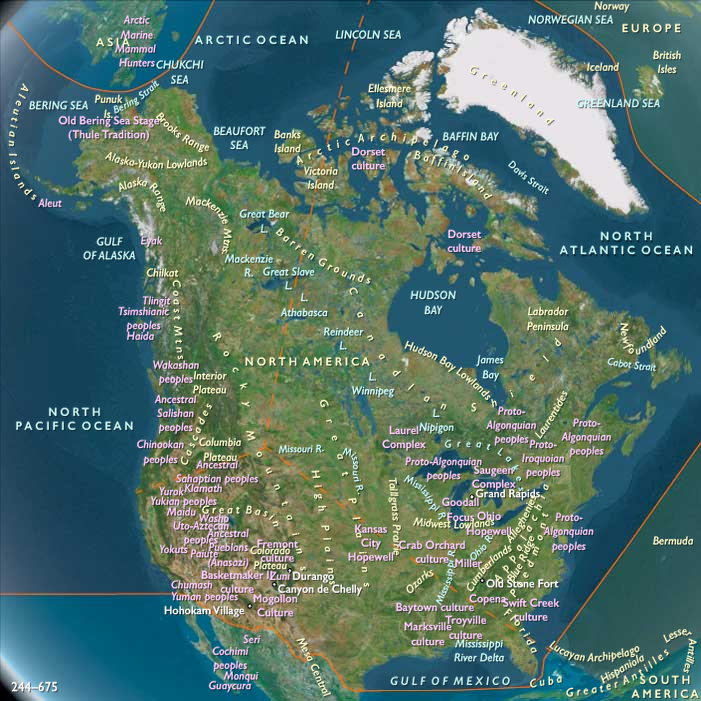
The Hohokam culture, centered in agricultural villages in the low-lying desert regions of present southern Arizona, near Phoenix and Tucson, begins its so-called “pioneer” period in about 300.
Named from a Pima word meaning "those who have gone", the Hohokam culture may be an outgrowth of groups already indigenous to the region or may have resulted from a migration of natives from Mexico (archaeologists disagree).
Employing an ingenious system of canals and ditches to divert the waters of the Gila and Salt rivers to irrigate their fields, the early Hohokam, living as farmers raising corn and gathering wild beans, had founded a series of small villages along the middle Gila River.
The communities are located near good arable land, with dry farming common in the earlier years of this period.
Wells, usually less than ten feet (three meters) deep, are dug for domestic water supplies.
Early Hohokam homes are constructed of branches bent in a semicircular fashion and then covered with twigs, reeds and heavily applied mud and other items at hand.
Ceramics appear shortly before 300, with pots of unembellished brown used for storage, cooking and as containers for cremated remains.
Groups
Commodities
Regions
Northern North America
View →Subregions
