Economic Policies and Limited Growth Under General…
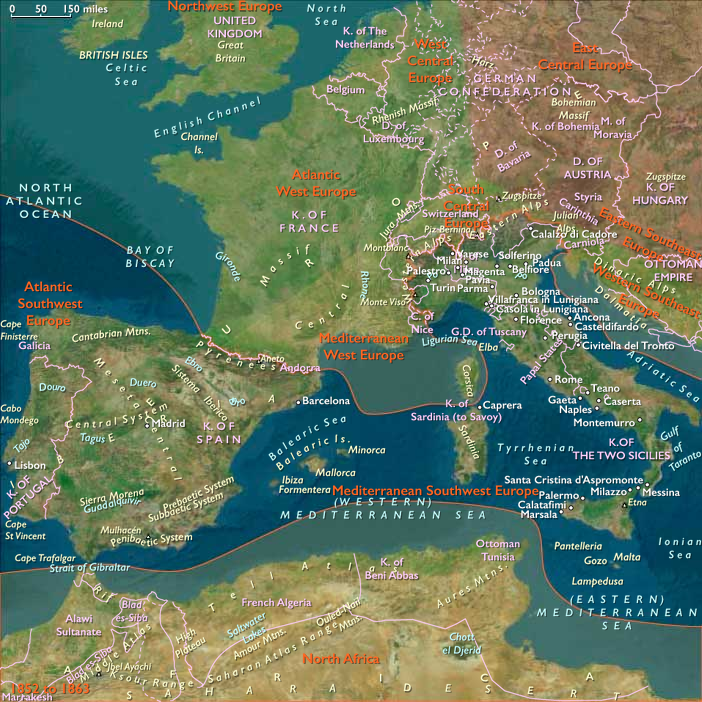
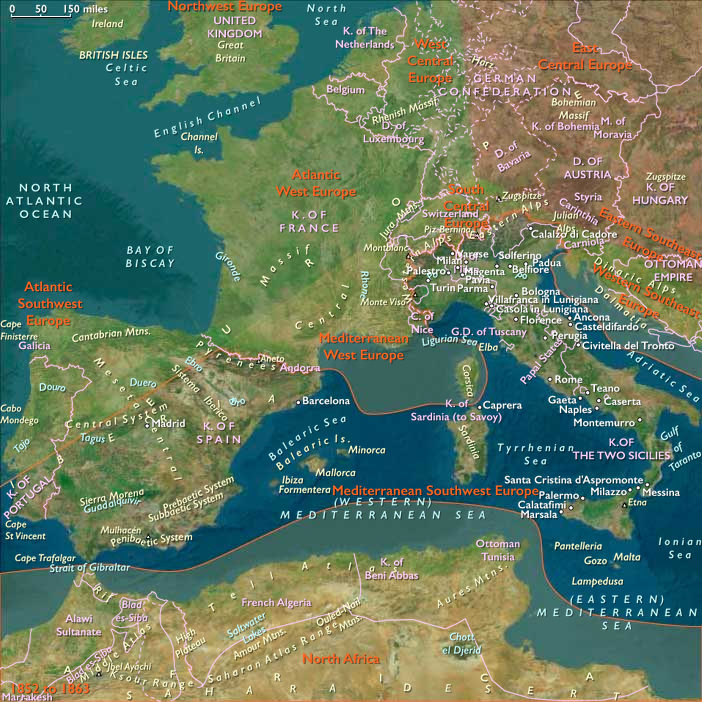
1852 CE to 1863 CE
Economic Policies and Limited Growth Under General Leopoldo O'Donnell (1856–1868)
In 1856, General Leopoldo O'Donnell rose to power in Spain through a pronunciamiento, ushering in a government that embraced laissez-faire economics and sought to modernize the country’s infrastructure. A strong advocate of foreign investment, O'Donnell encouraged European capitalists to fund the development of Spain’s railroad system, a key symbol of industrial progress.
Additionally, his administration pursued overseas expansion, particularly in Africa, as part of Spain’s renewed imperial ambitions. However, despite these efforts, economic growth remained limited, largely confined to Catalonia and the Basque Country, both of which already possessed established industrial bases. In contrast, much of Spain’s rural interior continued to lag behind, with little development in agriculture or industry.
A major point of contention was land reform, a pressing issue for Spain’s agrarian population. Despite early promises, no meaningful redistribution of land took place, reinforcing existing inequalities and social unrest in the countryside. While O'Donnell’s administration sought modernization, its economic policies ultimately failed to bridge regional disparities, leaving Spain’s economy uneven and structurally weak as it moved toward the latter half of the 19th century.
Locations
Commodities
Regions