
The successor of Marcellus II, the nobly …
Years: 1555 - 1555
May
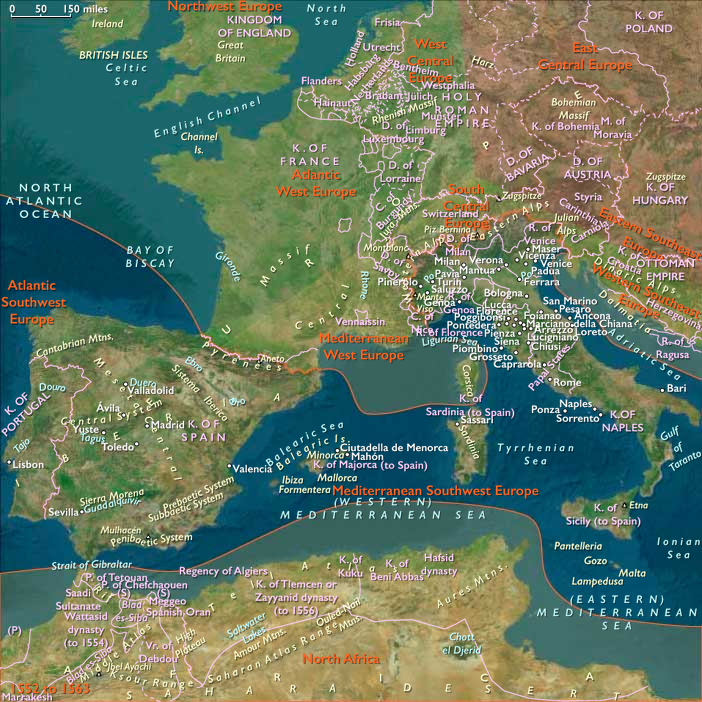
The successor of Marcellus II, the nobly born cardinal Gian Pietro Carafa, owes his ecclesiastical advancement to the influence of his uncle Cardinal Oliviero Carafa, and had served Pope Leo X as envoy to England and Spain as bishop of Chieti.
He had resigned his benefices in 1524 to found, with Cajetan of Thiene (Gaetano da Thiene), the order of the Theatines (Congregation of Clerics Regular) to promote clerical reform through asceticism and apostolic work.
An advisor to Leo's successors in matters of heresy and reform, Carafa had earned an appointment to Pope Paul III's commission for ecclesiastical reform, had been made cardinal in 1536, and had been responsible for a reorganization of the Roman Inquisition.
Carafa’s austerity, uncompromising reformism, exalted concept of papal authority, and violent antipathies toward the Habsburgs and the Spaniards do not dissuade the College of Cardinals, heavily influenced by Cardinal Alessandro Farnese, from electing him Pope Paul IV, even over the veto of Holy Roman emperor Charles V. Paul, whose handling of the Protestant question is to prove as disastrous as his politics, soon denounces as a pact with heresy the Peace of Augsburg, the first permanent legal basis for the existence of Lutheranism and Catholicism in Germany.
Locations
People
- Charles V, Holy Roman Emperor
- Fernando Álvarez de Toledo, 3rd Duke of Alba
- Pope Marcellus II
- Pope Paul V
- Reginald Pole
Groups
- Papal States (Republic of St. Peter)
- Christians, Roman Catholic
- Lutheranism
- Calvinists
- Spain, Habsburg Kingdom of
Topics
- Protestant Reformation
- Counter-Reformation (also Catholic Reformation or Catholic Revival)
- Italian War of 1551–1559, or Habsburg-Valois War
Commodoties
Subjects
Regions
Subregions

Related Events
Showing 10 events out of 36129 total
Years: 1555 - 1555
May
Locations
People
- Charles V, Holy Roman Emperor
- Fernando Álvarez de Toledo, 3rd Duke of Alba
- Pope Marcellus II
- Pope Paul V
- Reginald Pole
Groups
- Papal States (Republic of St. Peter)
- Christians, Roman Catholic
- Lutheranism
- Calvinists
- Spain, Habsburg Kingdom of
Topics
- Protestant Reformation
- Counter-Reformation (also Catholic Reformation or Catholic Revival)
- Italian War of 1551–1559, or Habsburg-Valois War
Commodoties
Subjects
Regions
Subregions