The Ratification of the Treaty of Brétigny-Calais…
1360 CE
The Ratification of the Treaty of Brétigny-Calais and John, Duke of Berry’s Role (1360)
The Treaty of Brétigny, negotiated in May 1360, was officially ratified at Calais in October 1360, becoming known as the Treaty of Brétigny-Calais. The treaty temporarily ended hostilities between England and France during the Hundred Years’ War but came at a heavy price for France.
Key Terms of the Treaty
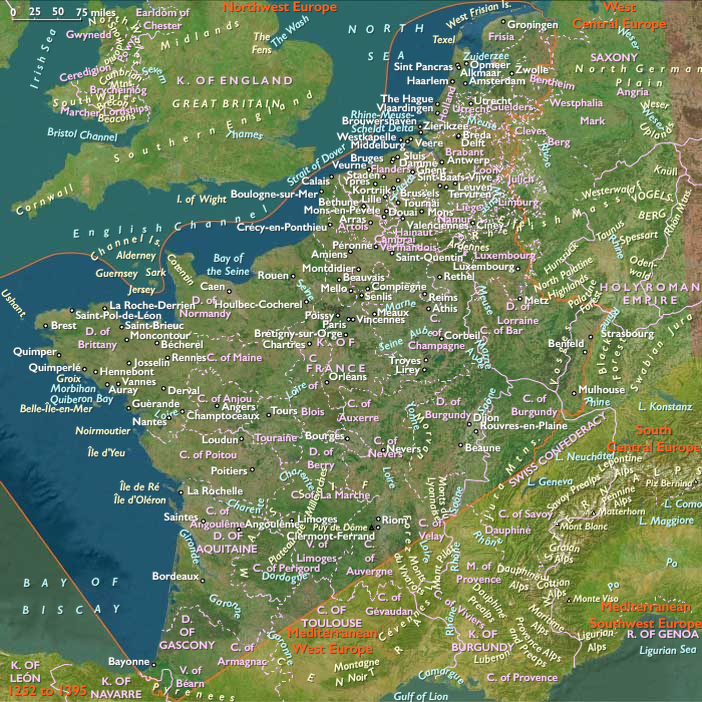
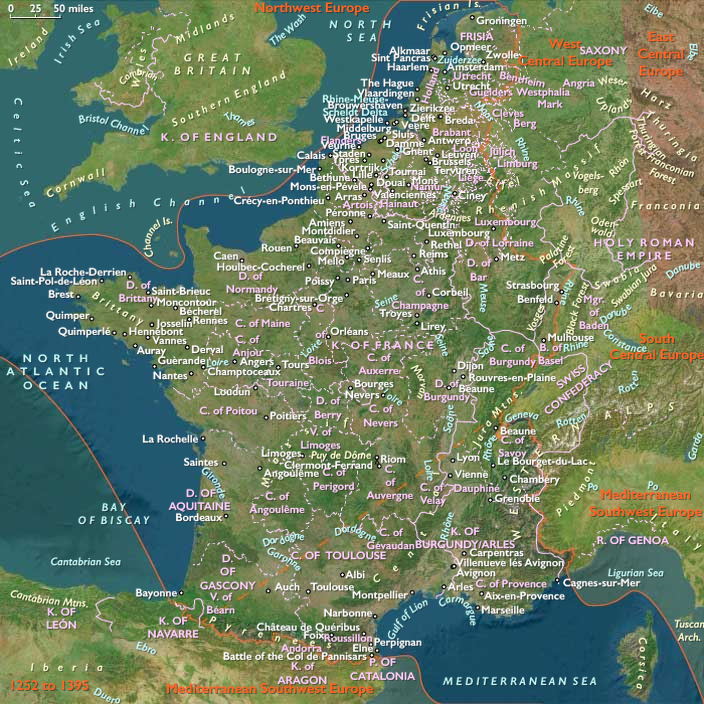
- Edward III of England gained expanded lands in Aquitaine, making it an independent English-held territory.
- In return, Edward:
- Renounced his claims to Normandy, Touraine, Anjou, and Maine, which had once been part of England’s Angevin Empire.
- Abandoned his claim to the French crown, marking a temporary halt to his pursuit of the French throne.
- Agreed to reduce the ransom of King John II of France by 1 million gold crowns, though it remained a staggering sum.
John, Duke of Berry: His Role in France and as an English Hostage
- John, Duke of Berry, was the third son of King John II of France and Bonne of Luxembourg, born November 30, 1340, in Vincennes.
- In 1356, he was made Count of Poitiers.
- In 1358, while his father was a captive of the English, he was appointed the king’s lieutenant in Auvergne, Languedoc, Périgord, and Poitou, charged with administering these regions in John II’s name.
Duchies of Berry and Auvergne (1360)
- After John II’s release in 1360, the king granted John newly created duchies, elevating him to:
- Duke of Berry
- Duke of Auvergne
- This move strengthened his political standing and gave him greater territorial control in central France.
John, Duke of Berry Becomes an English Hostage (1360–1369)
- As part of the Treaty of Brétigny, French nobles were required to serve as hostages in England to guarantee the massive ransom payment for King John II.
- John, Duke of Berry, was one of these hostages, remaining in English custody from 1360 until 1369.
- This prolonged captivity deeply affected his later rule, as he developed a diplomatic approach to governance, rather than a militaristic one.
Impact of the Treaty
- The Treaty of Brétigny-Calais was highly favorable to England, granting Edward III significant territorial control in France.
- However, the French monarchy’s loss of sovereignty over Aquitaine and the financial burden of the ransom created long-term resentment.
- The hostage system placed key French nobles under English control, including John, Duke of Berry, ensuring that France remained weakened and divided.
- The peace would not last, and by 1369, the war resumed, with France reasserting itself under Charles V.
The Treaty of Brétigny-Calais (1360) marked a temporary peace but failed to end the Hundred Years' War, leaving long-term territorial disputes and economic burdens that would lead to renewed conflict.
Locations
People
Topics
Commodities
Subjects
Regions
West Europe
View →Subregions