
Event
The Tudor style begins to reflect European…
The Tudor style begins to reflect European influences, as plans become more symmetrical and designs are increasingly seen in terms of small, individual units rather than the linear patterning so prevalent in the English Gothic.
New forms come into use and more and more exotic detailing, often carried out by European artisans, is introduced, including simple octagonal towers, polychrome brick, niches, plaques, decorated chimneys, and—inside the buildings—the most elaborate fireplaces.
Although this detailing and planning changes the character of this architecture, it does not alter its fundamental Gothic form.
-
{# Image navigates to the detail page; the magnifying-glass chip is the only Fancybox lightbox trigger (kept a separate sibling — anchors can't nest). #}
 The North Atlantic Lands
World
-
{# Image navigates to the detail page; the magnifying-glass chip is the only Fancybox lightbox trigger (kept a separate sibling — anchors can't nest). #}
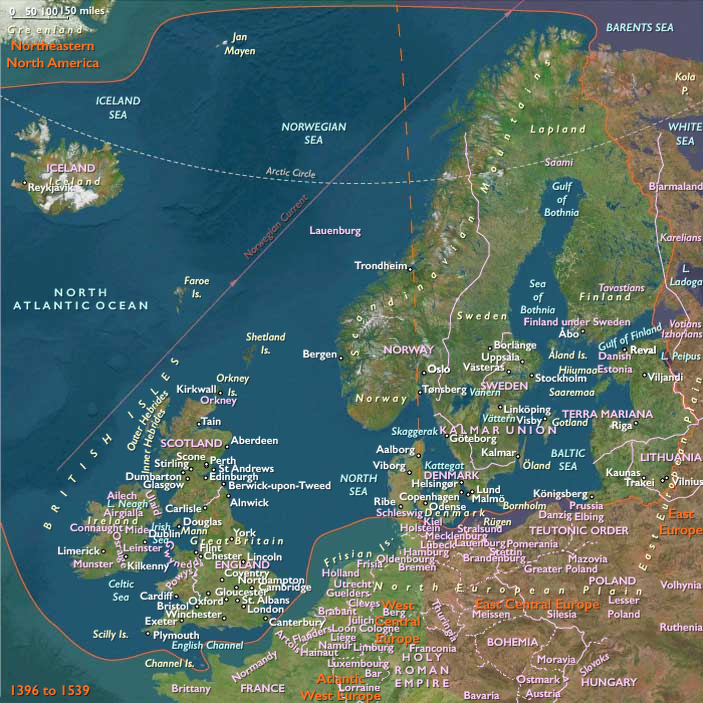 North Europe
Region
-
{# Image navigates to the detail page; the magnifying-glass chip is the only Fancybox lightbox trigger (kept a separate sibling — anchors can't nest). #}
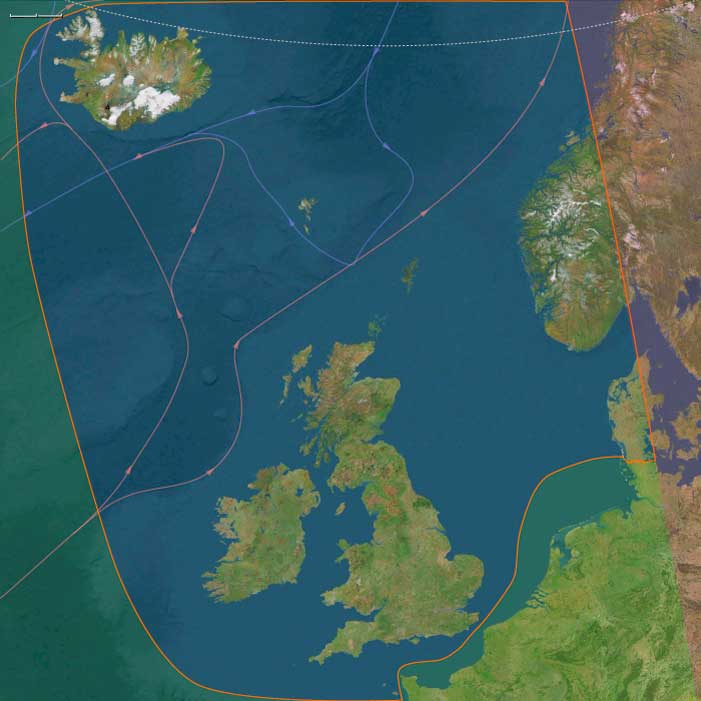 Northwest Europe
Subregion
