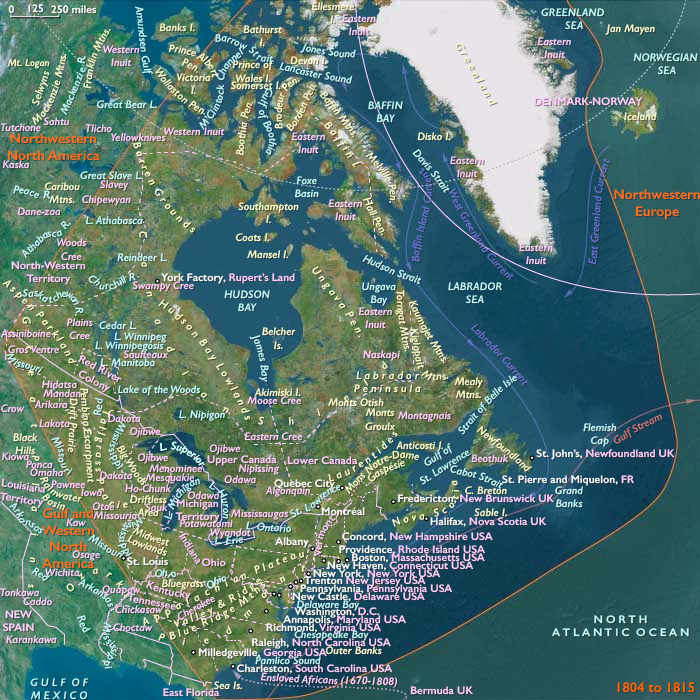
American prosecution of the war will suffer…
August 1812 CE
"Two of the Massachusetts members [of Congress], Seaver and Widgery, were publicly insulted and hissed on Change in Boston; while another, Charles Turner, member for the Plymouth district, and Chief-Justice of the Court of Sessions for that county, was seized by a crowd on the evening of August 3, [1812] and kicked through the town". (Adams, Henry (1918) [1891]. History of the United States of America during the Administrations of James Madison and Thomas Jefferson. II: History of the United States During the First Administration of James Madison. New York: Scribner & Sons.)
The United States will have great difficulty financing its war.
It has disbanded its national bank, and private bankers in the Northeast are opposed to the war.
The United States will be able to obtain financing from London-based Barings Bank to cover overseas bond obligations.
The failure of New England to provide militia units or financial support is a serious blow.
Threats of secession by New England states will be loud, as will be evidenced by the Hartford Convention of 1814-15.
Britain will exploit these divisions, blockading only southern ports for much of the war and encouraging smuggling.
People
Groups
Subjects
Regions
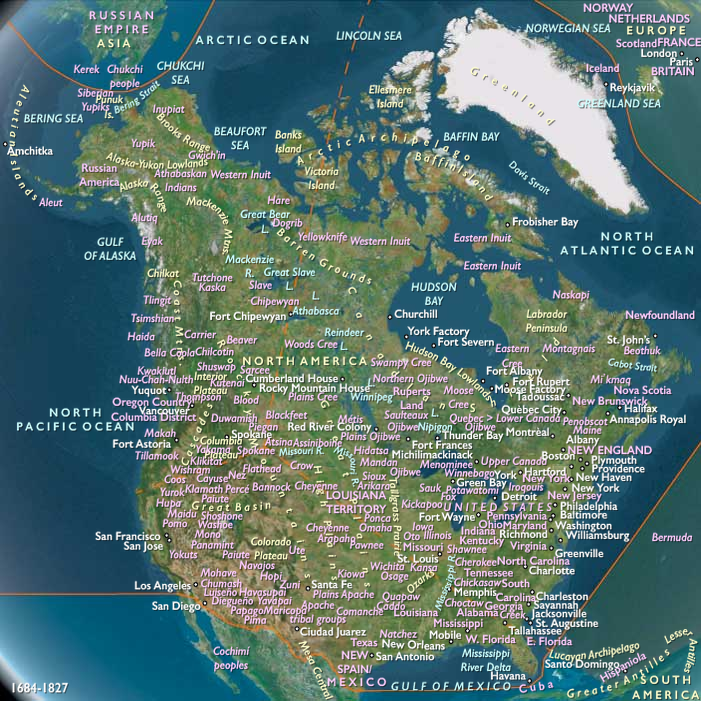
Northern North America
View →Subregions