Napoleon, angered by the Russian Tsar’s resumption…
1812 CE
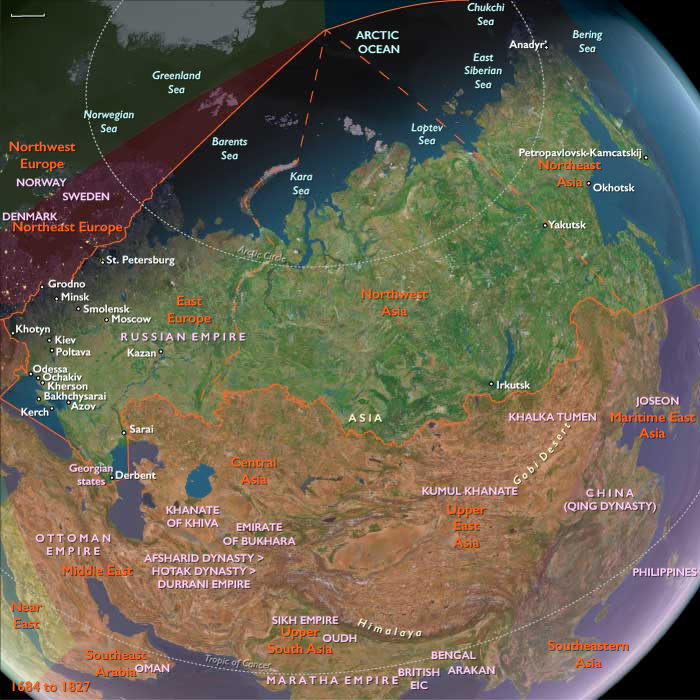
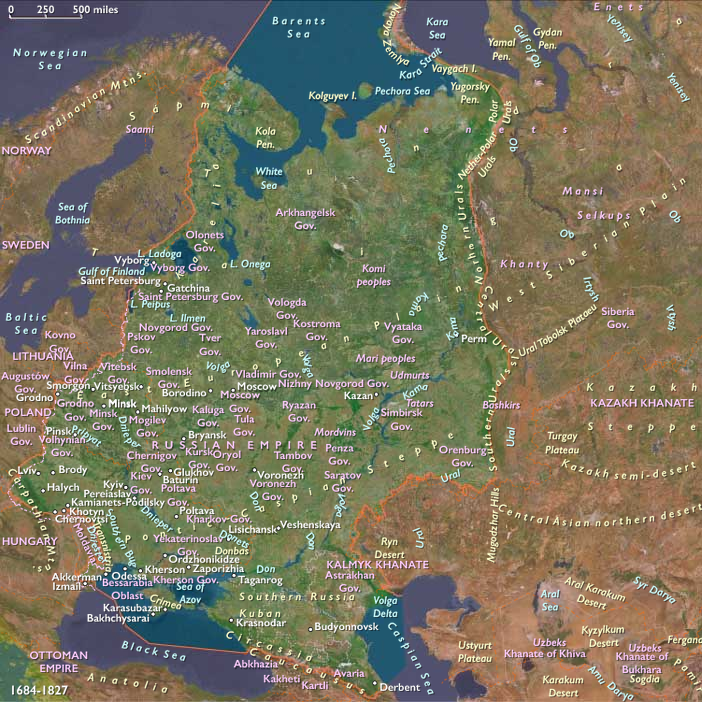
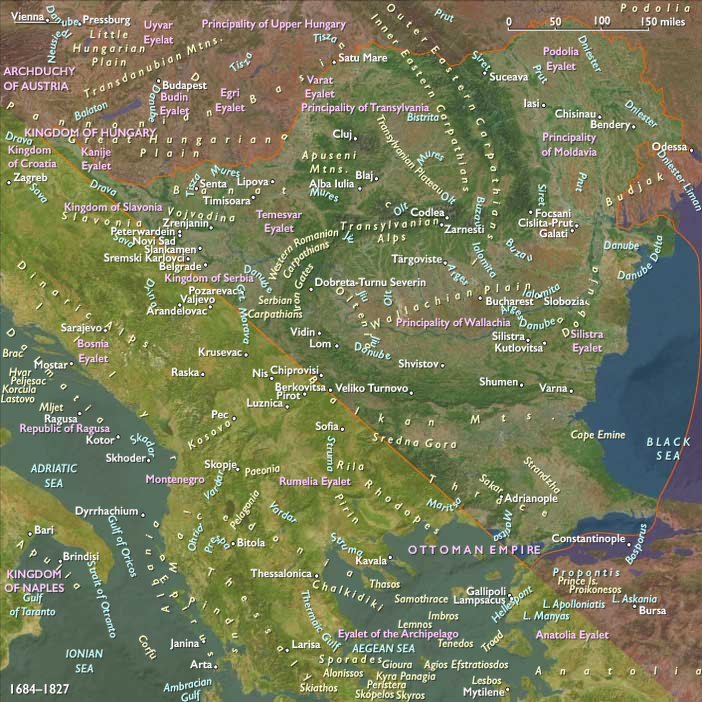
Napoleon, angered by the Russian Tsar’s resumption of trade relations with the British, invades Russia in June, 1812 with an army of nearly half-a-million men, an act that temporarily stops the periodic Russo-Turkish wars.
Subjects
Related Events
Showing 10 events out of 35 total
Manuel Belgrano raises the Flag of Argentina (which he designed) in the city of Rosario, for the first time, on February 27, 1812.
José de San Martín, for twenty years a soldier for the Spanish crown, serving mostly in European campaigns, returns to Buenos Aires in 1812 to join the forces fighting for the liberation of his homeland.
Historians will propose several explanations for this action: the common ones are that he missed his native country, that he was a British agent and the congruence of the goals of both wars.
The first explanation suggests that when the wars of independence began San Martín thought that his duty was to return to his country and serve in the military conflict.
The second explanation suggests that Britain, which would benefit from the independence of the South American countries, sent San Martín to achieve it.
The third suggests that both wars were caused by the conflicts between Enlightenment ideas and absolutism, so San Martín still waged the same war; the wars in the Americas only developed separatist goals after the Spanish Absolutist Restoration.
San Martín had been initiated in the Lodge of Rational Knights in 1811.
They met at the house of Carlos María de Alvear, other members were José Miguel Carrera, Aldao, Blanco Encalada and other criollos, American-born Spaniards.
They had agreed to return to their home countries and join the local revolutionary movements.
San Martín had asked for his retirement from the military, and moved to Britain, staying in the country for a short time, and meeting many other South Americans at a lodge held at the house of Venezuelan general Francisco de Miranda at 27 Grafton Street (now 58 Grafton Way), Bloomsbury, London (the house now has a blue plaque with Miranda's name).
He then sailed to Buenos Aires aboard the frigate George Canning, along with the South Americans Alvear, Francisco José de Vera and Matías Zapiola, and the Spaniards Francisco Chilavert and Eduardo Kailitz.
They arrives on March 9, 1812, to serve under the First Triumvirate.
San Martín, proving himself a master military tactician, will aid General Belgrano in his defeat of Spanish royalist forces in early clashes in Paraguay, Chile, Peru and Uruguay.
William Brown, an Irish-born rebel leader and future Admiral of the Navy of Argentina, begins a blockade of Montevideo, the colonial capital of Rio de la Plata, on May 16.
Gaspar de Vigodet, Spain's last colonial administrator of the Viceroyalty of the Río de la Plata (covering nearly all of modern-day Argentina, Chile, Paraguay and Uruguay), surrenders the city of Montevideo to independence fighters, led by General Carlos María de Alvear, on June 26, 1814.
They had appointed him a lieutenant colonel of cavalry, and asked him to create a cavalry unit, as Buenos Aires did not have good cavalry.
He began to organize the Regiment of Mounted Grenadiers with Alvear and Zapiola.
As Buenos Aires lacked professional military leaders, San Martín had been entrusted with the protection of the whole city, but had kept focused on the task of building the military unit.
San Martín, Alvear and Zapiola have established a local branch of the Lodge of Rational Knights, along with morenists, the former supporters of the late Mariano Moreno.
This lodge seeks to promote liberal ideas; its secrecy hides whether it was a real Masonic lodge, or a lodge with political goals.
It has no ties to the Premier Grand Lodge of England.
San Martín has married María de los Remedios de Escalada, a fourteen-year-old girl from one of the local wealthy families.
The lodge organizes the Revolution of October 8, 1812, when the terms of office of the triumvirs Manuel de Sarratea and Feliciano Chiclana end.
Juan Martín de Pueyrredón promotes antimorenist new members, Manuel Obligado and Pedro Medrano, by preventing the vote of three deputies and thus achieving a majority.
As this causes a commotion, San Martín and Alvear intervene with their military force, and the Buenos Aires Cabildo disestablishes the triumvirate.
It is replaced by the Second Triumvirate of Juan José Paso, Nicolás Rodríguez Peña and Antonio Álvarez Jonte.
The new triumvirate calls the Assembly of the Year XIII and promotes San Martín to colonel.
General José de San Martín replaces Manuel Belgrano, who had been routed at the battles of Vilcapugio and Ayohuma in 1813, as commander of the Argentine revolutionary forces.
The Assembly of Year XIII (Spanish: Asamblea del Año XIII) is a meeting called by the Second Triumvirate governing the young republic of the United Provinces of the Río de la Plata (today's Uruguay, part of Argentina and Bolivia) on October 1812.
One of the objectives of the assembly is to define an institutional government system for the republic.
Without the presence of representatives from some of the provinces (such as the Oriental Province), it is inaugurated on January 31, 1813 (hence the name).
At the same time, it is to proclaim independence from Spain, and write the first constitution of the young state.
During the assembly, differing interests delay the declaration of independence, but a number of common points are successfully established:
The national coat of arms is chosen.
The national anthem is commended.
The Freedom of Wombs (Libertad de vientres) law, which puts an end to slavery, is passed (it dictates that children born from slaves since the passing of the law are automatically free citizens).
All titles of nobility (from the colonial period) are voided and suppressed.
The creation of the national currency is ordered.
The Spanish Inquisition and the practice of torture are abolished.
A statute is approved that replaces as Executive Power the Second Triumvirate for a unipersonal Supreme Directorship.
José de San Martín and his Regiment of Mounted Grenadiers gain a largely symbolic victory against a Spanish royalist army on February 3 in the Battle of San Lorenzo, the baptism of fire for this military unit, and for San Martín in the Spanish American wars of independence.
Montevideo, a royalist stronghold during the Argentine War of Independence, is under siege by José Gervasio Artigas.
Those in the city raid population centers along the nearby rivers for supplies.
San Martín, who shortly before had arrived in Buenos Aires and formed the regiment, had followed the royalist ships to San Lorenzo.
The area around San Lorenzo forms a large empty plain, so the regiment hides inside the San Carlos convent during the night and San Martín studies the battlefield and the enemy ships from the tower.
The battle starts at dawn, when the grenadiers make a surprise pincer movement to trap the enemy forces.
One column is led by San Martín, and the other by Justo Germán Bermúdez.
San Martín falls from his horse, and is nearly killed, but Juan Bautista Cabral and Juan Bautista Baigorria intervene and save him.
The royalists are defeated but will continue to raid villages for some time afterwards.
Posadas had become part of the Triumvirate when the Assembly granted Executive Power to the Triumvirate.
Then on January 22, 1814 the same Assembly decides to concentrate the Executive Power in him as a Supreme Director for the United Provinces, so he assumes this office on January 31 for a one-year period.
During his rule, Saavedra and Campana are exiled and Montevideo falls to the United Provinces but serious problems arise with José Gervasio Artigas and the Liga Federal on the Banda Oriental.
Moreover, Ferdinand VII of Spain will regain his throne in 1815.
His last term as Consul was from February 12, 1814 to June 12, 1814, after which he had retired from public life to his estate.
Paraguay's Third National Congress is held on October 3–4, 1814 and replaces the two-man executive with a single dictatorship, to which Francia is elected.