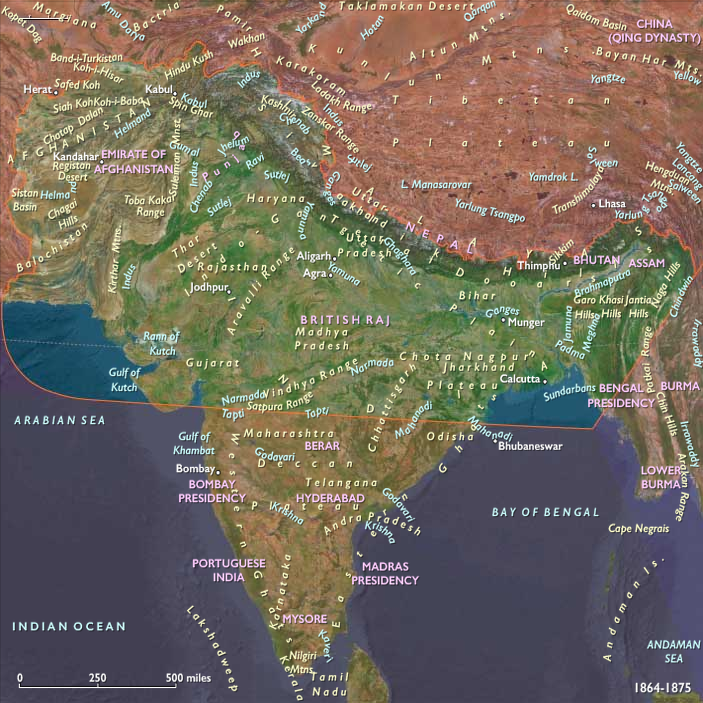
The district officer is the linchpin of…
1864 CE to 1875 CE
The district officer is the linchpin of the British Indian system.
The officer is revenue collector as well as dispenser of justice and is called district collector, district magistrate, and, in some areas, deputy commissioner (the DC) with equal validity.
District officers are usually drawn from the prestigious meritocracy, the Indian Civil Service.
Recruitment to the Indian Civil Service is competitive, based on examination of young men with a British classical education.
Exclusively British at its beginning, the Indian Civil Service is forced to open its doors slightly to successful Indian candidates.
After 1871 district boards and municipal committees are established to assist the district officers in their administrative functions.
Thus elective politics, in however limited a form, is introduced to the subcontinent.
The governor general is also known as the viceroy and crown representative when dealing with Indian princes.
Relations between the British crown and Indian princes are set out in an elusive doctrine of "paramountcy."
The princes promise loyalty and surrender all rights to conduct foreign or defense policy; the crown promises noninterference in internal affairs (except in cases of gross maladministration or injustice) and protection from external and internal enemies.
Locations
People
Groups
Regions
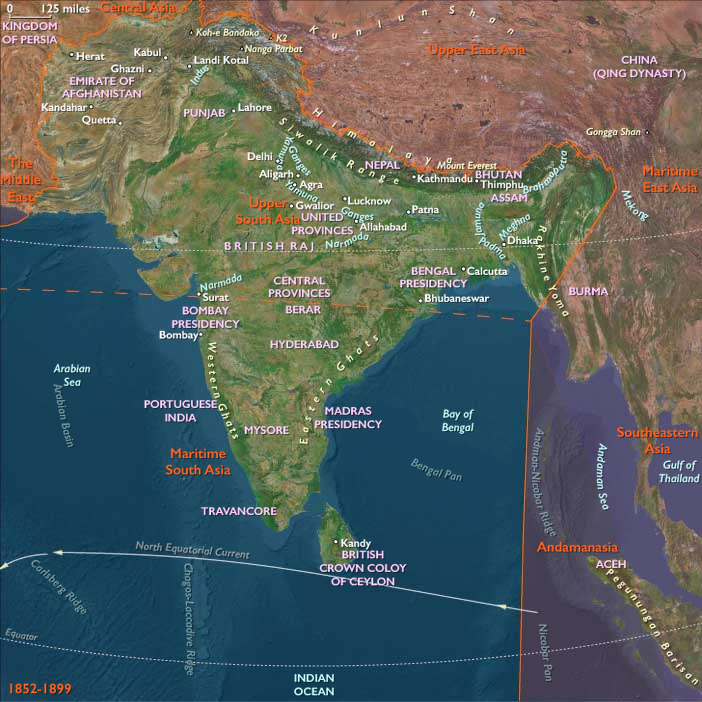
South Asia
View →Subregions