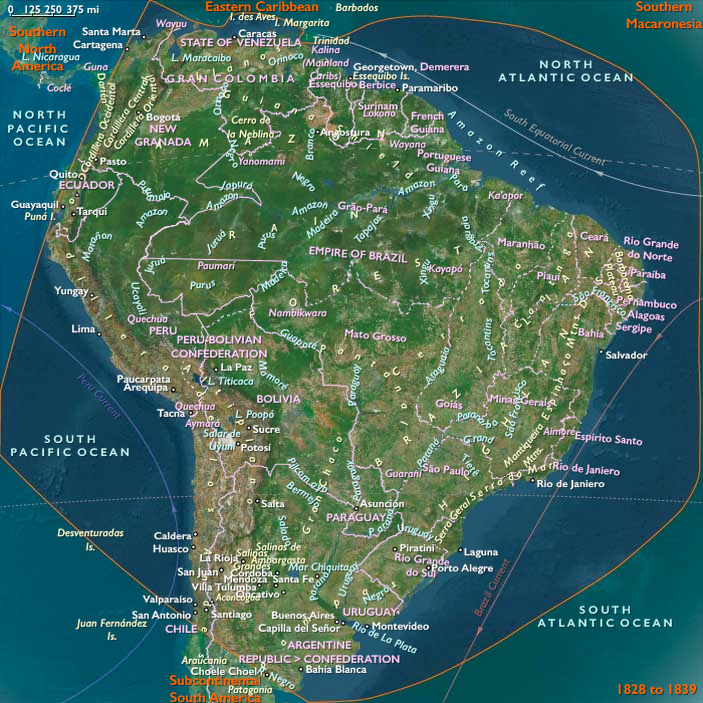
Fiscal poverty reflects, in turn, the underdeveloped…
1828 CE to 1839 CE
Fiscal poverty reflects, in turn, the underdeveloped state of New Granada's's economy, in which the vast majority of the population labors farming crops, raising livestock for domestic consumption, or producing primitive handicrafts.
Foreign trade per capita is the lowest among Latin America's larger countries, and this in itself is a major reason for fiscal poverty because customs duties are the leading source of revenue.
New Granada had begun independent life with a single important export, gold, exactly as in the colonial era, but gold mining employs few people and has few linkages to the rest of the economy.
Native, and some foreign, entrepreneurs look intermittently for other exports that might stimulate wider economic growth, and these efforts lead to a succession of speculative booms in tobacco, quinine, and certain lesser commodities.
None will have lasting success until the expansion of coffee cultivation at the end of the nineteenth century and beginning of the twentieth; until then, with brief and partial exceptions, stagnation will be the rule.
Locations
Groups
Commodities
Regions
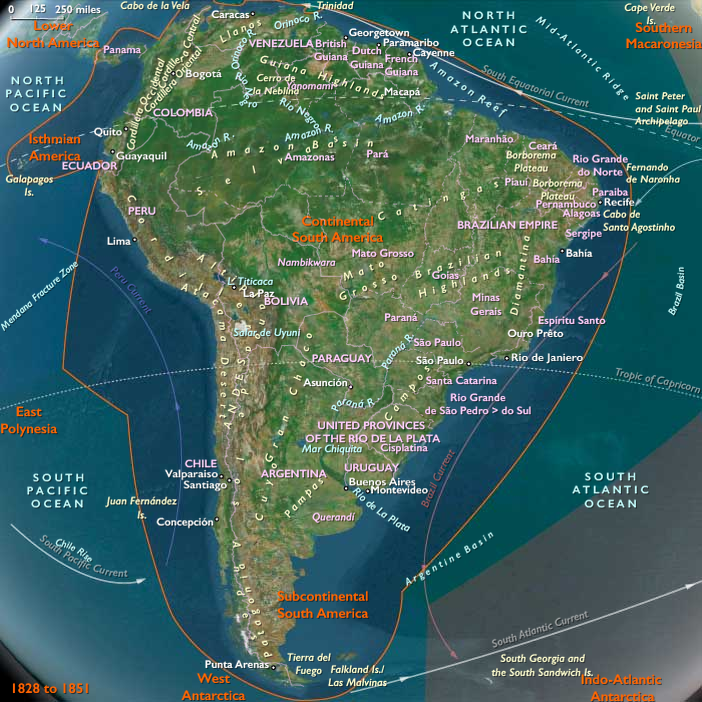
South America
View →Subregions