
The whole town of Plymouth and its…
1439 CE
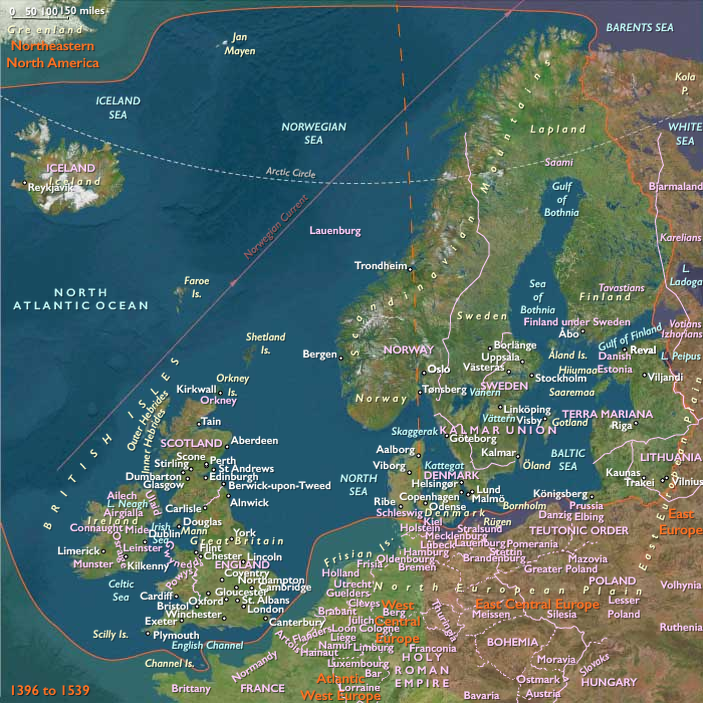
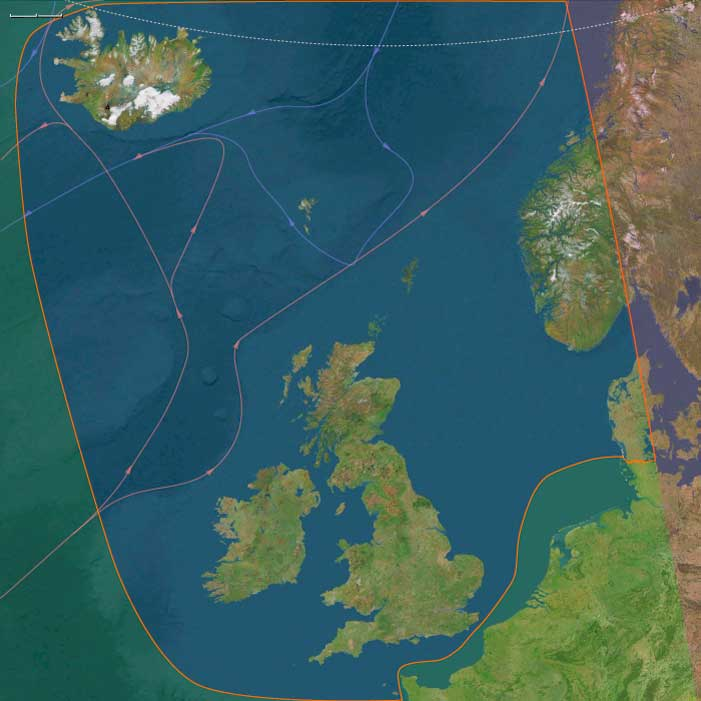
The whole town of Plymouth and its surrounding area achieve municipal independence in 1439, becoming the first town to be incorporated by Act of Parliament.
Locations
Subjects
Regions
North Europe
View →Subregions
Northwest Europe
View →Related Events
No active filters.
Showing 10 events out of 41860 total
Vasily has to flee the capital in 1439, when it is besieged by the Khanate of Kazan.
Isidore, soon after the decree of union signed in July 1439 at the Council of Ferrara, had been made a Roman cardinal, henceforth referred to as “the Ruthenian (Ukrainian Roman Catholic) cardinal.”
Commissioned papal legate by Eugenius IV, Isidore successfully implements the decree of union at Kiev, but…
…by energetically attempting to introduce it in Moscow, he encounters the hostility of Vasily and the Russian Church.
He is convicted by an ecclesiastical court of apostasy to the Orthodox faith and imprisoned.
The Swedes and Danes now press Erik for constitutional forms of government in a new union; he refuses.
Continuing discontent and the appeal to the memory of Engelbrekt, whose death had made him a national hero, gives the Swedes the strength necessary to depose Erik by the summer of 1439.
After Norway follows Sweden’s lead, representatives of the three Scandinavian states install Erik’s twenty-four-year-old nephew, Christopher of Bavaria, as King Christopher III of the Kalmar Union.
Erik has been deposed in all three countries when dissident Swedish nobles opposed to his absolutist rule are supported by the Danish state council, which objects to the king's war against the Hanseatic League and the counts of Holstein.
Christopher's accession restores peace and union in the three Scandinavian kingdoms.
The forces of Wladyslaw and Albert prepare for war, but the brewing Polish-Bohemian conflict ends with Albert’s death from dysentery in 1439 while fighting the Turks in Hungary.
Albert has left his wife pregnant, and a crisis immediately develops concerning his succession to the throne of Hungary.
The Hungarian nobles choose Wladyslaw, who is supported by the successful aristocratic general Janos Hunyadi, whom Albert had recently appointed military governor (ban) of Severin in Wallachia.
Olesnicki has opposed the spread of the dissident Hussite religious movement in Poland, using royal forces under Hińcza of Rogów to defeat the Hussite nobles under Hińcza of Rogów on May 3, 1439, near the village of Grotniki Duże near Nowy Korczyn.
The defeat of the Protestant forces marks the end of Hussite movement in Poland.
Olesnicki’s appointment in this year as the first Polish cardinal by Pope Eugenius IV further strengthens his position.
Albert II, elected in 1438 to succeed Sigismund as king of Hungary and Bohemia as well as Germany, has devoted his brief reign to suppressing a revolt in Bohemia and fighting the Turks in Hungary, where he dies from dysentery on October 27, 1439, leaving as his only heir a posthumous son, Ladislas.
The Ottoman army, headed by the sultan Murad II himself, again attacks and sacks Serbia in 1439.
Despot Đurađ fled to Hungary in May 1439, leaving his eldest son Grgur Branković and Jerina's brother Thomas Kantakouzenos to defend Smederevo.
After three months of siege, Smederevo falls on August 18.
The Ottomans appointe Grgur as governor of his father’s estates captured by the Ottomans.
Zürich, its claims to the Toggenburg territories thwarted and access to some of its markets thus denied, has invoked economic sanctions against the rival cantons.
Hostilities ensue, and Zürich, is soundly beaten at Etzel in 1439.
A Franciscan church is built around 1439 in Lienz, a southern Austrian town of located on the Drava (Drau) and Isel rivers at the northern end of the rugged Lienzer Dolomiten.