
Ghent's Wool Trade, Guild Politics, and Resistance …
Years: 1447 - 1447
Ghent's Wool Trade, Guild Politics, and Resistance to Philip the Good (1440s)
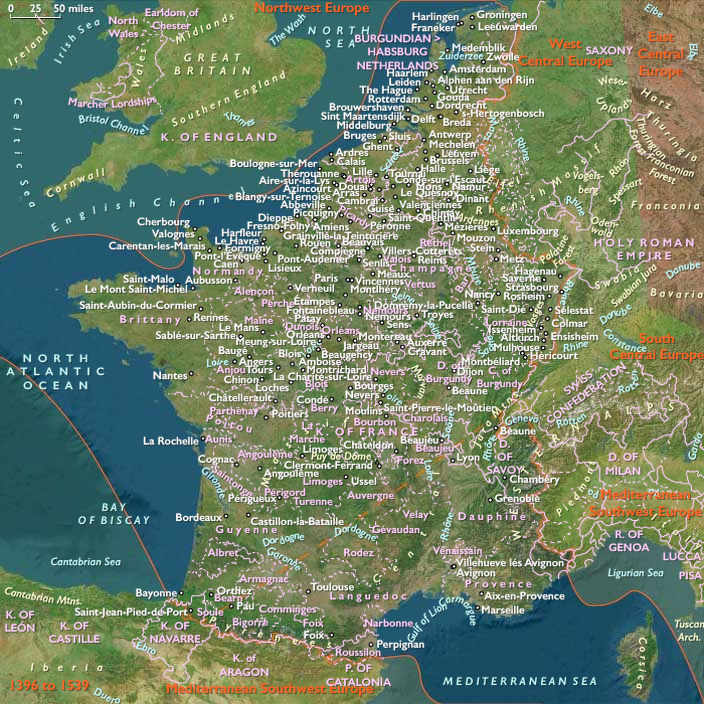
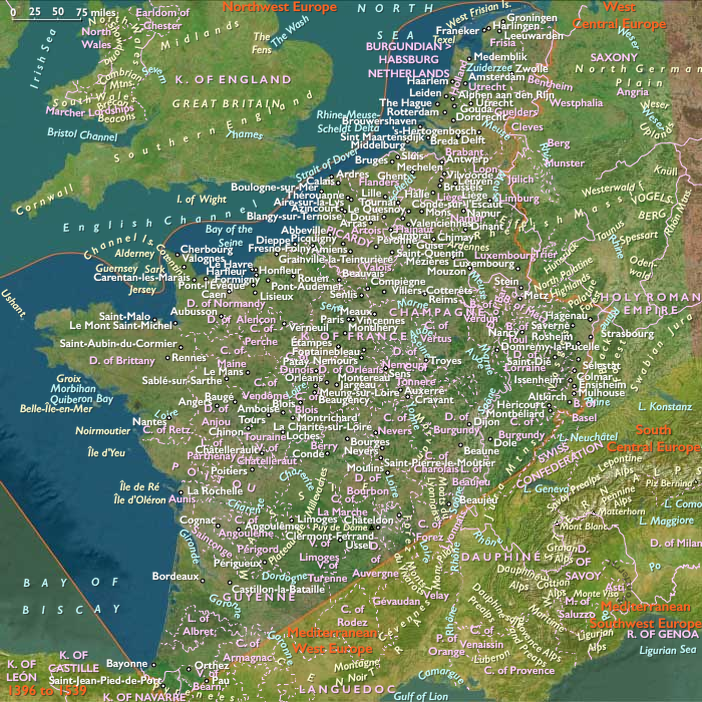
The city of Ghent, a major economic powerhouse of Flanders since the High Middle Ages, owed much of its prosperity to the wool industry—initially established at the heart of Flemish wealth and power. The city’s renowned textile industry had become so developed by the fifteenth century that it necessitated extensive imports of wool from Scotland and England, reinforcing significant political and commercial relationships with these regions. Indeed, Ghent's historical ties to England were symbolically reinforced by the birth there of John of Gaunt, Duke of Lancaster.
The success of the wool trade had granted Ghent—and other Flemish cities—significant political leverage. Following the famous Battle of the Golden Spurs (1302), Ghent's guilds had secured increased political influence (the small nering), enabling representatives from the guilds to participate actively in civic governance. Between roughly 1360 and 1380, this participatory arrangement crystallized into a political structure known as the Rule of the Three Council Members, a balanced power-sharing arrangement between the city magistrates (schepenen) and guild representatives, fostering stability and cooperation within Ghent.
However, by the mid-1430s and into the 1440s, Philip the Good, Duke of Burgundy, sought to weaken the independence and political power that Flemish cities—Ghent in particular—had achieved following their victory in the Battle of the Golden Spurs (Guldensporenslag, 1302). Philip aimed to restore greater ducal authority, both politically, by asserting control over the appointment of city officials, and financially, by establishing reliable sources of income from wealthy Flemish cities.
Philip's most controversial effort involved imposing indirect taxation, moving away from the previous system of individual tax requests (beden), which city authorities could refuse. During a visit to Ghent in 1447, he sought approval from the city council, delivering a carefully prepared speech in Dutch to advocate for a semi-permanent tax, supported by a tax on salt—a critical commodity necessary for food preservation—and other essential goods such as beer. Despite his careful political preparation, including attempts to persuade or bribe influential guild deacons, the city council of Ghent strongly rejected Philip's proposals.
This confrontation was emblematic of the tensions between ducal centralization and traditional civic autonomy in the Low Countries. Ghent’s steadfast resistance marked a clear reaffirmation of civic independence, highlighting the ongoing struggle over governance, taxation, and political authority that would continue to shape the political and economic landscapes of Atlantic West Europe throughout the later fifteenth century.
Locations
People
Groups
- Flanders, County of
- Burgundy, Duchy of
- France, (Valois) Kingdom of
- Netherlands, Burgundian
- England, (Plantagenet, Lancastrian) Kingdom of
- Scotland, Kingdom of
Topics
Commodoties
Subjects
Regions
Subregions
Years: 1447 - 1447
Locations
People
Groups
- Flanders, County of
- Burgundy, Duchy of
- France, (Valois) Kingdom of
- Netherlands, Burgundian
- England, (Plantagenet, Lancastrian) Kingdom of
- Scotland, Kingdom of
Topics
Commodoties
Subjects
Regions
Subregions