
The word poetaster, first used in English…
June 1601 CE
The word poetaster, first used in English by Ben Jonson in his 1600 play Cynthia's Revels, is immediately afterwards chosen by Jonson as the title of his 1601 play Poetaster.
In this play the "poetaster" character is a satire on John Marston, one of Jonson's rivals in the Poetomachia or War of the Theatres.
Today, poetaster, like rhymester or versifier, is a contemptuous name often applied to bad or inferior poets.
Specifically, poetaster has implications of unwarranted pretensions to artistic value.
Locations
People
Commodities
Subjects
Regions

North Europe
View →Subregions
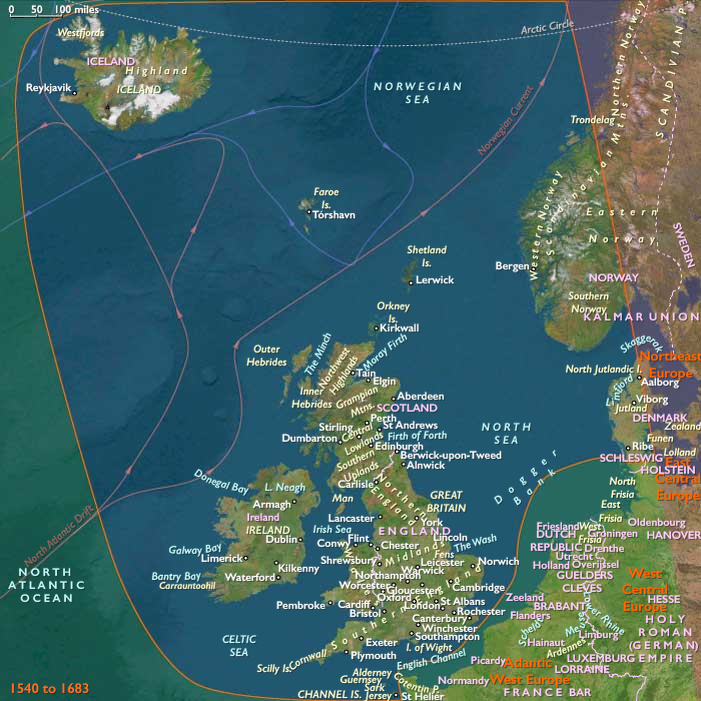
Northwest Europe
View →Related Events
Showing 10 events out of 19 total
The Flight of the Portuguese Royal Family to Brazil (November 29, 1807)
As Junot’s army neared Lisbon, Prince Regent João of Braganza hesitated between complete submission to the French and escaping to Brazil. The indecision continued until a dramatic revelation changed the course of history.
The Final Decision – Napoleon’s Declaration of Deposition
- The British Admiral Sidney Smith, assisting in Portugal’s evacuation, produced a Paris Moniteur newspaper from October 13, 1807.
- The publication declared that the House of Braganza had been deposed—even though Junot had not yet entered Lisbon.
- This false but alarming claim convinced João that staying in Portugal was no longer an option.
The Chaotic Evacuation
- João ordered his family, courtiers, state papers, and royal treasury to be loaded onto ships.
- Many nobles, merchants, and officials joined the flight, fearing Napoleon’s rule.
- On November 29, 1807, a fleet of 15 warships and over 20 transports set sail for Brazil, Portugal’s largest colony.
A Desperate Escape
- The departure was so rushed that 14 carts filled with treasure were abandoned on the docks.
- The royal succession was placed at great risk—João, Queen Maria, Prince Pedro (future Pedro I of Brazil and Pedro IV of Portugal), and Infante Miguel (future Miguel I of Portugal) all traveled on a single ship.
- Carlota Joaquina and the infantas were placed on two other ships, further separating the royal family.
How Many People Fled?
The exact number of people who emigrated with João is debated:
- 19th-century sources estimated up to 30,000 refugees, though this figure is likely exaggerated.
- More recent estimates range between 500 and 15,000 passengers, with 15,000 being close to the maximum capacity of the fleet's 15 warships (including their crews).
- Many families were separated, and even high officials were left behind, unable to secure places on the ships.
A Historic Exile – The Portuguese Court in Brazil
The departure of the Portuguese monarchy for Brazil was unprecedented—never before had an entire European royal family relocated to a colony. The event would have profound consequences for both Portugal and Brazil, setting the stage for:
- The transformation of Brazil into the center of the Portuguese Empire.
- The eventual independence of Brazil in 1822.
- The decline of Portugal’s influence as Brazil took on a more autonomous role.
Conclusion – The End of Portugal’s Independence in Europe
As the royal family fled across the Atlantic, Junot entered Lisbon unopposed on November 30, 1807, marking the beginning of the French occupation of Portugal. The Portuguese state survived—but only in exile, while Napoleon’s ambitions in Iberia were about to trigger the Peninsular War.
The Struggle Between Liberalism and Absolutism in Portugal (1823–1826)
Following the Liberal Revolution of 1820, Portugal became deeply divided between liberals, who supported the new constitutional government, and royalists (absolutists), who sought to restore monarchical rule without constitutional constraints. This ideological conflict led to several uprisings, culminating in King João VI’s return to moderate absolutism until his death in 1826.
The First Royalist Uprising – The Absolutist Rebellion in Trás-os-Montes (February 1823)
- The first significant absolutist reaction surfaced in February 1823 in Trás-os-Montes, where the Count of Amarante led an insurrection against the liberal regime.
- The rebellion failed to gain widespread support at first, but it foreshadowed greater absolutist resistance.
The Vilafrancada (May 1823) – Miguel Joins the Absolutists
- In May 1823, the Count of Amarante launched another revolt, this time at Vila Franca de Xira, just north of Lisbon.
- Parts of the Lisbon garrison defected, and Prince Miguel, the king’s younger brother, joined the absolutist cause, refusing to swear allegiance to the 1822 Constitution.
- The uprising, known as the Vilafrancada, successfully forced a shift in power:
- King João VI sided with the absolutists, suspending the liberal constitution.
- Prince Miguel was rewarded, being made generalissimo of the Portuguese army.
The Abrilada (April 1824) – Miguel’s Failed Coup
- In April 1824, Miguel attempted to fully restore absolutist rule by launching a coup against his father, João VI.
- With the backing of royalist officers, Miguel arrested several liberal politicians and tried to take control of the government.
- However, King João VI—supported by Beresford, who had been allowed to return to Portugal—opposed Miguel’s actions.
- Miguel was dismissed from his position as generalissimo and exiled to France, effectively ending his immediate influence in Portugal.
The Suspension of the 1822 Constitution and João VI’s Rule (1824–1826)
- Following Miguel’s exile, King João VI suspended the 1822 Constitution, choosing to govern under moderate absolutism.
- His rule attempted to balance the interests of both liberals and royalists, though tensions remained high.
- João VI ruled in this manner until his death in 1826, after which Portugal’s succession crisis reignited the struggle between absolutists and liberals.
Conclusion – A Temporary Return to Absolutism
The Vilafrancada and Abrilada demonstrated the deep divisions within Portugal regarding its political future. While King João VI’s death in 1826 would reopen the conflict, his later rule represented a temporary victory for moderate absolutists. However, the liberal-royalist struggle would continue, shaping Portugal’s politics for decades to come.
The Portuguese Succession Crisis of 1826 – Pedro I’s Conditional Abdication
The death of King João VI in March 1826 created a succession crisis in Portugal, as the rightful heir to the throne was his eldest son, Emperor Pedro I of Brazil. However, neither Portugal nor Brazil wanted a unified monarchy, leading to a complicated political arrangement to resolve the issue.
Pedro I’s Abdication in Favor of Maria da Glória
- Pedro I of Brazil (Pedro IV of Portugal) abdicated the Portuguese throne in April 1826 in favor of his seven-year-old daughter, Maria da Glória.
- To maintain dynastic unity and avoid further conflict, Pedro stipulated that Maria must marry his younger brother, Prince Miguel, upon coming of age.
The Constitutional Charter of 1826
- As part of the succession arrangement, Pedro granted a new constitution to Portugal, known as the Constitutional Charter of 1826.
- This moderate constitutional document balanced monarchical authority with liberal principles, offering:
- A bicameral legislature, with a House of Peers (appointed) and a House of Deputies (elected).
- A constitutional monarchy, granting the king executive power while maintaining representative governance.
- Civil liberties and legal protections without fully embracing democratic rule.
Miguel’s Role as Regent
- Since Maria da Glória was too young to rule, Pedro appointed Miguel as regent of Portugal, entrusting him to govern in her name.
- This arrangement was intended to reconcile the absolutist and liberal factions in Portugal, but it would soon collapse into open civil war as Miguel sought to claim the throne for himself.
Pedro Returns to Brazil – A Fragile Peace
- With the succession crisis seemingly resolved, Pedro returned to Brazil, leaving Maria as the designated queen and Miguel as her regent.
- However, this compromise would not last, as Miguel soon rebelled against the arrangement, proclaiming himself king and rejecting the Constitutional Charter, leading to the Portuguese Civil War (1828–1834).
Conclusion – A Temporary Settlement That Led to Civil War
The succession settlement of 1826, while attempting to balance absolutist and liberal forces, only delayed further conflict. Within two years, Miguel would seize power as an absolutist ruler, forcing Pedro to return from Brazil to fight for his daughter’s rights. This struggle culminated in the Portuguese Civil War, a defining conflict between monarchical absolutism and constitutional liberalism in Portugal.
The Succession Crisis of 1826 – Pedro I Inherits and Abdicates the Portuguese Throne
With the death of King João VI on March 10, 1826, Pedro I of Brazil unexpectedly inherited the Portuguese throneas King Pedro IV of Portugal. However, the situation was politically complex, as Pedro had already declared Brazil’s independence in 1822 and was reigning as Emperor Pedro I of Brazil. To avoid a dual monarchy and further conflicts between Portugal and Brazil, he abdicated the Portuguese throne shortly after in favor of his daughter Maria da Glória.
The Death of João VI – A Case of Poisoning
- King João VI fell ill suddenly on March 4, 1826, after dining at the Jerónimos Monastery.
- He died six days later, on March 10, under mysterious circumstances.
- An investigative autopsy 174 years later (in 2000) revealed that he had been poisoned with arsenic.
- The exact perpetrator remains unknown, though speculation suggests political rivals, possibly linked to the ongoing struggle between liberals and absolutists.
Pedro IV’s Short Reign and Abdication (March 10 – May 28, 1826)
- Upon João VI’s death, Pedro I of Brazil inherited the Portuguese throne, becoming Pedro IV of Portugal.
- Pedro had no interest in ruling both Brazil and Portugal, as unifying the two countries was politically impossible.
- On May 28, 1826, Pedro abdicated the Portuguese throne in favor of his seven-year-old daughter, Maria da Glória, who became Queen Maria II.
The Marriage Condition – A Political Compromise
- Pedro stipulated that Maria should marry his younger brother, Dom Miguel, as a way to unite the liberal and absolutist factions in Portugal.
- This arrangement was meant to ensure stability, but it would soon unravel, leading to the Portuguese Civil War (1828–1834) between liberal and absolutist forces.
Conclusion – A Fragile Succession That Led to War
Pedro I’s abdication in favor of Maria II was an attempt to resolve Portugal’s succession crisis peacefully, but the conflict between liberals and absolutists persisted. Dom Miguel would soon seize power, overthrow Maria II, and establish an absolutist regime, leading to a protracted civil war between Miguelist and liberal forces.
Pedro, though remaining Emperor of Brazil, would later return to Portugal to fight for his daughter’s rights, marking another turning point in Portuguese history.
Atlantic Southwest Europe (1828–1839): Liberal Turmoil, Constitutional Struggles, and Early Industrialization
Between 1828 and 1839, Atlantic Southwest Europe—including northern and central Portugal (Lisbon, Porto), Galicia, Asturias, Cantabria, northern León and Castile, the Basque Country, and northern Navarre—entered a turbulent period defined by liberal revolutions, civil conflicts, constitutional struggles, and the early stages of industrialization. Portugal faced a bitter civil war between liberals and absolutists, while Spain grappled with similar tensions erupting into the First Carlist War. These upheavals reshaped regional identities, intensified political alignments, and set lasting foundations for modern governance and economic development.
Political and Military Developments
The Portuguese Liberal Wars (1828–1834)
-
Portugal descended into civil conflict known as the Liberal Wars between supporters of constitutional monarchy (Liberals) and absolutist factions loyal to Dom Miguel, who seized power in 1828.
-
Northern Portugal, especially Porto, became a bastion of liberal resistance during the 1832–1833 siege, famously enduring over a year of intense combat and hardship until liberal forces, led by Dom Pedro IV, successfully defeated Miguelist troops.
-
The liberal victory in 1834 resulted in Queen Maria II ascending the throne, solidifying constitutional monarchy, curtailing the political power of the Church and aristocracy, and definitively shifting Portugal toward parliamentary governance.
The First Carlist War in Northern Spain (1833–1839)
-
In Spain, King Ferdinand VII’s death in 1833 sparked the First Carlist War, a conflict between supporters of Ferdinand's daughter, Isabella II, backed by liberals, and those favoring Ferdinand's brother, Carlos V (Don Carlos), representing traditionalist absolutism.
-
Northern Spanish regions—particularly the Basque Country, Navarre, and rural areas of Cantabria, Asturias, and Galicia—became major battlegrounds. Carlists attracted significant rural support, leveraging regional discontent toward centralization and threats to traditional fueros (regional privileges).
-
The Carlist slogan "God, Country, and King" resonated strongly in conservative rural communities, although urban centers like Bilbao and Santander generally remained loyal to Isabella and liberal governance.
-
The conflict concluded provisionally with the Convention of Vergara (1839), negotiated by the liberal General Baldomero Espartero and moderate Carlist General Rafael Maroto, preserving Basque and Navarrese fueros and promising their integration within the Spanish liberal framework, though tensions lingered unresolved.
Economic Developments: Early Industrialization and Commercial Expansion
Industrialization in Northern Spain
-
Northern Spain, particularly the Basque Country and Cantabria, witnessed rapid industrial growth focused on iron mining, metallurgy, and shipbuilding. The development of ironworks around Bilbao and Santander laid foundations for significant future industrial expansion.
-
Coal mining in Asturias began modestly but steadily, supplying fuel to emerging industrial enterprises, gradually transforming the regional economy toward industrial capitalism.
Portuguese Economic Reorientation
-
Post-war economic recovery in northern Portugal focused on renewed maritime commerce, agricultural improvements, and early manufacturing industries around Porto and Lisbon, gradually reintegrating Portugal into European trade networks.
-
British influence remained strong, reflected in port wine exports from Porto and textile manufacturing, stabilizing the economy after the disruptions of civil war.
Social and Urban Developments: Urban Growth Amid Rural Distress
Urban Expansion and Social Change
-
Urban areas, particularly Porto, Lisbon, Bilbao, and Santander, grew significantly due to commercial and industrial opportunities. This attracted rural migrants seeking employment, causing rapid urbanization and increased social mobility but also deepening urban poverty and social tensions.
-
The growing middle class in these cities embraced liberal and constitutional ideologies, strongly influencing local politics and cultural life.
Rural Distress and Social Tensions
-
In Galicia, Asturias, northern León, and rural parts of Navarre, poverty persisted, aggravated by war disruptions and limited agricultural productivity. This fueled migration toward cities and overseas colonies (particularly Brazil and the Americas), significantly reshaping demographic patterns.
Religious and Cultural Developments: Liberal Reforms and Traditionalist Resistance
Ecclesiastical Reforms and Conflict
-
Liberal victories in Portugal (1834) and Spain (1839) significantly impacted Church authority. Portugal officially dissolved religious orders (1834), confiscating monastic lands and curtailing Church privileges. Similar measures, albeit more limited, were initiated in Spain, setting the stage for future ecclesiastical conflicts.
-
The suppression of religious orders and confiscation of church lands (desamortización) led to profound societal shifts, intensifying conflict between liberals and conservative religious elements, particularly in rural areas and among Carlists in Spain.
Cultural Expression and Romanticism
-
Romanticism emerged as the dominant cultural movement, promoting national and regional pride through literature, art, and folklore. Prominent authors and artists explored historical themes and regional identities, fueling nationalist and regionalist sentiments, especially visible in Galicia, the Basque Country, and northern Portugal.
-
The revival of regional languages (Galician, Basque) and cultural traditions expressed resistance to centralization, asserting distinctive regional identities amid national conflicts.
Legacy and Significance
The era from 1828 to 1839 marked a critical turning point for Atlantic Southwest Europe:
-
Political Liberalization and Constitutionalism: Liberal victories in Portugal and Spain definitively advanced constitutional governance, though conservative resistance persisted, sowing seeds for future conflict.
-
Economic Modernization and Industrial Growth: Early industrialization, particularly in the Basque Country and Cantabria, significantly transformed regional economies, initiating sustained economic growth and industrial development.
-
Strengthening of Regional Identities: Intense conflicts reinforced distinct regional identities and autonomy claims, particularly through the Carlist Wars in northern Spain, highlighting enduring tensions between centralizing national governments and local traditions.
Ultimately, these developments laid foundational structures for modern state formation, industrial economies, and ongoing struggles over regional autonomy, deeply influencing subsequent historical trajectories across Atlantic Southwest Europe.
The Portuguese Civil War (1828–1834) – The Liberal Victory and the Restoration of the Constitutional Charter
Following Pedro I’s abdication of the Brazilian throne in 1831, tensions in Portugal erupted into full-scale civil war between liberal constitutionalists, led by Pedro, Duke of Braganza, and absolutists (Miguelists), who supported Dom Miguel's claim to the throne. The war ended with a liberal victory in 1834, leading to the restoration of the Constitutional Charter.
Pedro’s Return to the Fight for Portugal (1831–1832)
- Pedro abdicated the Brazilian throne in favor of his son, Pedro II, in 1831 and sailed for Britain before organizing a military expedition to reclaim Portugal for liberal rule.
- By March 1831, he established a government-in-exile in the Azores, a key liberal stronghold.
The Siege of Porto (July 1832 – August 1833)
- In July 1832, Pedro’s forces landed in Porto, which soon became the center of liberal resistance.
- The absolutists (Miguelists) besieged Porto, attempting to crush the liberal stronghold.
- Despite being encircled for over a year, the liberals held their position, waiting for an opportunity to break the stalemate.
The Turning Point – The Capture of Lisbon (1833)
- In June 1833, still surrounded in Porto, the liberals launched a bold counteroffensive:
- The Duke of Terceira led a force to the Algarve, a key absolutist-controlled region.
- At the same time, a liberal naval squadron defeated the Miguelist fleet near Cabo São Vicente, securing naval superiority.
- Terceira landed at Faro and marched north through the Alentejo, capturing Lisbon on July 24, 1833.
Final Campaign and the End of the War (1834)
- With Lisbon in liberal hands, the Miguelists lifted their siege of Porto and marched south in a final attempt to defeat Pedro’s forces.
- However, they were decisively defeated at Évora-Monte.
- On May 26, 1834, peace was declared:
- Dom Miguel was exiled permanently from Portugal, never to return.
- Pedro restored the Constitutional Charter, reestablishing constitutional monarchy in Portugal.
Conclusion – Liberalism Triumphs in Portugal
- The Portuguese Civil War (1828–1834) ended absolutist rule, ensuring that Portugal would be governed by a constitutional monarchy.
- Pedro’s victory secured the throne for Queen Maria II, his daughter, under the principles of the Constitutional Charter.
- The war reflected the larger 19th-century struggle between absolutism and liberalism in Europe, marking a decisive moment in Portuguese history.
Pedro’s final triumph over Miguel ensured that Portugal remained on a liberal constitutional path, shaping the country’s political development for decades to come.
The Liberal Resistance to Miguel’s Usurpation (1828) and the Five Years of Repression
When Miguel declared himself absolute king of Portugal in 1828, the liberals did not accept his usurpation without a fight. His seizure of power violated the Constitutional Charter of 1826 and directly threatened the rights of Queen Maria II and her supporters.
The Liberal Rebellion Begins (May 18, 1828)
- On May 18, 1828, the garrison in Porto, Portugal’s most liberal city, declared its loyalty to Pedro IV, Queen Maria II, and the Constitutional Charter.
- The rebellion quickly spread to other cities, as liberals rose up against Miguel’s absolutist rule.
- However, Miguel’s forces moved swiftly to crush the resistance, using the army and police to suppress uprisings across Portugal.
Miguel’s Crackdown – Thousands Arrested or Exiled
- Many liberal officers, politicians, and intellectuals were arrested as Miguel tightened his grip on power.
- Thousands of liberals fled to Spain and Britain, where they sought foreign support for their cause.
- Some exiles regrouped in the Azores, which remained one of the few strongholds of liberal resistance.
The Five Years of Repression (1828–1833)
- Miguel’s reign became known for severe political persecution, with mass arrests, censorship, and executions of liberals.
- Portugal was ruled by absolutist policies, undoing the reforms that had been introduced under the Constitutional Charter of 1826.
- The press was censored, and political opposition was silenced, making Portugal a repressive absolutist state.
The Path to the Liberal Wars (1828–1834)
- The exiled liberals, led by Pedro IV, began organizing military resistance, setting the stage for the Portuguese Civil War (1832–1834), also known as the Liberal Wars.
- With support from Britain, France, and Spain, Pedro IV would eventually return to challenge Miguel’s rule, leading to one of the most significant conflicts in 19th-century Portuguese history.
Conclusion – Repression and the Struggle for Constitutionalism
Miguel’s absolutist coup led to five years of political persecution, but the liberal opposition did not disappear. Instead, they regrouped in exile and prepared for war, ensuring that the struggle between absolutism and constitutionalism would soon escalate into a full-scale conflict.
Miguel’s Seizure of Power and the Abolition of the Constitutional Charter (1828)
Despite Portugal’s Constitutional Charter of 1826 attempting to balance absolutists and liberals, the absolutists were never fully satisfied with the compromise. Many viewed Dom Miguel, the younger brother of Pedro IV (Emperor Pedro I of Brazil), as the rightful king, arguing that Pedro was too Brazilian to rule Portugal.
Miguel’s return to Portugal in February 1828 initially seemed to follow the constitutional framework, but within months, he abolished the charter and declared himself absolute ruler, plunging Portugal into civil war.
Miguel Returns to Portugal and Is Proclaimed King (February 1828)
- In February 1828, Miguel returned to Portugal, supposedly to:
- Swear allegiance to the Constitutional Charter.
- Serve as regent for his niece, Queen Maria II, as required by Pedro IV’s abdication settlement.
- Upon his arrival, however, he was immediately proclaimed king by his absolutist supporters.
The Gradual Move Toward Absolutism (March–May 1828)
- At first, Miguel appeared to uphold the Constitutional Charter, but pressure from absolutist factions mounted for a full return to monarchical rule.
- March 1828 – Miguel dissolved the Chamber of Deputies and the Chamber of Peers, eliminating the parliamentary elements of the Charter.
- May 1828 – Miguel summoned the traditional Cortes of the three estates (clergy, nobility, and commoners), an institution that had not met since the pre-constitutional era.
Miguel Becomes Absolute Monarch – The Cortes of 1828
- The Cortes of 1828, dominated by Miguel’s supporters, formally nullified the Constitutional Charter.
- Miguel was proclaimed King Miguel I as an absolute monarch, effectively restoring autocratic rule.
Consequences – The Outbreak of Civil War
- Miguel’s seizure of power sparked outrage among liberals, leading to mass arrests, purges, and political exile.
- Many liberals fled to Britain and the Azores, preparing for a counteroffensive.
- The situation escalated into the Portuguese Civil War (1828–1834), a bloody conflict between absolutists and liberals.
Conclusion – The Charter is Overturned, But the Struggle Continues
Miguel’s abolition of the Constitutional Charter and his self-proclamation as absolute king in 1828 marked a return to pre-revolutionary rule, but his reign would soon be challenged by Pedro IV and the liberal forces. The battle between absolutists and liberals was far from over, setting the stage for one of Portugal’s most defining 19th-century conflicts.
Portugal's Constitutional Charter of 1826 – A Compromise Between Absolutists and Liberals
Portugal’s Constitutional Charter of 1826, granted by King Pedro IV (Emperor Pedro I of Brazil), was an attempt to reconcile absolutists and liberals by giving both factions a role in government. Unlike the radical Constitution of 1822, which had severely limited monarchical power, the Charter sought a balance between royal authority and constitutional governance.
Key Features of the Constitutional Charter
The Constitutional Charter established four branches of government, distinguishing it from the more rigid three-branch model of classical liberalism.
1. The Legislature – A Bicameral System
-
Chamber of Peers (Upper Chamber)
- Comprised of life and hereditary peers and clergy.
- Members were appointed by the king, ensuring aristocratic and clerical influence in government.
-
Chamber of Deputies (Lower Chamber)
- Consisted of 111 deputies, elected to four-year terms.
- Elected indirectly—local assemblies (themselves elected by property-owning taxpayers) selected deputies.
- This ensured political power remained with the propertied classes, excluding lower-income citizens from voting rights.
2. Judicial Power
- Exercised by independent courts, maintaining a separation of powers with oversight from the monarchy.
3. Executive Power
- Held by the ministers of government, who administered state affairs under the king’s authority.
4. Moderative Power
- Granted exclusively to the king, giving him an absolute veto over all legislation.
- Allowed the monarch to intervene in legislative and judicial matters, making the king the ultimate arbiter of governance.
Significance – A Conservative Constitutionalism
- Unlike the radical democratic model of the Constitution of 1822, the Charter retained significant monarchical authority, making it more palatable to absolutists.
- It created a constitutional monarchy with aristocratic influence, preventing full parliamentary control over government.
- This system was similar to the British constitutional model, but with a stronger monarchical presence.
Impact – A Fragile Compromise
- The Charter failed to fully reconcile liberals and absolutists, as neither faction was entirely satisfied.
- Absolutists still favored direct monarchical rule, while radicals sought a more democratic constitution.
- The political instability of the 1830s and 1840s showed that the Charter, while an attempt at compromise, could not fully resolve Portugal’s ideological divisions.
Conclusion – The Charter as a Middle Path
The Constitutional Charter of 1826 was a landmark attempt to blend monarchy and constitutionalism, providing a legal framework that lasted (with interruptions) until 1910. Though it avoided the extremes of absolute monarchy and radical democracy, it failed to prevent civil conflict, leading to further struggles between moderates, radicals, and royalists throughout the 19th century.
The Liberal Challenge to Miguel’s Usurpation (May 1828) – The Failed Porto Rebellion
After Miguel seized the Portuguese throne in 1828 and abolished the Constitutional Charter of 1826, liberal forces immediately sought to resist his absolutist rule. The first major attempt to challenge Miguel's usurpation occurred in Porto, the stronghold of Portuguese liberalism.
The Porto Garrison Declares Loyalty to Pedro and the Charter (May 18, 1828)
- On May 18, 1828, the garrison in Porto—a city known for its progressive and constitutionalist leanings—declared its loyalty to Pedro IV, Queen Maria II, and the Constitutional Charter.
- This act sparked hope for a wider liberal uprising, as the city had long been a center of resistance to absolutism.
Exiled Liberals Land in Porto and Attempt an Uprising
- A group of liberal exiles, who had fled Portugal following Miguel’s coup, returned to Porto aboard the British ship Belfast.
- Once ashore, they raised a rebellion against Miguel’s forces, hoping to rally the people and expand the revolt to other cities.
- The uprising briefly spread beyond Porto, but it was quickly met with fierce repression.
Failure of the Rebellion and Liberal Flight to England
- The rebellion failed, as Miguel’s forces crushed the insurrection before it could gain momentum.
- The leading liberals were forced to retreat back to the Belfast and fled once again to England, where they continued to plan resistance.
- Miguel responded with a brutal crackdown, arresting and executing suspected liberals, further deepening the divide between absolutists and constitutionalists.
The Road to the Portuguese Civil War (1828–1834)
- Though the Porto rebellion failed, it proved that resistance to Miguel’s rule was far from over.
- Liberal exiles regrouped in Britain and the Azores, preparing for a full-scale military campaign against Miguel’s absolutist regime.
- Within a few years, this conflict would escalate into the Portuguese Civil War (1828–1834), also known as the War of the Two Brothers, as Pedro IV returned to reclaim the throne for Maria II.
Conclusion – A Failed Uprising, But the Fight Continues
The failed Porto rebellion of May 1828 demonstrated that Miguel’s absolutist rule would not go unchallenged. Though the liberals were forced back into exile, they remained determined to restore constitutional government, setting the stage for the violent struggle that would define Portugal’s political future.