Thirteen thousand Swedish troops land in July,…
July 1630 CE
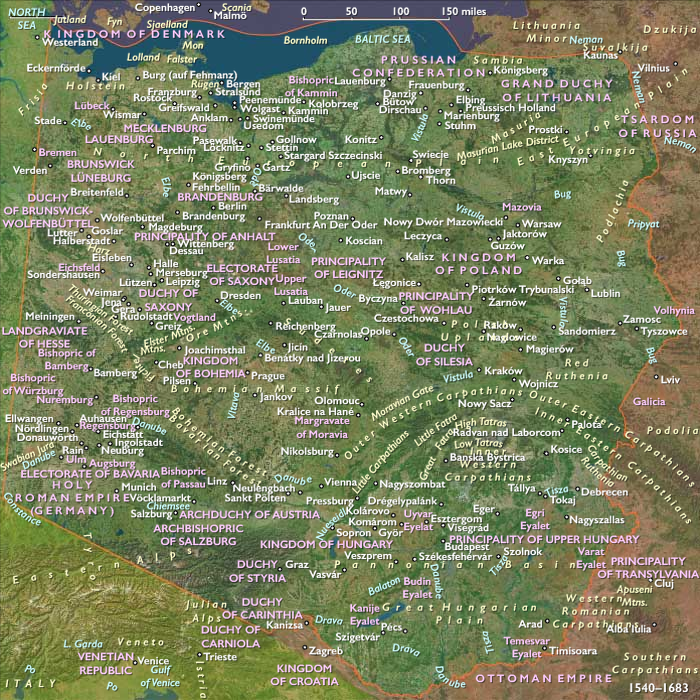
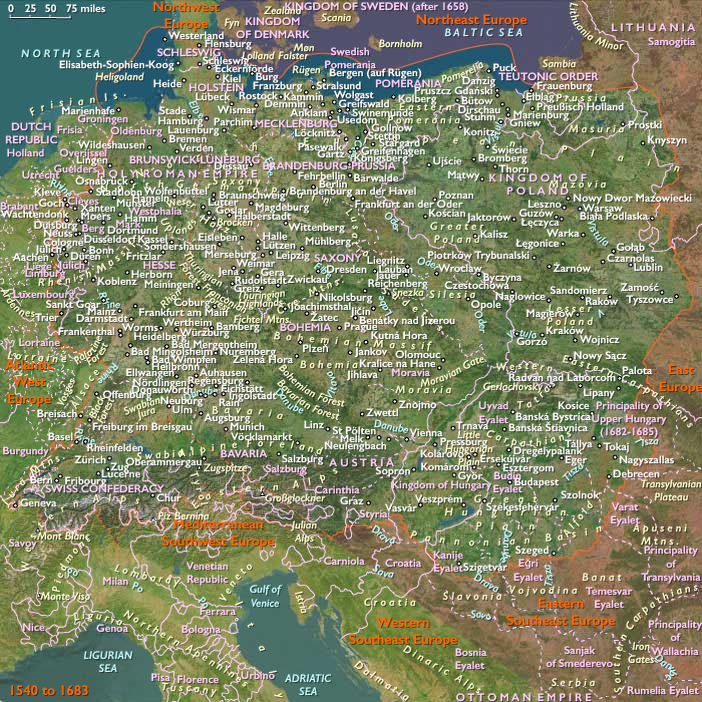
Thirteen thousand Swedish troops land in July, 1630, on Usedom near Wolgast—in the same spot as Christian IV had earlier—entering the Holy Roman Empire via the Duchy of Pomerania, which serves as the Swedish bridgehead as a condition of the Treaty of Stettin, the legal framework for the occupation of the Duchy of Pomerania by the Swedish Empire.
Concluded on August 25, (O.S.) or September 4, 1630 (N.S.), it is to be predated to July 10 (O.S.) or July 20, 1630 (N.S.), the date of the Swedish landing.
The treaty also includes the alliance with Stralsund of 1628, which had been concluded when the town resisted the Capitulation of Franzburg and was thus besieged by Albrecht von Wallenstein's army.
When Pomerania’s Duke Bogislaw XIV, Duke of Pomerania, concluded the alliance, he had immediately written a letter to Ferdinand II, Holy Roman Emperor, reading, in part, "This union is not directed against the majesty of the Emperor or the Empire, but is rather designed to maintain the constitution of the Empire in its ancient state of liberty and tranquillity, and to protect the religious and secular settlements against the ravagers and disturbers of the public peace, and thereby not only to leave intact the relationship which binds us, Bogislaw XIV [...] to His Imperial Roman Majesty [...] but also to preserve our lawful duty and obligations to the same."
Bogislaw further blames the "barbarities and cruelties of the Imperial soldiers" for leaving him no choice.
Ferdinand II will not forgive Bogislaw XIV, and the imperial occupation forces in Pomerania are instead instructed to act even more harshly.
As a consequence, raids are to be conducted frequently, buildings and villages burned, and the population tormented.
The imperial atrocities become one argument for the Pomeranian population to support Sweden.
Another argument is that in contrast to Pomerania, there is no serfdom in Sweden, and thus the Pomeranian peasants hold a very positive view of the Swedish soldiers, who are in fact peasants in arms.
People
Groups
Topics
Commodities
Subjects
Regions
Central Europe
View →Subregions