Thomas Bilney was born around 1495 in…
1531 CE
Thomas Bilney was born around 1495 in Norfolk, most likely in Norwich.
Nothing is known of his parents except that they outlived him.
He entered Trinity Hall, Cambridge at a young age, around the year 1510.
He is nicknamed Little Bilney during his life because of his short stature.
Bilney obtained a license in 1525 to preach throughout the diocese of Ely.
He denounced saint and relic veneration, together with pilgrimages to Walsingham and Canterbury, and refused to accept the mediation of the saints.
The diocesan authorities raised no objection, for, despite his reforming views in these directions, he was to the last perfectly orthodox on the power of the Pope, the sacrifice of the Mass, the doctrine of transubstantiation and the authority of the church.
But Cardinal Wolsey took a different view.
He appears to have summoned Bilney before him in 1526.
Bilney had been dismissed upon his taking an oath that he did not hold and would not disseminate the doctrines of Martin Luther, but in the following year serious objection had been taken to a series of sermons preached by him in and near London, and he had been dragged from the pulpit while preaching in St George's chapel, Ipswich, arrested and imprisoned in the Tower.
Arraigned before Wolsey, William Warham, Archbishop of Canterbury, and several bishops in the chapter-house at Westminster Abbey, he had been convicted of heresy, sentence being deferred while efforts were made to induce him to recant, which eventually he did.
After being kept for more than a year in the Tower, he had been released in 1529, and had gone back to Cambridge.
Here he had been overcome with remorse for his apostasy, and after two years he is determined to preach again what he had held to be the truth.
The churches being no longer open to him, he preaches openly in the fields, finally arriving in Norwich, where the bishop, Richard Nix, causes him to be arrested.
Articles are drawn up against him by Convocation, he is tried, degraded from his orders and handed over to the civil authorities to be burned.
The sentence is carried out on August 19, 1531 at Lollards Pit, Norwich.
A parliamentary inquiry is threatened into this case, not because Parliament approved of Bilney's doctrine but because it has been alleged that Bilney's execution had been obtained by the ecclesiastics without the proper authorization by the state.
Bishop Nix in 1534 will be condemned on this charge to the confiscation of his property.
The significance of Bilney's execution lies in the fact that on so many points he had been an orthodox Roman Catholic.
Locations
Subjects
Regions
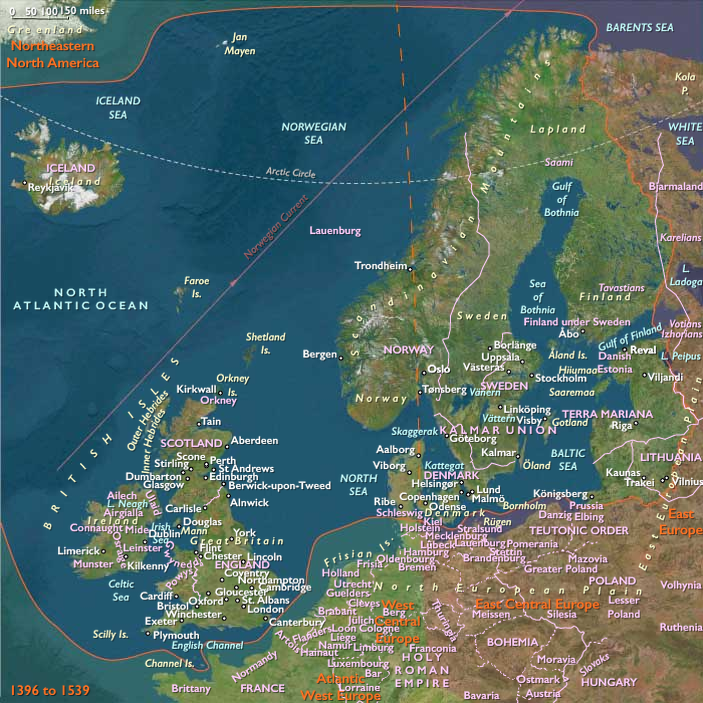
North Europe
View →Subregions