Transylvania’s Bethlen now engages plans for an …
Years: 1626 - 1626
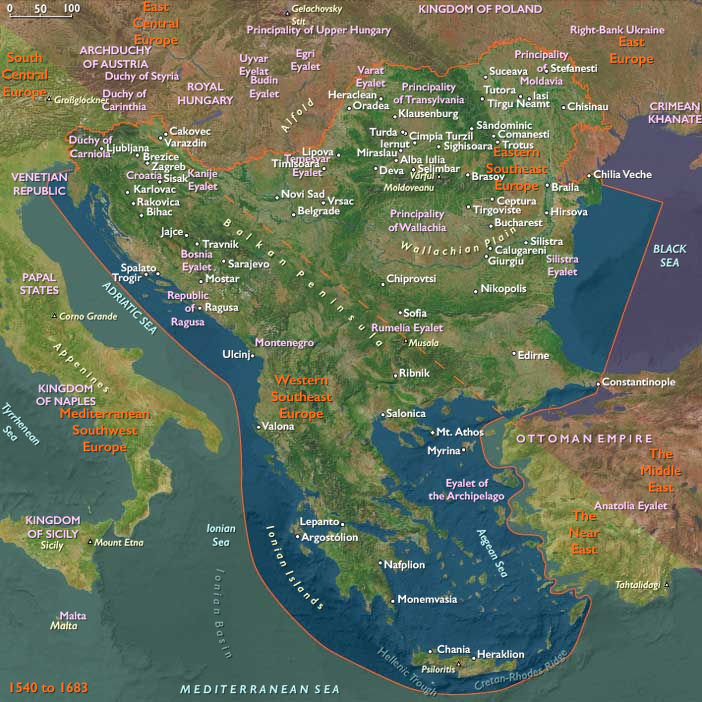
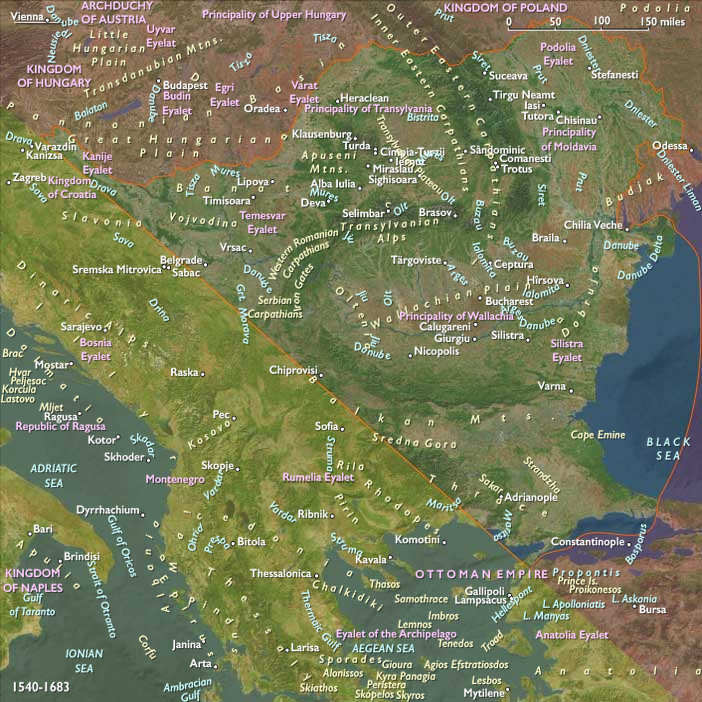
Transylvania’s Bethlen now engages plans for an eastern alliance aimed at completely expelling the Turks from Hungary and Europe.
Hoping to gain aid from Ferdinand, he seeks to marry one of Ferdinand's daughters but is rejected.
Related Events
Filter results
Showing 10 events out of 32781 total
The Manchus have very badly defeated the Imperial Ming army.
Part of the Ming army's new strategy of defense is to develop Ningyuan into a military stronghold.
Ming commander Yuan Chonghuan, with the support of the able Commander-in-Chief Sun Chengzong, has seriously strengthened the defense of Ningyuan in anticipation of a Manchu attack.
After the elderly Sun Chengzong, who has refused to bribe the Emperor's eunuch, is replaced by a new commander, his replacement orders all Ming Forces outside the Great Wall to retreat inside and abandon all land outside Shanhai Pass.
Yuan Chonghuan objects strongly and is thus left to command a lone army guarding Ningyuan (modern-day Xingcheng, Liaoning).
Kundulun Khan Nurhaci, seeing all Ming forces leaving, decides in 1626 to advance towards Ningyuan, personally leading a force of at least sixty thousand, and possibly as many as one hundred thousand to three hundred thousand troops.
Yuan Chonghuan, with only ten thousand men under his command, burns everything outside Ningyuan and writes an essay of defiance against Jin in his own blood; he also sends orders to guards at the Great Wall to execute any deserters from Ningyuan, thus greatly boosting the city's morale.
The Jin army arrives after a twenty-day march and immediately attacks the city, but Yuan Chonghuan successfully holds Ningyuan with the newly mounted and modified "red-barbarian cannon".
The citizens and soldiers of Ningyuan, in two days of intense fighting, inflict heavy losses on the Jin forces.
Nurhaci himself is wounded by cannon fire and decides to retreat.
Yuan is said to have studied every aspect of the cannon for it to fire accurately at the position he wanted, and this is the reason why Nurhaci, even though well protected by his elite guards in a relatively safe position, had been wounded.
After the battle, Yuan reportedly sent letters to ask the well-being of Nurhaci, as is the custom among Chinese generals, but Nurhaci returns only insult, calling Yuan a faker.
As a result of the first battle of Ningyuan, the Imperial Court at Beijing had appointed Yuan as the Governor of Liaodong on February 27, 1626, with full authority to handle all forces outside the passes.

Nurhaci, having retreated back to Mukden, dies from his wounds.
His eighth son or the fourth Beilei (lord) Hung Taiji assumes the title of the Great Khan of the Later Jin Khanate.
Bethlen now joins the German princes and again occupies Habsburg Hungary in 1626, but victories by Catholic and imperial armies force him to come to terms once more with Ferdinand in the Treaty of Pozsony.
The Ottoman campaign fails in 1626 because of lack of artillery and a Turkish army mutiny.
Al-Mu'ayyad Muhammad, the son of Imam al-Mansur al-Qasim, who had restored the Zaidi imamate and begun the cumbersome process of conquering back Yemen from the Ottoman occupiers, had taken the reins of government from his father in 1620, at which time much of the highland was in Zaidi hands, and an uneasy truce obtained with the Turks.
The population in and around Sa'dah in the north in 1622 had refused to pay taxes to the imam.
Muhammad then sent his brother Saif al-Islam al-Hasan who put down the revolt.
Al-Hasan, however, had found means to win the confidence of the locals through reforms, and was appointed governor on behalf of the imam.
Through this act of delegation of power to a relative, the power of the Qasimid family had been confirmed in the north.
Muhammad decides in 1626, however, to break with them.
The tribes of northern Yemen respond enthusiastically to his call, and the rising scores victories against the Turks.
Most of the lowland area of Tihamah fall to the imam's forces, and San'a is besieged.
The Ottoman difficulties are aggravated by the attacks of Shah Abbas of Persia on Turkish positions in Iraq.
Olivares' 'Union of Arms' plan fails in the face of opposition from the provinces, in particular Catalonia, leading him to offer his resignation to the king in 1626; it is not accepted.
The subsequent years are to be challenging financially for Spain.
Financial difficulties had arisen for Poussin with the departure to Spain of Barberini, accompanied by Cassiano dal Pozzo, the antiquarian and the Cardinal's secretary, who later would become a great friend and patron.
However, their return from Spain in 1626 had stabilized Poussin’s position, with renewed patronage by the Barberini and their circle.
Rembrandt Harmenszoon van Rijn, born on July 15, 1606 in Leiden, in the Dutch Republic, as the ninth child born to the affluent Harmen Gerritszoon van Rijn and Neeltgen Willemsdochter van Zuytbrouck, had attended Latin school and enrolled at the University of Leiden, although according to a contemporary he had a greater inclination towards painting; he was soon apprenticed to a Leiden history painter, Jacob van Swanenburgh, with whom he spent three years.
After a brief but important apprenticeship of six months with the famous painter Pieter Lastman in Amsterdam, Rembrandt had opened a studio in Leiden in 1624 or 1625, which he shared with friend and colleague Jan Lievens.
The Stoning of Saint Stephen is Rembrandt’s first painting, executed in 1625 at the age of 19.
Rubens completes the Assumption of the Virgin Mary or Assumption of the Holy Virgin in 1626 as an altarpiece for the high altar of the Cathedral of Our Lady, Antwerp, where it remains.
According to New Testament apocrypha, Jesus' mother Mary was physically assumed (raised) to heaven after her death.
In Rubens’ depiction of the Assumption, a choir of angels lifts her in a spiraling motion toward a burst of divine light.
Around her tomb are gathered the twelve apostles — some with their arms raised in awe; others reaching to touch her discarded shroud.
The women in the painting are thought to be Mary Magdalene and the Virgin Mary's two sisters.
A kneeling woman holds a flower, referring to blossoms that miraculously filled the empty coffin.
King Charles I sees art as a way of promoting his grandiose view of the monarchy.
The most passionate and generous collector of art among the British monarchs, he is able in 1626 to persuade the Italian Baroque painter Orazio Gentileschi, one of more important painters influenced by Caravaggio (the so-called Caravaggisti), to settle in England, later to be joined by his daughter Artemesia and some of his sons.
Gentileschi is to remain in England for the rest of his life.
His works will become increasingly conventional and decorative, but will be appreciated by the local aristocracy for their classicism.
Van Dyck will include him in his portraits of a hundred illustrious men.
Years: 1626 - 1626
Locations
People
Groups
- Austria, Archduchy of
- Ottoman Empire
- Hungary, Royal
- Transylvania (Ottoman vassal), Principality of
- Hungary, Kingdom of
- Habsburg Monarchy, or Empire